We need your help now

Support from readers like you keeps The Journal open.

You are visiting us because we have something you value. Independent, unbiased news that tells the truth. Advertising revenue goes some way to support our mission, but this year it has not been enough.

If you've seen value in our reporting, please contribute what you can, so we can continue to produce accurate and meaningful journalism. For everyone who needs it.

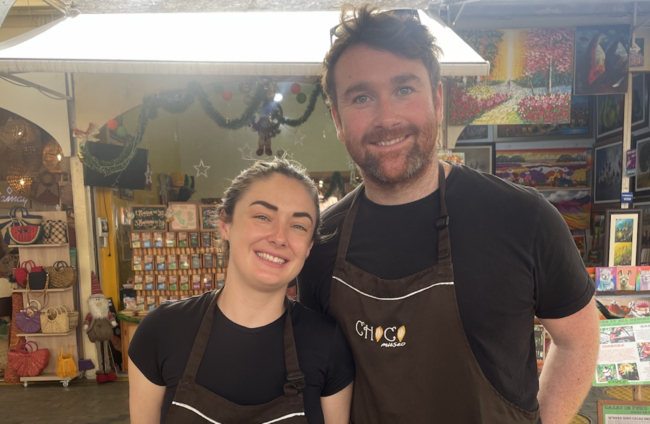
Emily and Joe in Peru last year.

Severe asthma It's like running while breathing through a tiny straw, with a peg on your nose

Emily Smyth has lived with severe asthma her whole adult life, but she makes sure it doesn’t hold her back.

MY NAME IS Emily. I’m 33 years old and I have severe asthma. While around 450,000 people in Ireland live with asthma, there’s still a widespread lack of understanding, especially when it’s severe.

Asthma is often portrayed in films as a minor inconvenience, usually affecting a quiet or “nerdy” child. It’s commonly shown as something embarrassing, a quick puff from an inhaler in an awkward or exaggerated moment. However, for many of us living with asthma, the reality can be far more serious.

For most people with asthma, symptoms can be well managed by inhaled medications, allowing them to live symptom-free lives. But for some with severe asthma, it’s not quite so simple.

So, what makes asthma severe?

Severe asthma is a type of asthma which is difficult to control, even when taking high doses of medications that are effective for most people. This means that, for some of us, even when we’re doing everything right, taking all the prescribed medications, attending medical appointments, avoiding triggers, etc., we can still experience sudden, severe asthma attacks or extended periods of no control.

It’s hard to describe how it feels, but imagine trying to run while breathing through a tiny straw, with a peg on your nose to make it even trickier. Suddenly, everyday tasks that most take for granted become impossible. As things worsen, speaking becomes difficult, your rescue inhaler no longer provides relief, and before you know it, you’re on your way to the hospital just to breathe.

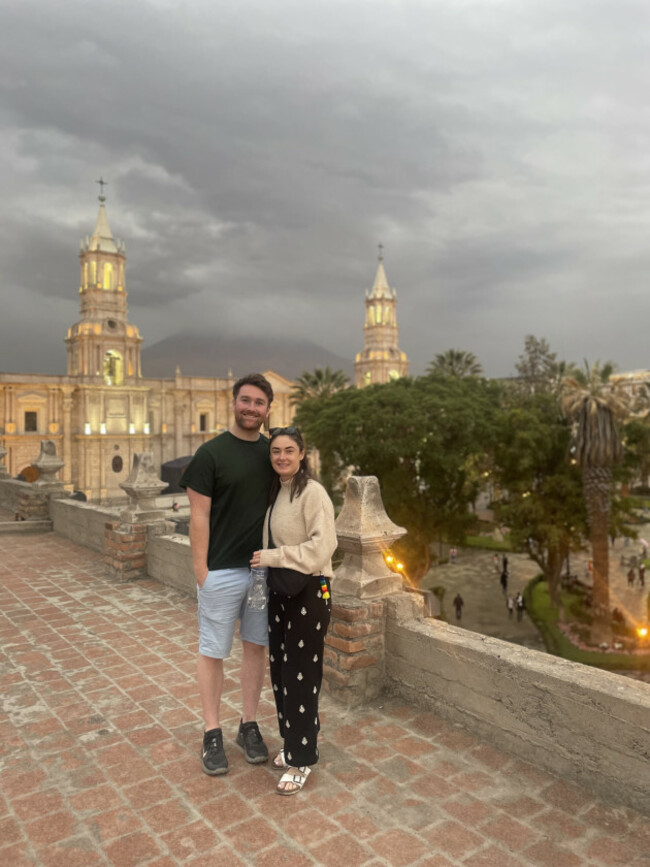
3. Emily Smyth and her partner Joe Lennon in Arequipa, Peru, in November 2024 (1) Emily and her partner Joe Lennon in Peru, November 2024.

These episodes can be life-threatening and, frankly, they’re a real pain in the ass. I know all patients with severe asthma are different, and I’m lucky that when I have control of my asthma, I have no symptoms day-to-day. I live a great life. I love running, hiking, reformer Pilates, travelling and spending time with friends and family. When I don’t have control of my asthma, life is very different.

Living a normal life

I work as a Research Fellow in exercise oncology and part-time as a self-employed physiotherapist. With five hospital admissions between September 2023 and May 2024, well, let’s just say I missed a few days of work! This time off affected not only me through loss of income, but also my colleagues, who had to absorb my workload, and my physiotherapy patients, whose appointments were cancelled last-minute as I was rushed to the emergency department.

Loss of control for me also means loss of independence. I can no longer jump on my bike and cycle to work, or run down to the shop to grab something for dinner. I rely on my partner to help with day-to-day tasks, on my parents to get to and from work, and on friends to keep me laughing, even when I’m a little grumpy about losing control of my asthma again as they go on trips and hikes that I had planned to join.

This loss of control and independence becomes even more pronounced when in hospital. Arriving in and being taken straight to the resuscitation area, leaving your family waiting outside, unsure of what’s happening. Then, after a few hours, once you’re stabilised, you’re spending hours on a trolley in the hall waiting to be transferred to the wards, unsure of when you will get home.

Despite how unpleasant an admission might be, I want to acknowledge the exceptional care that I’ve received during my admissions. Notwithstanding the immense pressure on staff, I’ve always been met with kindness and compassion. Being able to access the Asthma Society of Ireland’s Adviceline and resources when I needed additional support has also been hugely helpful to me.

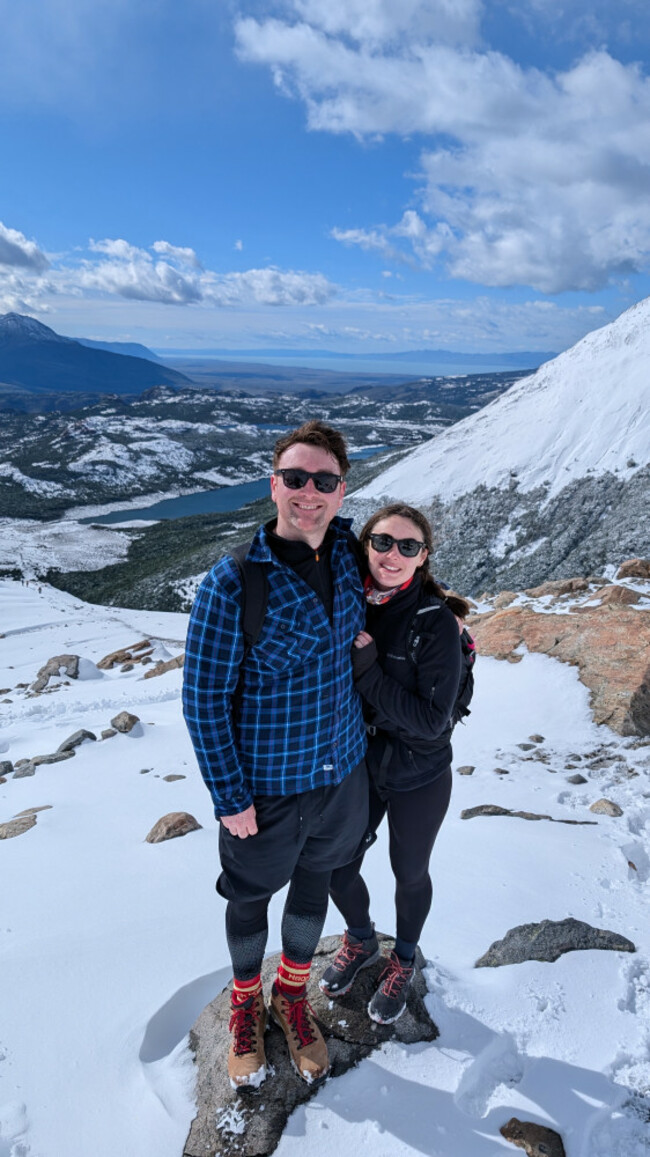
4. Emily Smyth and her partner Joe Lennon visit Patagonia, Argentina, in October 2024 (1) Emily and Joe in Argentina, October 2024. Emily Smyth Emily Smyth

The impact on your body is not the only challenge. For many people with all types of asthma, the ongoing costs of monthly medications, frequent GP appointments, and semi-emergency out-of-hours medical reviews add up quickly and can become a significant financial burden.

These expenses create an additional layer of stress for people already struggling to manage their health and, for some, the financial pressure becomes a barrier to seeking care, or worse, to taking the medication that they need to stay healthy.

I was started on a biological injection in 2024, and the impact has been significant. I can’t begin to explain the freedom that this has given me. There have been prolonged periods of control with only two emergency department attendances since starting, compared to the five admissions the year before.

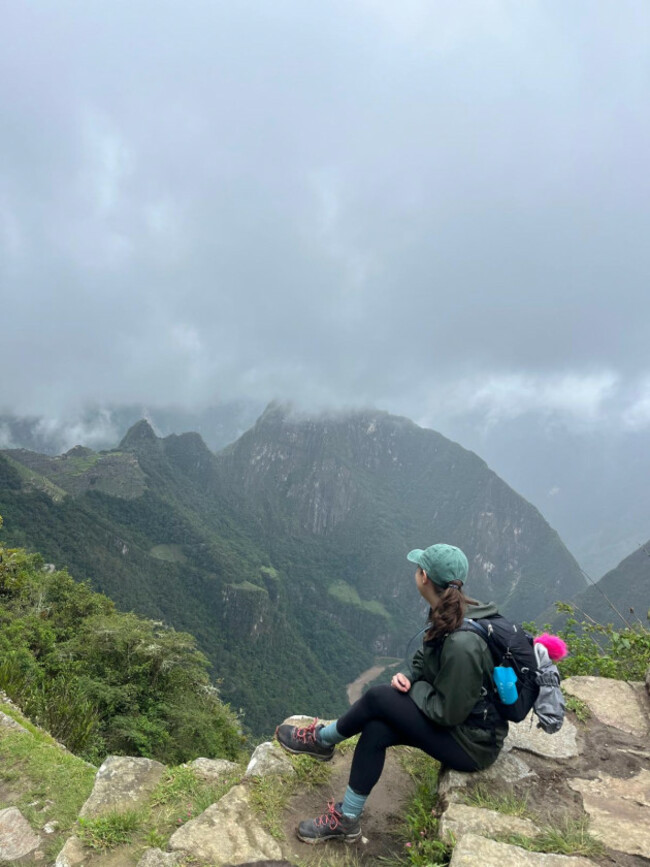
2. Emily Smyth views Machu Picchu, Peru, in November 2024 (1) Emily in Peru last year. Emily Smyth Emily Smyth

It has allowed me to spend three months travelling around South America, hiking 25km a day in Patagonia, ascending to 5,100 meters above sea level in Peru, and exploring the world with my partner. While I still experience periods of poor control, the severity of my asthma attacks is significantly reduced.

I’m extremely lucky to attend a severe asthma team and have received exceptional care. I’ve learned so much about how to manage my symptoms, how to recognise when I need to go to hospital, and how to better navigate the challenges of living with severe asthma. Access to this specialist care is life-changing for someone like me.

Severe asthma affects thousands of people in Ireland, yet many remain undiagnosed or unsupported due to a lack of proper data, regional specialist services and public awareness.

It’s time for policymakers to prioritise the establishment of a national Severe Asthma Register, to invest in multidisciplinary specialist teams across all regions, and to support the inclusion of asthma on the Long-Term Illness Scheme, so that no person’s care is compromised due to financial barriers.

Surely, everyone with asthma deserves access to timely and expert care, regardless of their means or where they live?

Emily Smyth is a physiotherapist living in Dublin. For more information on the supports and services offered by the Asthma Society of Ireland, including its Pre-Budget submission setting out its key asks of Government in the upcoming budget, check out www.asthma.ie

Readers like you are keeping these stories free for everyone...
A mix of advertising and supporting contributions helps keep paywalls away from valuable information like this article. Over 5,000 readers like you have already stepped up and support us with a monthly payment or a once-off donation.

View 6 comments
Close
6 Comments
This is YOUR comments community. Stay civil, stay constructive, stay on topic. Please familiarise yourself with our comments policy here before taking part.
Leave a Comment
    Submit a report
    Please help us understand how this comment violates our community guidelines.
    Thank you for the feedback
    Your feedback has been sent to our team for review.

    Leave a commentcancel

     
    JournalTv
    News in 60 seconds