We need your help now

Support from readers like you keeps The Journal open.

You are visiting us because we have something you value. Independent, unbiased news that tells the truth. Advertising revenue goes some way to support our mission, but this year it has not been enough.

If you've seen value in our reporting, please contribute what you can, so we can continue to produce accurate and meaningful journalism. For everyone who needs it.

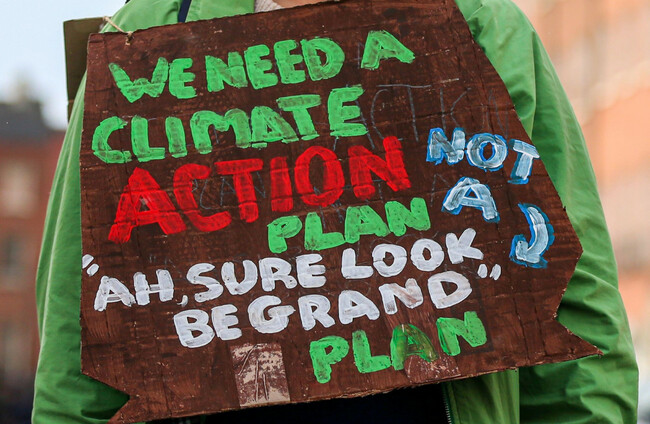
A sign at a climate action protest in Dublin in 2021. Damien Storan/PA/Alamy

Opinion I'm marching for climate action today. It might seem futile, but here's why it matters

Garry Walsh lets us in on why he’s taking part in the national climate march happening in Dublin this afternoon.

I’M TAKING TO the streets of Dublin today with thousands of others for the national climate march, stomping and shouting and waving placards for what’s shaping up to be the biggest climate demonstration that Ireland has seen this decade.

At the same time, there will be marches happening across the globe – from New York to New Delhi, from Buenos Aires to Belém, in the heart of the Amazon where the crucial COP30 global climate negotiations are currently taking place.

As I march down O’Connell street, I’ll be thinking of the people I have had the privilege to meet around the world who are on the frontlines of this crisis.

People like Nadiko, who I met in Northern Kenya during a devastating drought, in the extremely dry and arid region of Turkana. She was struggling to keep her family alive, while at the same time oil companies were greedily extracting fossil fuels from under the dry sandy soils of her indigenous people’s land.

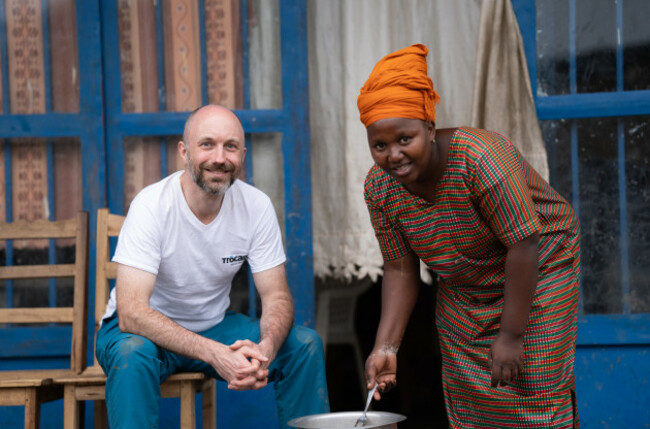
While climate breakdown brought too little water for Nadiko, it brought too much water for Souvenir, who I met in Rwanda.

Her home was one of thousands destroyed by torrential rains which flooded the country and washed away entire villages.

For people like Nadiko and Souvenir, the climate crisis is not a distant threat. It’s happening today and it is already devastating.

It’s a matter of deep inequality and injustice that these communities who have contributed the least to the climate crisis yet are experiencing its worst impacts – and this is only just the beginning.

Trócaire’s Garry Walsh with Souvenir Ibukushime in Western Rwanda. Souvenir lost her home and her business due to torrential flooding and landslides. Photo Muiru Mbuthia Trócaire’s Garry Walsh with Souvenir Ibukushime in Western Rwanda. Souvenir lost her home and her business due to torrential flooding and landslides. Muiru Mbuthia / Trócaire Muiru Mbuthia / Trócaire / Trócaire

I’m marching in solidarity with these communities and climate activists all around the world who are crying out for countries like Ireland to do their fair share, and act with greater ambition. I’ll be marching because I want to see Ireland respond to this global crisis with the urgency it deserves.

As well as being the right and responsible thing to do for the Global South, investing in climate action can bring huge positive benefits for Ireland. Not just because rising sea levels are an existential challenge for a small island like Ireland, but also because investing in the transition away from fossil fuels will bring cleaner energy, less pollution, new jobs, warmer homes, better quality public transport and more liveable towns and cities.

Why do we even bother marching?

I know what the detractors and the cynics might say – does taking to the streets actually achieve anything?

In many ways, I get it. I know it can seem somewhat futile to march through the streets in the face of an overwhelming global climate catastrophe, the vested interests of powerful oil companies, a world in turmoil distracted by war and trade disputes, and an extremely uninterested Donald Trump.

Yet to turn away and turn off, is a COP out in itself. The more citizens who turn away from the climate crisis, the slower our politicians act. Yes, the COP negotiations are painfully slow – but achieving consensus across all of the world’s countries on a global project to transform the entire global economy was never going to be quick and easy.

Ireland is currently off track to meet our climate targets, and our government’s commitment to climate action is waning.

This is what puts fire in my belly and motivates me to get on the streets.

I want to see Ireland support a Fossil Fuel Non Proliferation Treaty and to halt any building of new fossil fuel infrastructure like Liquefied Natural Gas terminals.

As a voter, I want to send a message clearly to my elected representatives that I didn’t vote them in only for them to take the foot off the pedal when it comes to Ireland’s transition away from fossil fuels.

However, Ireland has shown leadership before. We were the first country in the world to divest public money from fossil fuels, and we put our ambition to halve our emissions by 2030 into law, one of the most ambitious laws in the world.

None of that happened without people marching and making noise, writing to their politicians and keeping the issue high on the agenda. The more attention we put on an issue, the more political capital it gets and the more likely we are to see action.

History teaches us time and time again that when committed people come together to capture public attention, progress becomes unstoppable.

The unprecedented public marches and demonstrations in solidarity with Palestine over the last two years pushed the issue to the front of mind for the government – we now need to do the same for the climate crisis.

Positive change

If you’ve never joined a march before, I’ll let you in on something that might surprise you – it actually feels really good.

While anger and frustration often motivate people to take to the streets, when people join together, you can feel the collective power, and it’s an overwhelmingly positive and vibrant experience.

In the face of climate apathy and social media doom-scrolling, and the backdrop of a corporate-backed agenda to make us all feel guilty about our personal carbon footprints, I find that coming together to demand action is the antidote to despair.

Through collective action we can campaign for the systemic changes that are needed to transition away from climate catastrophe.

So, starting at 1pm at Parnell Square, I’ll be marching for Nadiko, for Souvenir, and for the future generations of this country. I do hope you’ll come join me and together we can make some noise. 

Garry Walsh is Campaigns Manager at Trócaire.

Readers like you are keeping these stories free for everyone...
A mix of advertising and supporting contributions helps keep paywalls away from valuable information like this article. Over 5,000 readers like you have already stepped up and support us with a monthly payment or a once-off donation.

View 83 comments
Close
83 Comments
This is YOUR comments community. Stay civil, stay constructive, stay on topic. Please familiarise yourself with our comments policy here before taking part.
Leave a Comment
    Submit a report
    Please help us understand how this comment violates our community guidelines.
    Thank you for the feedback
    Your feedback has been sent to our team for review.

    Leave a commentcancel

     
    JournalTv
    News in 60 seconds