Sign in. It’s quick, free and it’s up to you.
An account is an optional way to support the work we do. Find out more.
Sign in. It’s quick, free and it’s up to you.
An account is an optional way to support the work we do. Find out more.

WHEN SOMEONE ALLEGES that they’ve been seriously sexually assaulted, their chances of ‘obtaining justice’ in the form of an effective police investigation and successful criminal prosecution can be surprisingly low.
In the United Kingdom, it is staggeringly low; fewer than 4% of reported rape offences lead to criminal charges, of which roughly half result in a subsequent conviction.
It is strikingly low in Ireland, where around a fifth of (‘filed’) sexual offence reports lead to prosecution, and the actual conviction rate is described in the Irish legal literature as ‘extremely low’ (possibly just 0.3%).
I suspect that most people know about the main ‘rape myths’ that are said to lie behind these miniscule levels of conviction. These include ‘victim-blaming’, ‘misunderstandings’ over consent, ‘false rape claims’, the repeated assertion that ‘men can’t be raped’, and so on.
However, I would add one other problem in how reports of serious sexual assault are dealt with, and that is the cynicism of some medics when it comes to the topic of ‘date rape drug’ use.
In this regard, I write as a former emergency physician who has spent decades in different urban emergency departments (EDs), where claims that someone’s drink was ‘spiked’ were not uncommon, but scepticism among older healthcare professionals was not unusual.
This is a very serious suggestion on my part, so I must set out my case carefully, as with any medical hypothesis.
In a nutshell, I will define the problem, consider its potential scale, explain why healthcare professionals are ‘wary’ of the diagnosis, and – finally – describe my own recent ‘epiphany’ – that is, why I now believe that clinicians need to ‘tweak’ their approach to those who fear they’ve been victims of a chemically-facilitated assault.
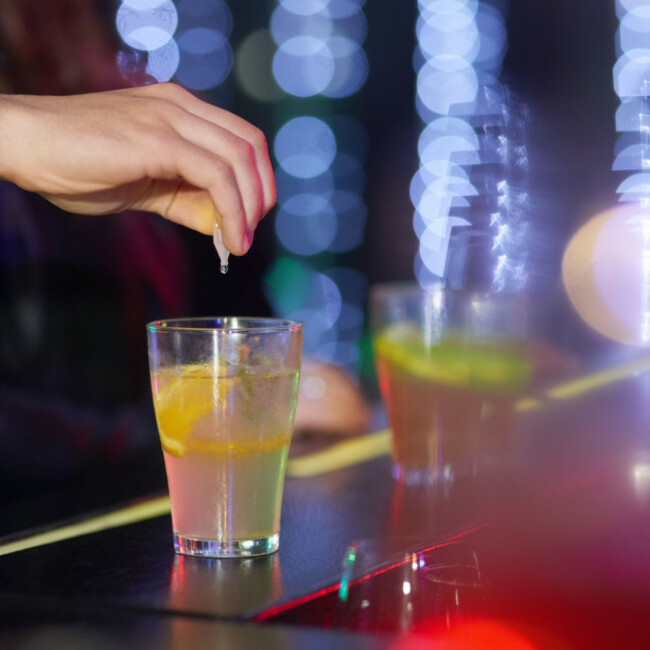
‘Spiking’ someone’s drink means adding a drug to that drink without the drinker’s knowledge in order to alter their physical or mental state. It is typically done for the purposes of robbery, drug facilitated sexual assault (DFSA), or as a ‘prank’.
But a key difficulty in the management of drink tampering is the dearth of reliable data.
A 2022 Global Drug Survey of 22 countries found that 2% of nearly 8,000 respondents believed they’d been ‘spiked’ in the previous year, mostly in clubs or bars, with about a fifth reporting a sexual assault during the incident. However, only about 7% of the suspected cases had been reported to the police.
The actual scale of spiking is very hard to assess and is contested, as survey findings often are.
Analysis by An Garda Síochána indicates that there were 52 cases of suspected ‘spiking’ incidents reported in 2023, compared with 107 in 2022, with much lower numbers in the previous decade.
Most reported incidents occurred in licensed premises and nearly 90% of victims were females aged 18-25 years. It is notable that jabbing with a needle (a related ‘scourge’) was reported in just over a quarter of Irish cases in 2020-2023 and, up to the end of January 2024, there had been 31 charges or summons related to 12 unique suspected ‘spiking’ incidents.
My career in emergency medicine began in the early 1980s, but it wasn’t until the early-to-mid 1990s that – like many of my colleagues – I began to hear the complaint “I think my drink was spiked” in the emergency department (ED) observation ward, where most young revellers who were admitted late at night were monitored.
It was also around that time that the factors in our EDs that still contribute to medical scepticism became particularly apparent.
The first real problem contributing to the credibility of claims that a drink was ‘spiked’ is that it’s very difficult ‘to see the wood from the trees’, or to spot – among the umpteen patients affected by drink or drugs in a crowded emergency department waiting room or ambulance bay – the one case that looks ‘just the same’ as all the others but is actually a case of malicious poisoning or ‘spiking’.
The second problem is that familiar reality: Irish ‘partying’ culture. Notwithstanding a small decline in consumption of alcohol here in recent years, Ireland is still to be found near the top of tables ranking countries by binge drinking, drug consumption and treatment for addiction.
The recent surge in ‘polydrug use’ by young (and not so young) people here is also a serious concern, with Cocaine and Ketamine being among the more medically significant of their favourite drugs. And both can cause deeply disturbing changes in consumers’ behaviour and demeanour, intentionally and unintentionally.
The third problem is that of ‘prinking’: the consumption of alcohol at home by most young Irish people before heading for ‘a night out in town’. One important consequence is that an anxious parent’s observation that ‘my daughter only had one drink in the pub’ may have no bearing on what the potential victim of ‘spiking’ had consumed at home, which matters because alcohol has always been the primary ‘date rape drug’.
The fourth problem is the limited medical research around the whole issue. In the few studies of patients presenting to EDs in England and Australia ‘after their drink was (said to be) spiked’, the toxicology tests undertaken rarely reveal proof that sedative chemicals were involved, but do routinely reveal evidence of excessive alcohol consumption or the use of other illicit drugs, and the ‘victims’ rarely experience long-term illness or other sequelae.
The authors of one study in Western Australia said that, even when toxicology testing had disproven the likelihood of drinks being ‘spiked’ and no police prosecution was considered, around a third of the patients still believed that they had been given a ‘spiked drink’. (As always, of course, ‘more research is needed’.)
At the end of the day (on most days), all the intentional intoxication becomes a wearying blur for the hard-pressed healthcare professionals crewing ambulances and inundated hospital emergency departments.
And if a patient presents a few days after an alleged episode of ‘spiking’ and they are not ‘unwell’, then the medical judgement may be that testing is not urgent, and follow-up needs to be undertaken – somewhere other than a hectic ED, where waiting times routinely exceed 12 hours. Sadly, exhausted medics can be inclined to be a tad sceptical.
What this means in practice is that suspected ‘spiking’ cases are sometimes managed less fastidiously than victims and their families would wish, and dissatisfaction can result in complaints to hospitals and the media, heated debates in council chambers and parliamentary committee rooms (on both sides of the Irish Sea), along with demands for better ‘protocols’ on the part of emergency healthcare staff and staff in clubs, pubs and music venues, where most suspected cases of spiking occur.
A significant divide persists when it comes to the management of ‘spiked drink’ cases.
On the one hand, worn-out ED staff may say that their role is to deal with the sick, not the forensic. They argue the latter is the work of the police or other services.
On the other hand, the public and the authorities take reports of spiking very seriously. For instance, Ireland’s Department of Foreign Affairs issued a warning to Irish tourists heading to Spain in April 2025 amid a spate of ‘date rape drug’ incidents.
I’ve had a foot in both camps for many years: on the ‘receiving end’ in hectic EDs and, as someone involved in training club and pub staff, promoting an assortment of strategies to keep customers safe (from unbreakable glasses and dry restroom floor tiles to well-lit stairways and professionally staffed medical care rooms).
I see the frustrations on both sides (from ‘we just can’t provide every single out-of-hours service’ to ‘they didn’t take me seriously’). And I see the cycles of public angst about ‘spiking’ prompted by media reports, contrasting with the frustratingly few cases of ‘spiking’ seemingly detected on toxicology testing.
Lately, however, when it comes to the use of incapacitating drugs, I confess that I’ve had a serious change of heart about the ‘medical myths’ surrounding ‘spiking’. In short, I’ve begun to think about the bodies.
For example, the dead bodies of four ‘previously fit and healthy’ young men who were murdered in London by the serial killer, Stephen Port, in 2014 and 2015, after being rendered unconscious with the notorious ‘date rape drug’ GHB (gamma-hydroxybutyrate) and left outside his apartment block or in a nearby cemetery. In this instance, evidence that eventually led to Port’s conviction included CCTV footage as well as his online activities.
Then there were the astonishing video-recordings of Gisèle Pelicot being raped by over fifty men between 2011 and 2020, after her husband, Dominique, slipped Lorazepam, the sleeping medication, into her drinks and food, and invited local men near their village of Mazan, in southern France, to take advantage of his comatose spouse, while he made recordings for his own gratification. These crimes were only detected when he was arrested for an unrelated crime, and his phone examined.
Meanwhile in Manchester, an Indonesian PhD student, Reynhard Sinaga, was found guilty of raping 136 (almost entirely) heterosexual young men he’d met outside clubs and pubs in the centre of the city, between 2015 and 2017. Sinaga had ‘spiked’ their drinks with GHB, before recording himself assaulting his victims, and then boasting about it online. Subsequently, the Crown Prosecution Service described Sinaga as ‘the most prolific rapist in British legal history’.
Earlier this year, in London, another of ‘the most prolific predators’ ever caught in the UK, Phd STUDENT Zhenhao Zou, was jailed for life for drugging 10 women in London and China (with Butanediol, a precursor of GHB), and filming most of the assaults), and just last week in Scotland, 46-year-old barber, Kenan Baki was jailed for nine years for drugging two women in a Kirkcaldy nightclub and carrying one of them into his nearby premises – which was captured on CCTV – where he raped her.
The irony, it seems to me, is that all these predators were primarily ‘hoist’ with their own electronic records or old-fashioned CCTV cameras, not with toxicology tests. A depressing reality was that they included an elderly ‘harmless-looking’ husband, two wealthy middle-class PhD students, a ‘respectable-looking barber’ and ‘1% of the locals’ within a 60-kilometre radius of a tiny French village.
Here then is my very simple, albeit potentially controversial, suggestion. I recommend that every distressed victim of an alleged spiking with a ‘date rape drug’ (i.e. alcohol or other sedative) be treated with the same urgency and care as a suspected TIA or a fleeting ‘mini-stroke’.
These can be very difficult to confirm, with ‘nothing to see’ initially, but are now recognised as potential harbingers of disaster and such cases are far more cautiously assessed and followed-up than in the 1980s.
I suggest that healthcare professionals stop worrying that they alone must ‘confirm’ a case of ‘drink spiking’ and acknowledge that none of the criminal cases I’ve cited above was ‘proved’ with (or without) medical investigations alone.
Crucially, too, the gravity, impact and shocking number of these initially unrecognised cases are – finally – self-evident. I believe that we now have the long-sought-after ‘evidence’ that most medics demand.
What all this means in practice for our clinical staff is that in future they should – on balance – assume that every complaint of a suspected ‘spiked drink’ may be credible, and they should treat such victims with all the care that the patient’s distress, clinical findings and story merit, bearing in mind that so many cases have been missed in the past – not really for want of ‘toxicology’ testing, but of victims being believed and then properly followed up.
Dr Chris Luke is a retired Consultant in Emergency Medicine and host of the Irish Medical Lives podcast.
Come back to The Journal next weekend for Dr Luke’s next article on drink spiking, where he will outline his ten key pieces of advice for the public and medics on how to deal with the problem.
To embed this post, copy the code below on your site














have your say