We need your help now

Support from readers like you keeps The Journal open.

You are visiting us because we have something you value. Independent, unbiased news that tells the truth. Advertising revenue goes some way to support our mission, but this year it has not been enough.

If you've seen value in our reporting, please contribute what you can, so we can continue to produce accurate and meaningful journalism. For everyone who needs it.

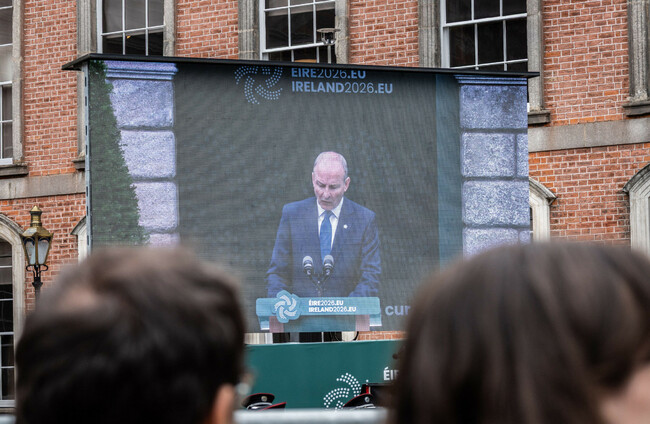
JULY 1, 2026: Ukrainian President Volodymyr Zelensky attends the EU Presidency opening ceremony at Dublin Castle in Dublin, Ireland, on July 1, 2026.

Opinion The answer to Ireland and Europe's biggest challenges is more democracy, not less

Ireland won’t solve housing, migration or climate change unless people from all walks of life have a real voice in the decisions that shape their lives.

IN THE SOCIAL media age, we all have a platform. But those who shout the loudest or generate the most outrage are invariably the ones who capture the most attention.

Having a voice is different. It means having a say, but also a stake, in the future of your town, your community, your society. It’s a notion that’s increasingly under threat today.

Rightly or wrongly, there’s a perception that the biggest challenges facing governments in Europe today, from affordable housing to AI, our fractured geopolitical system to the climate crisis – are insurmountable. This should worry us deeply.

Democracy cannot be measured by elections or economic growth alone, nor be sustained by government institutions only. People must believe they still have a voice.

So how can we give the average citizen the chance to participate and be heard outside of elections?

Firstly, we need to normalise and encourage getting involved – whether that’s as simple as volunteering for a cause you care about or joining a local community group. In our increasingly digitalised and atomised lives, this not only grounds us in local realities but builds real connections and friendships.

I get that many are too time poor to do this. But participation in a professional setting is also a possibility for many. Joining a trade union, professional association, or business network is an excellent way to have a say.

Secondly, and more crucially, we need to build, and in some cases build back, the structures and forums where the government listens and acts on the feedback they receive from civil society and social partners. Not consultation as a box-ticking exercise, but sustained, two-way dialogue as participatory democracy.

This is about more than building trust. Giving communities a say in the decisions that affect them leads not only to greater buy-in but also to better outcomes. On topics like sustainable farming, cycle lanes in urban areas and access to Wi-Fi in rural areas, they anticipate challenges before policymakers do and can come up with solutions.

On the other hand, a lack of consultation has been an undoubted driver of unrest in communities, leading to difficulties like protests and attacks against asylum-seeker accommodation, for instance. These are often stoked by malign actors with misinformation, but they are also exploiting an information vacuum.

The centralised nature of government in Ireland makes the need for this kind of approach even more important. All politics is local, after all.

Ireland and social partnership

At the national level, it’s no coincidence that groundbreaking social and disability legislation was passed during the peak of Ireland’s social partnership years, when the government negotiated pay and policy agreements with unions and employers, and, from 1997 onwards, the community and voluntary sector.

This resulted in a social safety net and the move away from a largely charitable medical model to a rights-based approach. The Equality Employment Act and its nine grounds for discrimination was another hard-won achievement.

As CEO of Irish Rural Link in the 2000s, I was part of the civil society engagement on affordable housing during this era of social partnership. This helped ensure the building of thousands of social housing units.

The 2008 crash put an end to social partnership in Ireland. I welcome recent debates on its potential return and would argue that many of the structural challenges facing us today, including the housing crisis and the decidedly mixed transition to renewable energy, would be less acute if we’d continued along this path.

What would a successful return to social partnership in Ireland look like that is fit for today? Early consultation, entry points at different levels of government, and deep policy dialogue. Organisations representing consumers should also be included this time along with unions, employers and the community and voluntary sector.

Civil society needs a seat at the table

Whether or not social partnership does make a return, my wider point is if governments want policies to reflect actual needs on the ground then civil society can’t be on the outside looking in. They have the expertise across policy areas and the networks of those affected, from families in poverty to isolated elderly, young people not in employment or education to vulnerable minority groups.

The answer to the complex and existential challenges facing Ireland and Europe right now is not less democracy, but more. Otherwise, the erosion of trust in public institutions and democratic systems will continue to grow, exploited by those on the extremes who blame others rather than offer workable solutions.

Ireland’s EU Council Presidency presents an opportunity to make real progress in this space. In addition to the ongoing EU priorities of competitiveness and security, civil society is a key plank of the Presidency.

The European Economic and Social Committee, the EU body which I lead, has been requested by the Irish government to tackle the topic of democratic disaffection and disengagement in communities and how we can address this. We’ll be looking at models of participatory democracy across the EU, including citizens’ assemblies, civic forums and panels, and sharing and discussing our findings with Ministers across the EU.

As the historian Timothy Snyder has put it, democracy is a verb not a noun. Deliberation and inclusion are not weaknesses but strengths – and essential for every citizen to have a voice.

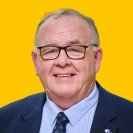
Séamus Boland is President of the European Economic and Social Committee, the EU body representing civil society.

Readers like you are keeping these stories free for everyone...
A mix of advertising and supporting contributions helps keep paywalls away from valuable information like this article. Over 5,000 readers like you have already stepped up and support us with a monthly payment or a once-off donation.

Close
13 Comments
This is YOUR comments community. Stay civil, stay constructive, stay on topic. Please familiarise yourself with our comments policy here before taking part.
Leave a Comment
    Submit a report
    Please help us understand how this comment violates our community guidelines.
    Thank you for the feedback
    Your feedback has been sent to our team for review.

    Leave a commentcancel

     
    JournalTv
    News in 60 seconds