We need your help now

Support from readers like you keeps The Journal open.

You are visiting us because we have something you value. Independent, unbiased news that tells the truth. Advertising revenue goes some way to support our mission, but this year it has not been enough.

If you've seen value in our reporting, please contribute what you can, so we can continue to produce accurate and meaningful journalism. For everyone who needs it.

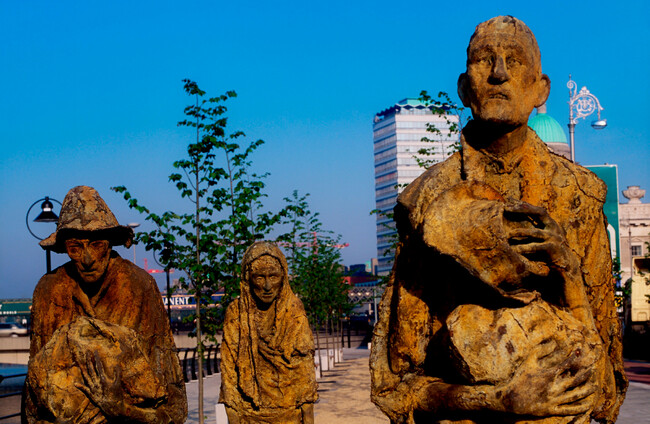
Dublin famine memorial. Alamy Stock Photo

An Gorta Mór How the horror of forced starvation in Gaza echoes our own cruel past

Fintan Drury looks at the parallels between Ireland’s Great Famine and the horrors unfolding before our eyes in Gaza.

In his recently published book ‘Catastrophe Nakba II’, Fintan Drury charts the first year of Israel’s response to the Hamas attack of 7 October 2023 and sets it in the context of the 1948 Nakba and the history since. 

Here, he reflects on the famine conditions in Gaza as an Irishman whose great-grandparents survived Ireland’s famine of the 1840s.

“It was now getting dark, and there was a solitary bird twittering somewhere in the distance. Mary took the corpse by the head. The old man took the feet. They had to bend it in order to get it down into a crevice. They laid the stones carefully over it after Mary had covered the dead face with the shawl.”

- Famine, Liam O’Flaherty.

THE POET JOHN Montague wrote that these and the other characters in Liam O’Flaherty’s story Famine undergo ‘heartbreaking travails that anticipate the Holocaust, including the burial of their dead, without ceremony in mass graves.’

The Holocaust, in the scale of its descent of human behaviour to an unprecedented level of barbarism, could hardly have been truly anticipated, as Montague suggested. Yet, grotesque as it is, fast approaching a century after the Jewish people suffered the Holocaust, the state that claims their identity is today deliberately taking humanity to unconscionable depths of depravity.

O’Flaherty’s wonderful, if sad, book, first published in 1973, brings the almost unimaginable horror of Ireland’s Great Famine to life, making it a vivid reality. Even without it and other more prosaic accounts of that time, the famine of the 1840s would, for all Irish people, be part of our ethnic DNA.

In historical terms, it’s just a heartbeat ago; those of us whose great-grandparents lived through it carry its corrosiveness in our bones. We have no recent experience of war; our size and our remoteness have inured us from that trauma for many generations. Famine is another matter entirely. An Gorta Mór, the Great Famine, was a period of mass starvation that killed more than a million people, with over twice that number forced to leave the country, most never to return.

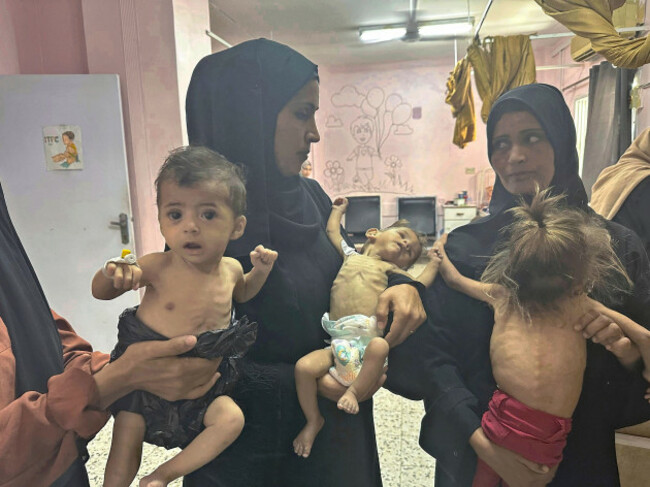
mothers-hold-their-emaciated-children-at-nasser-hospital-in-khan-yunis-gaza-palestine-on-july-21-2025-the-many-gaza-residents-especially-children-and-elders-have-collapsed-from-famine-and-malnu Mothers hold their emaciated children at Nasser Hospital in Khan Yunis, Gaza, Palestine, on July 21, 2025. Alamy Stock Photo Alamy Stock Photo

The Famine was the most catastrophic event in our history, which may be why we’re consumed by the latest phase of Israel’s genocide in Palestine – the famine now devouring what remains of the spirit of the traumatised people of Gaza. There’s one significant difference between our ancestors’ experience and what the Palestinians are enduring today. Ireland’s famine was due to a combination of random circumstances, including the neglect of colonial Britain, but what we’re witnessing in Gaza is an induced famine, one deliberately deployed by Israel as another means by which it hopes to achieve the Zionist objective of exterminating all Palestinians.

Warnings about famine

In my book, Catastrophe Nakba II, I refer to how there was clear evidence of an emerging famine in Gaza as early as a year ago and how the West, most especially the government of the United States, chose to ignore the pleadings of a whole swathe of witnesses who prophesied that, without intervention, a great number of Gazans were going to die of starvation.

In late spring 2024, then-US Secretary of State Anthony Blinken was advised by his department of emerging famine conditions; he chose to ignore the information because acknowledging it would have meant the Biden administration being obliged to halt its support for Israel’s military.

America’s Leahy Law explicitly prohibits the provision of arms to any state suspected of committing human rights violations. In May 2024, USAID, an independent government-backed aid agency, reported that Israel was preventing aid from getting into Gaza and creating circumstances that could lead to famine. The case was made without equivocation, which meant that, were it known, it would be a violation of US law to continue arming Israel.

The report the Secretary of State presented was altered; references to preventing aid from reaching the people were omitted. The decision to falsify it led to the resignation of one of its authors, Stacy Gilbert, a 20-year veteran of the State Department who warned that the ‘report’s flagrant untruths will haunt us.’ Others followed her lead; all of them were proven correct.

‘Right to defend itself’

Israel’s bombardment of Gaza started on the evening of 7 October 2023, hours after the brutal Hamas attack on kibbutzim and a music festival just inside the Israeli border. The scale of the response shocked many; in time, the horror mutated into a sense of hopelessness and despair.

When I went to the region – the West Bank, Lebanon and Jordan – seven months into Israel’s onslaught, I was struck by how many observers, even then, considered it different, more violent, more intense, than other Israeli campaigns. Seasoned commentators were used to Israel’s excesses, but proportionality has never been part of its modus operandi. In his last book, Night of Power, Robert Fisk had written of the ‘grotesque disproportion of Israel’s response’ in the conflict of 2009, when two thousand Palestinians had been killed. What would he make of the last almost two years?

Proportionality has no meaning when the numbers formally accounted for would represent the population of many large towns across Ireland. Most independent projections of the number of dead are far higher than those of the Hamas health ministry. The global medical journal The Lancet has argued that the real number of fatalities is in excess of 100,000. These numbers, the scale of the devastation, may be chilling to many, but to the government of Israel and its considerable support base, they are relevant only in that they represent a means to an end – the complete removal of the Palestinian people from their land.

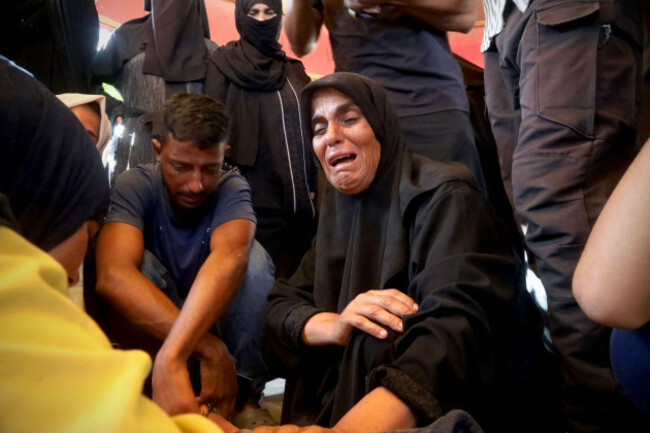
people-mourn-their-loss-as-bodies-of-palestinians-killed-in-israeli-attack-on-makeshift-tents-are-brought-to-al-nasser-hospital-people-mourn-their-loss-as-bodies-of-palestinians-killed-in-israeli-atta People mourn their loss as bodies of Palestinians killed in Israeli attack on makeshift tents are brought to al Nasser Hospital. Alamy Stock Photo Alamy Stock Photo

Israel’s Defence Minister, Yoav Gallant, had set the tone in the days after the onslaught began, saying that there would be ‘no electricity, no food, no fuel’ because Israel was ‘fighting human animals.’ Months later, Finance Minister Bezalel Smotrich suggested that it could be ‘justified and moral’ to starve the people of Gaza deliberately; he was only articulating what many Israelis believe. Opinion polls over the past two years have been erratic on the levels of support for the military campaign, but as the Israeli newspaper, Haaretz, reported in June, the ‘deep resentment’ that many Israelis harbour toward Palestinians has ‘intensified significantly since 7 October 2023.’ Last week, the same paper reported that a few hundred Israelis had marched in Tel Aviv protesting the starvation of Palestinians in Gaza; a few hundred in a population of four million.

Deep-rooted hate

Those hundreds in Tel Aviv and elsewhere in Israel who protest at the actions of their government are brave; it is not generally accepted in Israeli society to publicly challenge the conduct of the campaign against Palestine. The Holocaust shimmers in the mindset of many Israelis for whom its horror is too recent, too engrained in their own or their families’ life experience to make its brutality relatable to the conduct of Israel toward others. There’s no doubt that their government has been conducting a genocide against the Palestinians since 7 October 2023, and little that famine is a deliberate part of the plan toward the forced removal of all Palestinians from their land.

Just a few days ago, the Knesset voted to formally recognise that ‘Judea, Samaria and the Jordan Valley are an inseparable part of the Land of Israel – the historic, cultural and spiritual homeland of the Jewish people.’ Proof, as if it were needed, that Israel believes international law does not apply to its conduct.

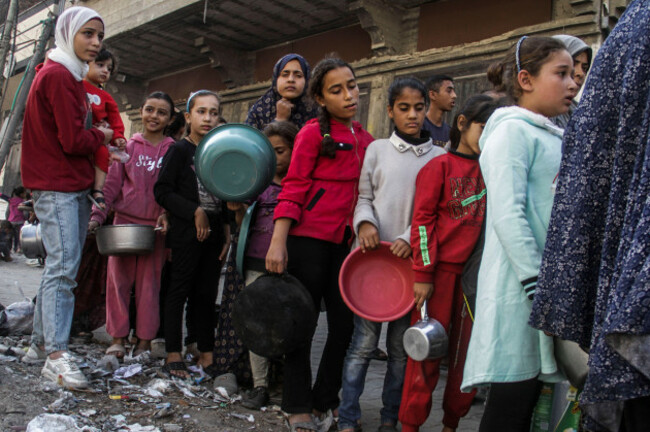
gaza-city-palestine-6th-nov-2024-internally-displaced-palestinian-children-seen-in-a-queue-ready-to-receive-food-distributed-by-charitable-organizations-in-the-nasser-neighborhood-of-gaza-city-ga Alamy Stock Photo Alamy Stock Photo

The charge that Israel has deliberately used famine as a means of achieving its strategic colonial goals is hard to dispute. The London-based agency, Forensic Architecture, has for many years monitored how Israel set about destroying the agricultural capacity of the Gazans to feed themselves. It reported that by the end of June 2024, more than 80 per cent of all plant life in Gaza and 45 per cent of its productive greenhouses had been destroyed, as had more than 50 per cent of its groundwater wells and 65 per cent of its water tanks. The decades-old blockade prevented Gazans from leaving, so weakened by the relentless bombardment, Israel strangled the Gazans’ remaining life source, food aid. It wasn’t finished.

When the international clamour over the restrictions on aid grew last spring, a new aid agency emerged from the ether. Israel granted exclusive rights to the Gaza Humanitarian Foundation (GHF), which it and the US backed, while all other established agencies were prevented from distributing aid. The mystery around its origins and backers was amplified by daily incidents of starving Palestinians being fired upon by IDF patrols as they desperately sought food from this mysterious agency’s food stations. Almost two thousand Palestinians have been killed at the shooting gallery offered up to the IDF by the GHF. This week, MSF described the aid distribution sites as ‘places of orchestrated killing and dehumanisation, not humanitarian aid.’

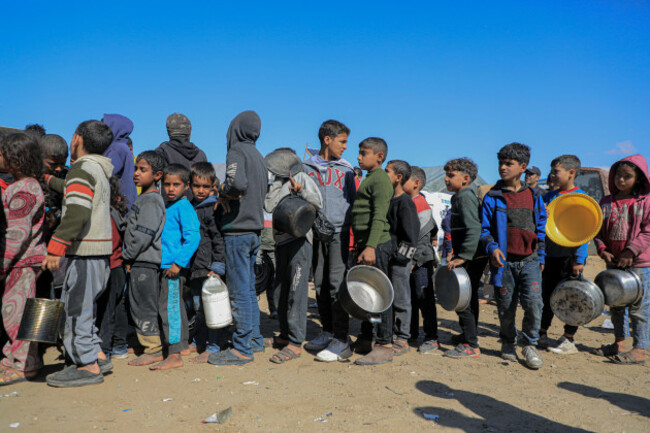
rafah-9th-feb-2024-palestinians-queue-for-relief-food-supplies-in-the-southern-gaza-strip-city-of-rafah-feb-9-2024-the-united-nations-relief-and-works-agency-for-palestine-refugees-in-the-near Alamy Stock Photo Alamy Stock Photo

There is nothing like Gaza happening anywhere else in our world right now. There is nowhere else where the oppressor feigns to be the oppressed and is being supported in that lie by many Western democracies and some Arab nations. There is nowhere else where a large percentage of a rogue nation believes they are the ‘chosen people’ and, on account of that imagined biblical imprimatur, their government can do as it wishes.

There is nowhere else where senior members of that government have consistently dehumanised the indigenous people so that no action against them, no matter how brutal, can be deemed unreasonable. There is nowhere else where a member state of the United Nations, a state that trades with nearly every other nation, a state that still participates in international arts, sporting and cultural events, is allowed to use famine as a tactic to deliberately destroy another people.

We cannot stand idly by

Mary, the main character in Liam O’Flaherty’s masterpiece on the Irish Famine, survives when, not long after she buries her mother in the dirt, she is saved from the same fate and makes it to a ship leaving for America. As the boat leaves the port, O’Flaherty writes that ‘she went on her knees and crossed herself’, knowing that with a fair wind and good fortune, a new life awaited her.

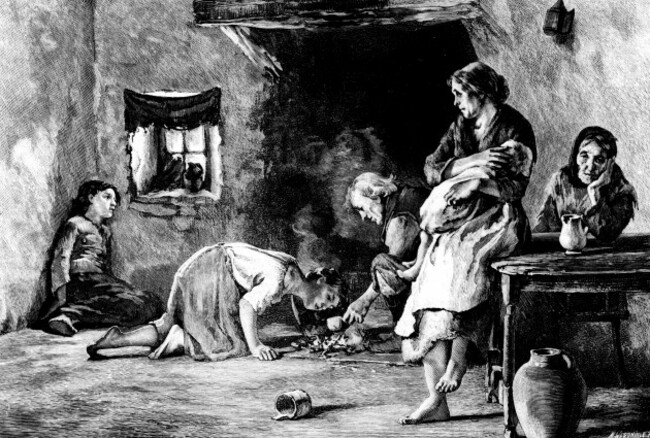
victorian-britain-irish-famine-peasants-in-their-hut-1847 An illustration of the conditions during An Gorta Mór in Ireland. Alamy Stock Photo Alamy Stock Photo

There can be no such happy endings for Palestinians in Gaza. Its horror is that the starving have no way out; the Palestinian population is penned in with no chance of escape, so without dramatic intervention, their fate is sealed. Without the world deciding to call Israel to account and warn of military intervention against it, all of these people will die, either shot by the IDF as they desperately seek food, or manage to escape the snipers but not the slow death by starvation.

It’s not too dramatic to say that, without unprecedented action against Israel, the fate of most Gazans will echo that of Mary’s mother in O’Flaherty’s epic. We already know that the spade, pressed into action across Ireland almost two hundred years ago to save as much of a rotting crop as possible, found an uglier task as the people died in their hundreds of thousands.

Gaza’s shovels or spades have been digging bodies out from under the rubble for almost two years. We are nowhere near angry enough that this is being allowed to happen by Western powers; we are witnessing circumstances where it is inevitable that, in Gaza, as with Liam O’Flaherty’s account, there will soon be only one remaining use for a spade.

‘Mary took the spade and covered the stones with earth, making a little mound. The old man appeared with two strips of wood from the hen coop, nailed together in the form of a cross.’

Fintan Drury is a former RTÉ journalist, broadcaster and businessman. His book, Catastrophe Nakba II (Merrion Press) is available in all bookstores at €18.99.

Readers like you are keeping these stories free for everyone...
A mix of advertising and supporting contributions helps keep paywalls away from valuable information like this article. Over 5,000 readers like you have already stepped up and support us with a monthly payment or a once-off donation.

Close
JournalTv
News in 60 seconds