We need your help now

Support from readers like you keeps The Journal open.

You are visiting us because we have something you value. Independent, unbiased news that tells the truth. Advertising revenue goes some way to support our mission, but this year it has not been enough.

If you've seen value in our reporting, please contribute what you can, so we can continue to produce accurate and meaningful journalism. For everyone who needs it.

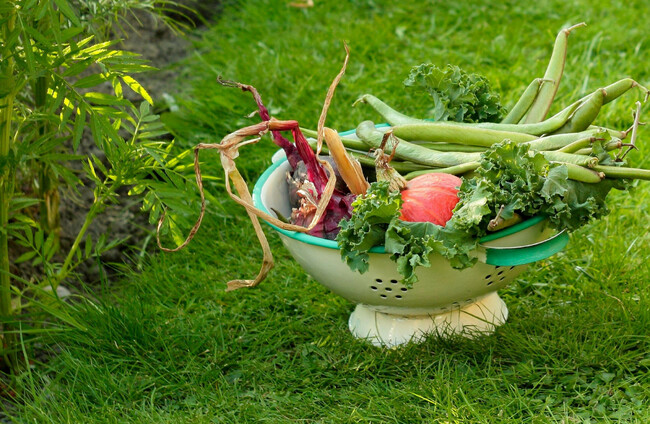
Exposure to ultra-processed foods have loaded our bodies with products we were not designed to consume. Alamy Stock Photo

Opinion The relationship between farming and pharma is closer than you might like

We’re a long way from the locally grown, nutrient-dense foods that previous generations grew up on, writes Pippa Hackett.

“LET FOOD BE thy medicine and medicine be thy food,” said the ancient Greek physician Hippocrates around 400 B.C.

Age-old advice we really should take heed off in a modern world that sees nano-plastics in our brain, pesticides in our urine, and forever chemicals in our EU leaders… we really are what we eat.

It’s welcome to see the growing interest (or should that be ‘growing concern’?) about the relationship between human health, food, and a healthy natural environment, because they are all intrinsically linked.

Politicians rarely make the link between farming and pharma, but the food we eat and the lifestyles we live determine much about how that food is grown and produced and thus what our later lives will look like.

We are what we grow our food in

The recently published and second of the EAT Lancet Reports included a new category on “Novel Entities” – chemicals that can remain in our soil, air and water, in all ecosystems in fact, as well as in human blood. 

They are accumulating faster than we can manage.

Entities like pesticides and anti-microbials, which are overused and becoming increasingly ineffective. Entities used predominately in the agricultural setting.

Modern agriculture has created many soils so dysfunctional that they are only able to grow crops because of chemicals in the form of fertilisers and pesticides. Mother Nature oppressed right under our feet.

And when you consider that many of the world’s anti-microbials are derived from the soil, and that soil health is degrading across the world because of modern farming processes, then adopting agricultural practices that restore soil to a healthy state is even more essential.

Healthy soil, alive with microorganisms such as bacteria, fungi, protozoa and viruses, is the most fundamental building block of a healthy wider ecosystem, and for growing wholesome crops for agricultural production.

We are sadly a long way from the locally produced and nutrient dense foods previous generations and indeed our distant evolutionary cousins were raised on.

Overprocessed

Our now daily exposure to unhealthy ultra-processed foods – such as fast food, ready meals and snacks – has loaded our bodies with nutrients we were not designed to consume, and has created a population that is obese and unwell.

It has also driven an agricultural model that pushes our finite land base more and more to produce commodities and products rather than healthy food.

By devaluing food and how it is produced and processed, we devalue human health and the health of our natural world.

I think it’s fair to say that the current food system is a lose-lose for nature and for human health, but a big win-win for the economy and those businesses which profit from producing and selling these ultra-processed foods which make people unhealthy.

But does our government really care? Because when you operate under the premise that the economy is really all that matters, then things like soil health and forever chemicals drift into the background of insignificance, as do the increased incidence of lifestyle induced diseases such as obesity, diabetes, and cardiovascular disease.

Because once we can “fix” the problem with some economically beneficial agrochemical or pharmaceutical, then there is really nothing to worry about, is there?

Healthy food for a healthy us

Ireland spends close on €30bn a year on healthcare, a figure expected to rise in line with our ageing and unhealthy population.

So the big question is: how do we balance the need to have healthier populations of people and healthier natural environments, with a healthy economy?

Hard to do when you want farmers to spend as much as they can on inputs, food outlets to buy as much produce as they can, and people to consume as much as they can, all in the name of healthy economy.

For example, if we were to remove the need for life-extending medications and hospital stays for chronic illnesses by eating better food and taking more physical activity, then how might we justify the possible reduced workforce and revenues in those sectors as a result?

Is it in fact possible to reverse engineer out of this vicious circle of environmental and human ill-health when too much of our focus is on the health of the economy?

Many individuals make positive decisions every day in their lifestyle choices and the foods they choose to put on their plates, so it can be done. But how to bring it to the masses?

For me, as a farmer, that begins inside the farm gate by nurturing and regenerating the soil. This not only supports a healthier natural environment; the crops, swards, and animals produced on it require fewer, if any, agrochemical and pharmaceutical inputs (while saving farmers money).

And by producing healthier food, the potential for a healthier population is supported.

Because as we all know, your health is your wealth – time the government took note.

Pippa Hackett is a former Green Party Minister of State in the Department of Agriculture, Food and the Marine. She has a PhD and runs a farming and bloodstock enterprise with her husband in Co Offaly.

Readers like you are keeping these stories free for everyone...
A mix of advertising and supporting contributions helps keep paywalls away from valuable information like this article. Over 5,000 readers like you have already stepped up and support us with a monthly payment or a once-off donation.

View 16 comments
Close
16 Comments
This is YOUR comments community. Stay civil, stay constructive, stay on topic. Please familiarise yourself with our comments policy here before taking part.
Leave a Comment
    Submit a report
    Please help us understand how this comment violates our community guidelines.
    Thank you for the feedback
    Your feedback has been sent to our team for review.

    Leave a commentcancel

     
    JournalTv
    News in 60 seconds