Sign in. It’s quick, free and it’s up to you.
An account is an optional way to support the work we do. Find out more.
Sign in. It’s quick, free and it’s up to you.
An account is an optional way to support the work we do. Find out more.
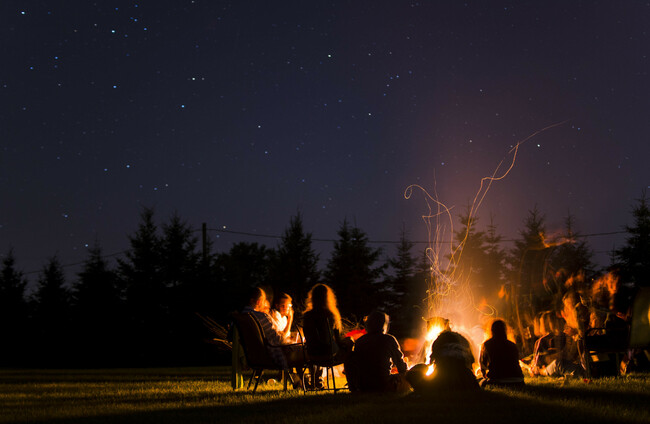

LATELY I’VE BEEN surrounded by ghosts. I’m not talking about metaphorical spirits, or even haunting thoughts swirling through my head as I try to get to sleep at night. And I’m not referring to people absentmindedly or pointedly failing to text me back.
No, I mean real ghosts, the ones that make noises, linger in the dark corners, shuffle only barely seen in the peripheral of our vision. Things that definitely do go bump in the night and question our state of mind and grasp on reality. Those are the ghosts that seem, unendingly present lately, as if summoned by a curiosity, long awakened but only recently the object of intense research and focus.
You see, I have always been fascinated by the paranormal. Some of my best memories from childhood involve searching the stacks at the library for any all ghoulish and creepy tales I could find.
I filled my break times at primary school with dramatic retellings of these stories; small, pocket-sized treasures I could share like sweets with my friends. We would return to class with open eyes, ears straining, looking over our shoulders. What if there was a story here (there was). What if the old school was just as haunted, had its own spooky tales (it did, of course).
At that age, ghost stories were about possibility, unconnected to us in a real, emotional sense, and our hunger for them a type of innocence that will always, always, be lost at some point in our lives. Many are lucky to reach adulthood without that loss, without having to manage the unmanageable, without having to face death in a real way through the loss of loved ones. And many have to face it younger than they should.
When I began writing The Waters and the Wild, I knew I would be writing a ghost story. The ten-year-old in my mind longed for a creepy, shivery tale, like those whispered beneath the trees at school all those years ago. She wanted the story to be sharp, decadent in atmosphere and with a resolution that left a lingering promise of possibility, sweet and smoky, and definitely not sad. But the story itself had other ideas.
Here in Ireland, we weave our ghost stories within both our collective and personal grief. These tales abound around centers of trauma and loss, with some of our “most haunted” places intimately connected to the terrible events that took place there.
A simple Google search will lead you to the likes of Leap Castle in County Offaly, Wicklow and Kilmainham Gaols, The Hellfire Club in the Dublin Mountains, and Loftus Hall in County Wexford, just a few of our haunted spots. Look up their history and it is soon apparent just how much historical trauma is connected to them.
And while the stories are terrifying, bone-chillingly so, they are also, at their very core, heartbreaking. Even our harbinger of death, the Banshee herself, is the very personification of grief; a keening woman, weeping for the loss she precedes.
And so, the more I read, listened and researched, the more apparent it became. Ghost stories, the real ones, the ones that hold truth and possibility open-palmed for the taking, are the ones without certainty, without resolution. They are stories of loss, and sadness, but mostly they are stories of hope. The truth is, a story about ghosts is often a story about love.
We know this, all of us, even if we haven’t consciously brought it into focus.
At the height of my research, I was listening to paranormal podcasts, both Irish and International, constantly. Shows like Uncanny, Jim Harold’s Campfire and Real Life Ghost Stories, all programmes that delve into the paranormal through “real-life encounters”.
These are peoples’ stories, and yes, while some were the typical Grey Lady and Shadow Monk tales, the vast majority could be divided into two categories; stories that terrified and those that healed.
In many cases, the first category caused a trauma that left distinct scars, inflicted psychological wounds that echoed throughout their lifetime, so much so that some stories were only being told for the first time, a desperate attempt to exorcise the fear that was initially inflicted.
These accounts were and are truly terrifying and, like those memorized in childhood, hold the potential of possibility, just maybe not a possibility that anyone wants to come true.
But the second category are the stories that stick. Driving the school runs, listening to these accounts required a box of tissues and a deep breath. These are the stories that we tell so well here in Ireland, but they are not unique to us. And, if I’m honest, these are the most believable of them all. Accounts of family members visiting after they have passed, a distant laugh that sounds exactly like a mother who died years ago, warnings in dreams from loved ones, taken onboard and proved to be worth their weight in gold.
And all the small things—the flicker of lights at a certain time of day, unexplained by the electrician, footsteps climbing the stairs every night when the house is silent and asleep. A rocking chair that belonged to a beloved grandfather, slowly moving in the corner when no one is sitting in it. Could it be a draft? A passing lorry causing rumbles beneath the floor?
What about the smoke, silently lingering in one corner, where a father used to sit every morning, cigarette in hand reading the daily paper? And some of my favourites, the curling weight of a beloved pet in an empty bed, familiar paws pressed to the duvet, when that dog or cat has gone years before.
All stories have their worth, but some get overlooked in the drama of more “impressive” tales.
When I finally sat at my laptop, facing the daunting first draft, I knew that it was time for a different ghost story to be told, one that gave a nod to all those small, emotionally weighted accounts, all those hopes that there is more beyond this life and those we lose we will one day find again.
Our folk traditions and beliefs have always reserved a special place, both for the departed and the grieving, and with Samhain on the doorstep, now feels like a good time to acknowledge our connection to the ghosts that surround us.
As I write this, the evening is darkening outside my office window and the rain taps against the leaves in the forest beyond. There is a screech beyond the trees that makes my arms goosepimple and sends an icy trail down my back. I have been here long enough to recognise the cries of foxes and the sounds of deer rutting to know that this sound holds the possibility of something else entirely.
Eilish Fisher lives in a small coastal town in Co Wicklow with her husband and son. Eilish received both a Words Ireland mentorship and a full Literary Bursary Award from the Arts Council of Ireland.
Her novel The Waters and the Wild follows a girl born in Arizona who has grown up listening to stories about the Irish Sídhe from her father, and when she moves back to Ireland after her father’s death, she begins experiencing unexplainable happenings in the woods behind her house.
To embed this post, copy the code below on your site









have your say