We need your help now

Support from readers like you keeps The Journal open.

You are visiting us because we have something you value. Independent, unbiased news that tells the truth. Advertising revenue goes some way to support our mission, but this year it has not been enough.

If you've seen value in our reporting, please contribute what you can, so we can continue to produce accurate and meaningful journalism. For everyone who needs it.

Alamy Stock Photo

Ireland’s nature heroes Garden size doesn’t matter - you can do a lot with a little

You can make a difference to Ireland’s biodiversity no matter how small your patch of the world is, writes Jack Morley.

A LOT OF people believe, understandably, that if they live in a town or city and only have a small garden, a balcony, or a few pots on a windowsill, then they can’t meaningfully help Ireland reverse its biodiversity crisis. It’s an understandable assumption.

When we picture “saving nature”, we tend to imagine sweeping landscapes, vast woodlands, restored bogs, or large farms shifting to more wildlife-friendly approaches.

But here’s something we don’t talk about enough: you absolutely can make a difference, no matter how small your patch of the world is. In fact, the collective impact of thousands of small gardens, balconies, and pockets of green is arguably one of the most powerful — and most overlooked — nature restoration tools we have.

Because when it comes to biodiversity, size doesn’t matter nearly as much as connection.

There are over two million gardens in Ireland amounting to nearly 360,000 acres. That would make Ireland’s largest national park. Yes, farmers and the government are the largest individual landowners, but everyone with some outdoor space can make a collective impact.

Ireland’s wildlife faces the same problem no matter where you look: fragmentation. Our landscapes have been carved into isolated patches of green separated by roads, walls, lawns, concrete, and intensive land use. Animals, insects, and even plants struggle to move, feed, shelter, or find mates when every direction is a barrier.

They’re trapped. Not in cages but in fragments — little leftover scraps of habitat scattered across the country. A woodland here. A ditch there. A field margin, a patch of scrub, a forgotten corner of a park. These pockets still hold life, but they’re surrounded by things that might look green to us, yet are practically deserts for wildlife: gardens full of plastic grass, concrete patios, non-native ornamentals, tidy lawns cut within an inch of their life.

This is where ordinary gardens — yours, mine, balcony or backyard — become unexpectedly heroic.

Every little green space can act as a stepping stone part of a wider wildlife corridor connecting between larger habitats. A blackbird doesn’t need a forest to stop for a berry snack. A hoverfly doesn’t require an entire meadow to forage. A bumblebee queen searching for early nectar doesn’t care if the flower is in a national park or a window box. What matters is that something is there to allow them to travel through, stop for a snack, a drink or a nap.

And if every garden, courtyard, balcony and windowsill in Ireland offered just a little bit of native nature — a shrub, a native tree, a pot of Irish wildflowers, a patch of longer grass, a mini-pond — then suddenly our fragmented landscape would begin to reconnect. Wildlife would be able to travel, feed, drink, rest, and perhaps even nest.

This is how you rebuild an ecosystem: not only through big actions, but through tens of thousands of small ones. It takes both.

Reversing the biodiversity crisis will take all of us — urban and rural, homeowners and renters, balcony-gardeners and field-owners alike.

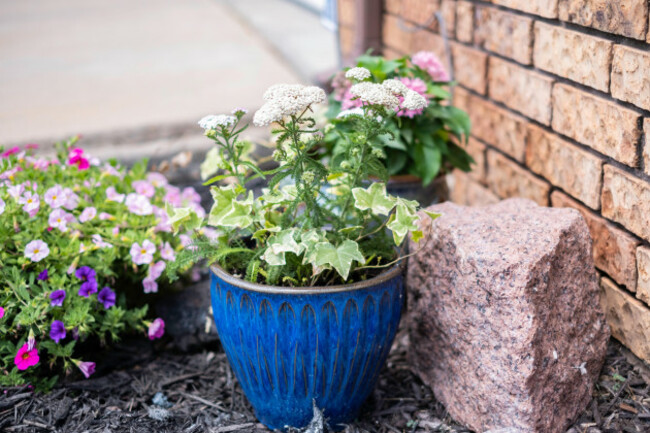
common-yarrow-achillea-millefolium-a-herbaceous-perennial-growing-in-a-ceramic-flower-pot Yarrow growing in a garden pot. Alamy Stock Photo Alamy Stock Photo

This isn’t a call to “let the whole garden go wild.” You don’t need to surrender your lawn to waist-high grass. You don’t need a woodland. You don’t need money, expertise or a huge amount of space.

We need to take pride in our native plants again and go easy on the trends of non-native palm trees and olive trees.

Here are simple, meaningful actions anyone can take.

1. Plant something native

Native plants support many times more wildlife than non-native ornamentals. They feed the insects that feed the birds that feed the mammals — the entire chain.

Here are some brilliant, Irish native options for small gardens or containers.

Trees & small trees:
  • Hawthorn (Sceach gheal)
  • Rowan / Mountain ash (Caorthann)
  • Hazel (Coll)
  • Silver birch (Beith)
Shrubs:
  • Guelder rose (Caor chon)
  • Spindle (Feoras)
  • Wild rose / Dog rose (Rós fiáin)
  • Holly (Cuileann)
Herbaceous plants & wildflowers:
  • Foxglove
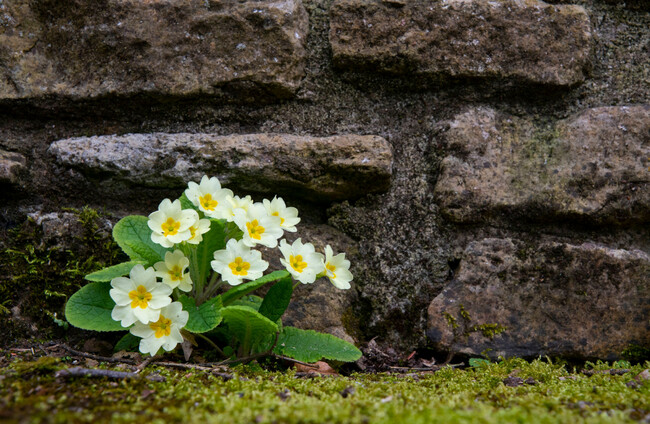
  • Wild primrose
  • Red campion
  • Ox-eye daisy
  • Devil’s-bit scabious
  • Yarrow
  • Yellowrattle

Even one pot of native wildflowers on a balcony can feed dozens of pollinators.

2. Let the ivy grow — at least on one wall

Ivy is one of the most important wildlife plants in Ireland. It provides autumn nectar, winter berries, nesting cover, and year-round shelter for insects. One wall of ivy can be a lifeline in an urban setting. I know, I know its controversial, but it’s really good for wildlife.

3. Let a corner go wild

Not the whole garden — just a corner, a strip, or even a single square metre. Allow the grass to grow a little longer, skip mowing for a while, and see what appears. You may be surprised by how many wildflowers emerge from the soil without any help at all.

This small act creates a home for caterpillars, beetles, solitary bees, ladybirds, and countless other tiny species that underpin the food web.

4. Create a water source

Nothing transforms a garden for wildlife — fast — like water.

A pond does not need to be large. In fact, it can be as small as:

  • a buried washing-up basin,
  • a repurposed half-whiskey barrel, or
  • a sturdy pot lined with a shallow stone for easy wildlife escape.

Even a bird bath makes a difference. Water is essential for drinking and bathing, especially in dry spells and during cold weather when natural sources freeze.

Within weeks, you’ll start seeing birds visiting, insects sipping, or amphibians exploring. A little water brings life.

One of the most surprising things about gardening for wildlife is how rewarding it becomes, very quickly.

Because once you stop fighting nature — once you allow even a small corner to breathe — wildlife shows up. And once it arrives, you can’t help but feel part of something much bigger than your own garden.

There’s genuine joy in watching a robin investigate your new shrub minutes after planting it, or spotting your first bumblebee queen of the year on a native flower you grew from seed. Seeing frogs appear in a pond the size of a basin. Finding an orchid in your lawn that has been waiting years and years to come up but kept getting mowed. Realising your patch is now part of a chain helping wildlife move through your neighbourhood.

And perhaps most importantly, there is meaningful pride in knowing that your tiny garden, balcony or courtyard is doing real ecological work.

Because helping nature doesn’t require perfection. It doesn’t require size. It just requires participation.

You can follow Jack Morley’s Irish nature journey on his Instagram @the_rewildlife or on YouTube @TheRewildlife. If you have land you’d like to rewild, you can learn more here: Rewildyourland.ie.

Readers like you are keeping these stories free for everyone...
A mix of advertising and supporting contributions helps keep paywalls away from valuable information like this article. Over 5,000 readers like you have already stepped up and support us with a monthly payment or a once-off donation.

View 4 comments
Close
4 Comments
This is YOUR comments community. Stay civil, stay constructive, stay on topic. Please familiarise yourself with our comments policy here before taking part.
Leave a Comment
    Submit a report
    Please help us understand how this comment violates our community guidelines.
    Thank you for the feedback
    Your feedback has been sent to our team for review.

    Leave a commentcancel

     
    JournalTv
    News in 60 seconds