Sign in. It’s quick, free and it’s up to you.
An account is an optional way to support the work we do. Find out more.
Sign in. It’s quick, free and it’s up to you.
An account is an optional way to support the work we do. Find out more.
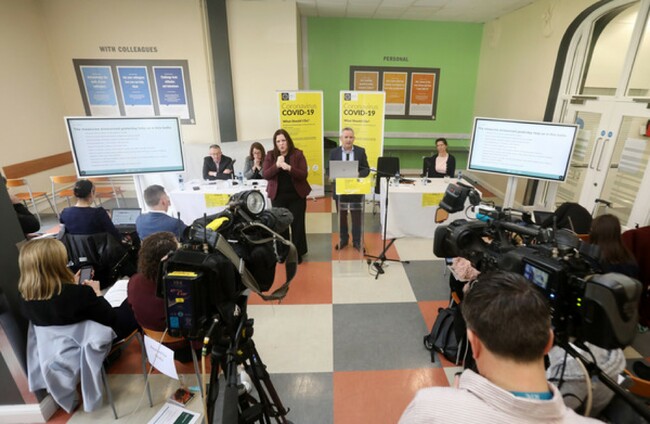

OUR NATIONAL LEADERS are to be commended for the implementation of public health policy on Covid-19, which changed public behaviours and introduced social distancing, with very positive health outcomes.
However, the management and care of our most vulnerable people in institutional care and in our communities during this health crisis will be a major benchmark of our success in fighting the Covid-19 pandemic.
In Ireland, broadly long-term institutional care is organised in three main areas: Elderly and Nursing Homes; Psychiatric facilities; Intellectual Disability.
In correspondence to the Irish Time letters (March 10), I posited the urgency of ‘risk assessment as a systematic investigation of the spread of the virus, followed by a process of maximising prevention’. Such an approach would have identified institutionalised people as a high-risk population very early on in the planning stage.
In subsequent correspondence –‘Focus on institutionalised people at risk’ (Irish Times, 4 April), I highlighted a lack of protocol and raised concerns about the unprecedented challenges of an outbreak among institutionalised people.
Meanwhile most of the daily narrative from medical experts on TV radio and newspapers, and the work of the National Public Health Emergency Team (NPHET) concentrated on acute hospital services, beds and ICU facilities, treatment and cure.
Unfortunately, much of that discussion was not relevant or appropriate to our populations in institutional care. Attention has now focused on people in institutional care following a full-blown outbreak of the virus infection and deaths in nursing homes and the recent deaths of eight people in the Maryborough psychiatric facility in Portlaoise.
The third sector of institutional care – intellectual disability – has not been in the public limelight to date and has not featured formally in terms of objective reporting from NPHET.
There is very little media reporting from newspapers or TV on intellectual disability as an area of health services delivery. Most often families, and in particular parents, feature on RTÉ’s Liveline, baring their souls to the nation with distressing stories of their lives as carers, their dependents and unsatisfactory public services.
The CSO (2016) reported that 66,611 persons have an intellectual disability, representing 1.4% of the population.
As well as intellectual disability, a majority of the people had other disabilities including; blindness deafness, physical, pain, psychological/psychiatric, and, particularly noteworthy is that 55.6% had difficulty going outside the home.
There are around 2,000 adults and children and an emerging elderly population with intellectual disability in Irish institutions and the remainder are in community settings
and the home.
Adding further to the complexity is that institutional care is delivered in different settings
including; traditional style institutions, the family home and small group homes located in the community.
Therefore, it is clear that intellectually disabled people and related services are not homogenous.
Significant to this speciality of care is that management and care be provided in accordance with individual needs and not by a label of intellectual disability.
Any comprehensive plan to prevent and manage Covid-19 must integrate institutional and community care settings. Many of the people who were attending day services and availing of respite services can no longer do so, and the total burden of care has fallen on the family member who may themselves be elderly or have commitments with younger children and distress and exhaustion quickly sets in.
What is not readily appreciated in society is that a very close affinity exists between an intellectually disabled person and their family and that closeness and intimacy brings with it many emotions and anxieties about the future and such emotions have been heightened in families during this pandemic.
In a context of this pandemic, there is very little reporting from the NPHET on happenings in intellectual disability services or indeed evidence of a national plan at either institutional or community level.
There is evidence of a lack of PPE and testing, with many staff improvising and trying to locate their own PPE. In intellectual disability services there is a heavy dependence on agency staff, who may move between locations and this was identified as a risk factor in nursing homes.
An outbreak of Corona-19 infection in intellectual disability services will present unprecedented challenges, given the institutional infrastructures and safety considerations in obtaining compliance, and maintaining a safe environment.
How will social distancing and handwashing be enforced? What criteria should be used in decision making about a person requiring general hospital or ICU care? Staff and
families must be extremely anxious.
Psychiatric and intellectually disability service have always been the Cinderella areas of health care in terms of budgeting, infrastructure, and staffing, and it is important that this malaise does not affect the provision of appropriate and equitable services for people with intellectual disability in Ireland, when diagnosed with Covid-19.
Belatedly, at this stage we need a national plan to support institutional and community care for intellectual disability services, and the following areas should be considered:
Capacity and resources are central issues in health care delivery, however failure to act in the best interests of intellectually disabled and institutionalised people will leave an indelible mark for future historians as they reflect on this period of history. It behoves us to maximise care and attention to our most vulnerable in society.
Seamus Cowman, Professor Emeritus, Royal College of Surgeons in Ireland and
former chairperson, St Vincent’s Parents Support Group. Follow him on Twitteer @scowman
To embed this post, copy the code below on your site












have your say