Sign in. It’s quick, free and it’s up to you.
An account is an optional way to support the work we do. Find out more.
Sign in. It’s quick, free and it’s up to you.
An account is an optional way to support the work we do. Find out more.


EMIGRATION HAS LONG been an integral part of Irish social and economic life.
In the face of worrying anti-immigrant campaigns, it is timely that we consider what our own history of emigration can tell us about the lives of immigrants.
A large body of Irish-language writings starkly reminds us of the self-evident but often overlooked fact that Irish emigrants, as soon as they arrived in any host country, immediately attained the status of immigrants.
Their stories, as relayed in autobiography and fiction, poetry and song, serve as personal testimonies that could inform our understanding of immigration in Ireland and lead to greater tolerance and empathy.
The challenges of immigrant life are often foregrounded in literary works. These include experiences of displacement, homesickness, culture shock, language difference, poor living conditions, precarious employment, hostility of the host community, social marginalisation and alienation.
Pádraic Ó Conaire’s novel Deoraíocht (1910) is set in London, where Ó Conaire worked for fifteen years with the British Education Board. The novel tells the story of an economic migrant from Galway, Micil Ó Maoláin, who is left disfigured and disabled after an automobile accident.
When he can’t secure conventional employment, he becomes a performer in a travelling show, where his disability is cruelly exploited. Befriended by factory worker Mag Mhór, he finds a sense of community in the bars frequented by sailors, vagrants and other disaffected emigrants.
The hybrid culture he encounters amongst the Irish community in London’s ‘Éire Bheag’ does not sustain him, however, and he ends up amongst the beggars and social outcasts who frequent London’s public parks.
Images of unfortunate and destitute Irish immigrants recur throughout the decades and certain motifs appear regularly:
The battered suitcase, the hobnail boots, the greedy contractor, the stingy landlord, the overcrowded lodgings, the heavy drinking, the park benches.
Emigration of the 1990s features in works such as Áine Ní Ghlinn’s poem sequence ‘Páidín’ from her collection Deora nár caoineadh / Unshed tears (1996) that depicts a young Irish man sleeping rough behind Waterloo Station in London, and Gearóid Mac Lochlainn’s ‘Paddy’ from his collection Na Scéalaithe (1999) which laments the suicide of a young Belfast man in London and links the Irish immigrant experience to that of other ethnic groups, specifically mentioning the Jamaican, Indian, Jewish and Scottish communities.
Questions relating to personal choice or necessity feature in all migration narratives. Though we associate Kerry storyteller Peig Sayers with traditional Irish life and culture, given a choice she would have emigrated to America.
In her autobiography Peig (1936) she describes the departure of her closest friend Cáit Jim Ní Bheoláin and her expectation that Cáit Jim would in due course send her the necessary passage money. She knew that that was not to be when she received a letter from Cáit Jim explaining that she had injured her hand and was out of work.
With her dreams of America shattered, Sayers chose marriage to an islander and its associated displacement over her only other option: a return to a life in hired service. She later saw the departure one after another to America of her own children, which she experienced as a painful separation.
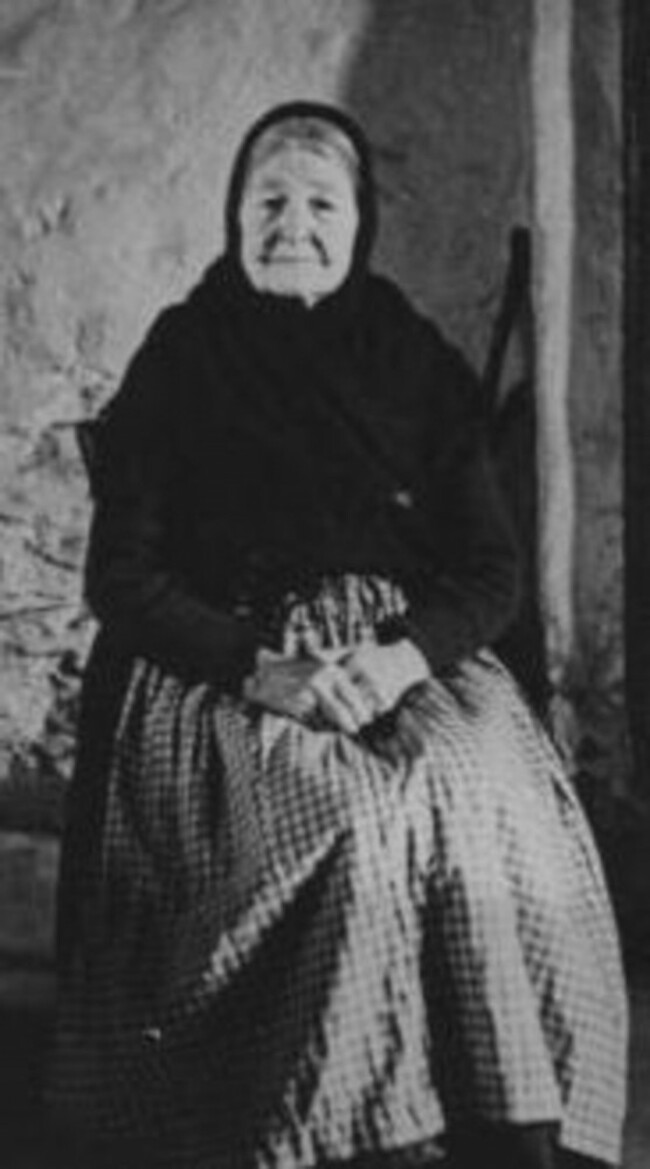
The inter-generational drama of an American Wake is enacted in Máirtín Ó Cadhain’s story ‘An Bhliain 1912’ (1948). The sorrow of a Connemara mother at the imminent departure of her eldest daughter is juxtaposed with a counter-narrative of youthful liberation as the young woman eagerly anticipates her new life in America.
For Donegal native Micí Mac Gabhann, whose late nineteenth-century experience is recounted in Rotha Mór an tSaoil (1959), choices were few. Left fatherless at the age of eight, he spent six seasons as a child labourer on east Donegal farms followed by seasonal emigration to Scotland at the age of fifteen.
After five seasons of hard labour, poor pay and working conditions, including open hostility and aggression towards the Irish, he emigrated to America in 1885. He lodged with relations in Bethlehem, Pennsylvania and remained among the Irish community when he travelled west to work in the copper mines of Butte, Montana.
His epic journey in search of gold in Klondyke is a story of endurance and survival in extreme conditions. The importance of group solidarity is emphasised but also the threats and challenges of a hostile physical and social environment.
Stories of economic emigration continue into later periods and autobiographical and fictional examples by Gaeltacht authors present emigration to England or North America as something inevitable or accepted, but not always permanent.
Their accounts bring us into the heart of Irish immigrant communities in cities such as London, Chicago and San Francisco.
The importance of Irish music and song, and the role of dance halls and pubs, in maintaining a sense of immigrant identity and solidarity are regularly acknowledged.

Questions of choice and lack of choice pervade the work of Dónall Mac Amhlaigh, whose Dialann Deoraí (1960) is a unique first-person account of the working conditions and social life of Irish working-class men in 1950s Britain.
To fully understand the importance of Mac Amhlaigh as a chronicler of Irish immigrant experience, however, his other writings should also be acknowledged, especially the novel Deoraithe (1986), translated by Mícheál Ó hAodha as Exiles (2021), and the scores of newspaper and journal articles he published in English and Irish from the 1960s through to the late 1980s.
Deoraithe includes the story of Connemara woman Nano who has chosen to emigrate for personal reasons but is now challenged by different social mores. She is nervous and ambivalent at the prospect of pursuing new relationships and fearful that she has made the wrong decision.
She meets Lithuanian immigrant Julius (one of the many postwar ‘displaced persons’ from eastern Europe employed by the hospital where she works) and their blossoming love affair is dealt with by Mac Amhlaigh with great empathy and sensitivity.
Mac Amhlaigh’s journalistic work regularly addressed the reality of living in a multi-ethnic society and he was not afraid to challenge racial prejudice and oppose racist behaviours, including examples of racial prejudice within the Irish community.
Similarly, Kerry author Maidhc Dainín Ó Sé, in his autobiographical A Thig ná Tit Orm (1987), describes the emergence of the Black Civil Rights movement and the impact of racial tensions in Chicago on his family and work life. Ó Sé, who was supportive of the Civil Rights movement, explains how his decision to return with his family to Ireland in 1969 was precipitated by street violence and workplace intimidation over which he had no control.
The Irish diasporic experience is increasingly one of living between two countries and belonging to two places.
This is reflected in more recent narratives of Irish emigration which focus on the interculturality of Irish people settled abroad and the importance of maintaining and supporting transnational kinship and community networks.
If Irish experiences abroad were to inform responses to immigration in Ireland, then current debates would be focussed more on understanding each other’s cultures than on ethnonationalist claims: the conditions that we would wish for our emigrant friends and relatives, we would also wish for our immigrant neighbours.
Literary sources cannot provide a blueprint for government immigration policy, but they do serve as reminders of the lived reality of immigrant life and the urgent need for compassionate and constructive societal responses.
Máirín Nic Eoin is Emerita Professor of Irish at Dublin City University. With Aisling Ní Dhonnchadha, she compiled the anthology of emigration literature, Ar an gCoigríoch: Díolaim Litríochta ar Scéal na hImirce (2008). She is taking part in the IMRAM Irish language literature festival, which is running until 23 November.
To embed this post, copy the code below on your site













have your say