Sign in. It’s quick, free and it’s up to you.
An account is an optional way to support the work we do. Find out more.
Sign in. It’s quick, free and it’s up to you.
An account is an optional way to support the work we do. Find out more.

LAST UPDATE | 16 Jul
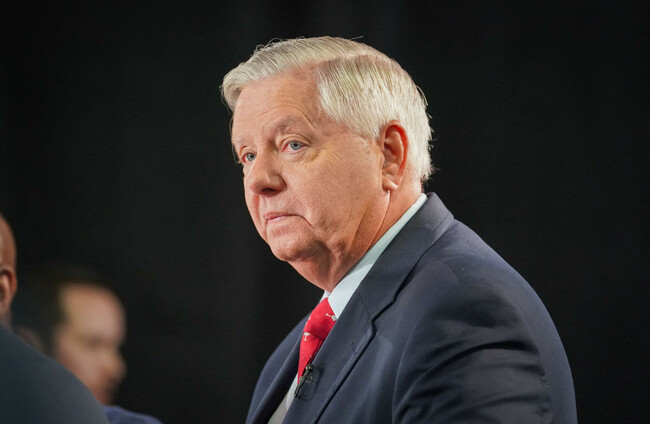
IT’S AN IRONY that Lindsey Graham might have appreciated. While everyone on Capitol Hill and beyond was fixated on the Mitch McConnell ‘is he dead/alive/brain-dead and can we just make sure he hangs on until 3 August’ nail-biter, the 71-year-old South Carolina senator provided a welcome distraction – for McConnell at least – with his sudden death.
You might even say he did McConnell, his former longtime Senate buddy a final favour by shifting the media glare and increasingly trenchant proof of life demands away from the ailing Kentucky Senator.
Graham never missed an opportunity to hog the headlines or ingratiate himself with a reporter.
His quicksilver persona – mischievous, gossipy and garrulous – belied a self-serving ruthlessness that invariably placed self-promotion over substance, political expedience over principle.
By his own account, he learned the value of a friendly demeanour and a ready quip at an early age, growing up in a dive bar and pool hall in a working-class town in South Carolina. “If you kept ‘em laughing, you’d keep ‘em drinking.” As a politician he was always happy to sing for his supper, provided it came with a seat at the best table.
In his pre-Trump iteration, Graham was one of the most popular figures in the Senate and one of the most bipartisan. He counted Ted Kennedy, Joe Biden, Joe Lieberman, Chris Coons and half a dozen other Democratic Senators as friends. In the early mid 2000s, he and his close friend and mentor John McCain supported attempts to pass legislation on traditionally liberal issues like immigration and climate change.
He was a fixture at every Capitol Hill gathering of import, Republican or Democrat. The first time I met him, during a reception hosted by Ted Kennedy, then the most powerful Senator on Capitol Hill, he insisted that I call him Lindsey. He looked around and spotting John Kerry nearby, leant in and confided with a chuckle; “now that one over there, even his own family has to call him Senator.”
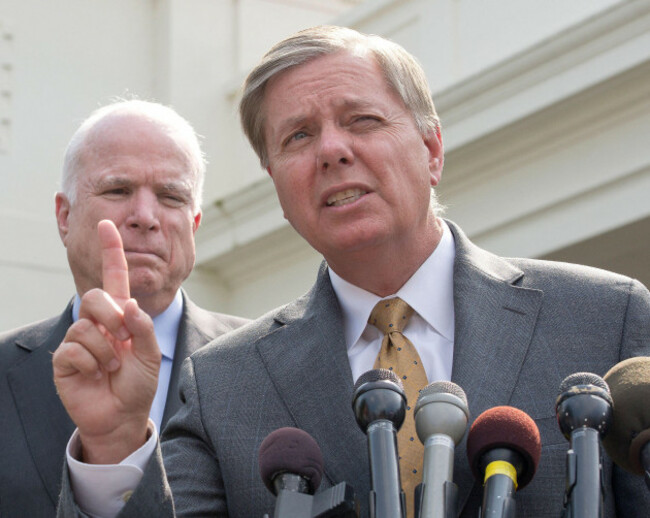
Always anxious to burnish his credentials as a foreign policy wonk and statesman, he underscored his support for the Northern Ireland Peace Process during every conversation. He never joined the bipartisan Friends of Ireland congressional caucus, and like McCain, he initially opposed granting a visa to Gerry Adams. But he voted to support initiatives like the International Funds for Ireland and in 2023, he co-led a bipartisan Congressional delegation visit to Ireland.
When I ran into him on Capitol Hill prior to the 2009 Obama Inauguration, he waxed lyrical about his close friendship with Joe Biden, suggesting that he was responsible for ensuring that Biden’s son Beau, who was stationed in Iraq, was granted permission to travel home to witness his father being sworn in as Vice-President.
Months after his eldest son’s death from brain cancer, Graham became visibly emotional during a Huffington Post interview as he spoke of their friendship. “If you can’t admire Joe Biden as a person, then you’ve got a problem. You need to do some self-evaluation, ’cause what’s not to like? … He’s the nicest person I think I’ve ever met in politics. He is as good a man as God ever created.”
Such misty-eyed professions of affection didn’t prevent him from going all out in his attempts to subvert Biden’s 2020 election victory at Trump’s behest.
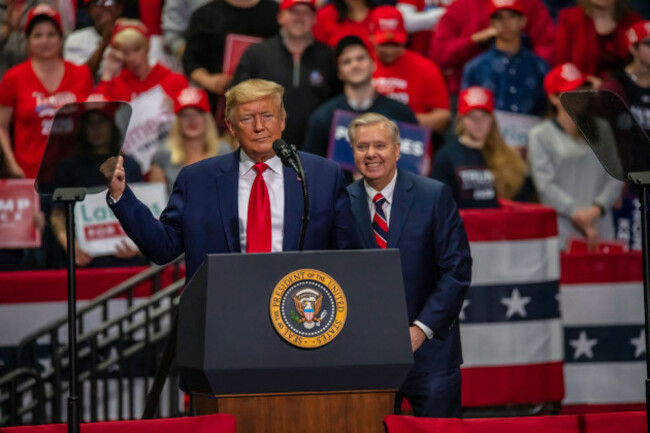
But he continued to play both sides, often mocking Trump in conversations with reporters and gaining a reputation as an inveterate leaker of White House scuttlebutt. On the evening of the January 6th attacks, their relationship appeared to rupture. ‘Enough is enough. Count me out,’ he declared from the Senate Floor.
According to Trump, Graham phoned him 40 minutes later to mend fences. When I saw them weeks later at the right-wing CPAC convention in Florida, they appeared to be inseparable.
In the interim, Republicans who sought to hold Trump to account would be purged from the ranks of power. Graham justified the U turn with a simple calculus. “I’ve always liked Liz Cheney, but she’s made a determination that the Republican Party can’t grow with President Trump. I’ve determined we can’t grow without him.”
In retrospect, it seems the only constant in Graham’s three-decades long political career was his craving for proximity to power. He has been described – harshly but accurately – as the ultimate political pilot fish. Small, effete and obsequious by nature, he invariably latched onto the emerging apex predator in Washington DC’s treacherous waters.
He attached himself to McCain, a principled Republican maverick, when he arrived in the Senate in 2003. McCain was an alpha male, a former Vietnam POW whose 2000 bid for the GOP nomination and rapid-fire banter aboard his Straight Talk Express made him a media darling. He lost to Bush but Graham, correctly predicting that he would be the next GOP candidate, hitched himself to McCain’s wagon.
What he hadn’t reckoned on was the public volte face on the war in Iraq or the implosion of the US economy on Bush’s watch. Or that McCain, who could credibly claim distance between himself and the Bush administration, would be no match for the Democrat’s newly minted political phenomenon.
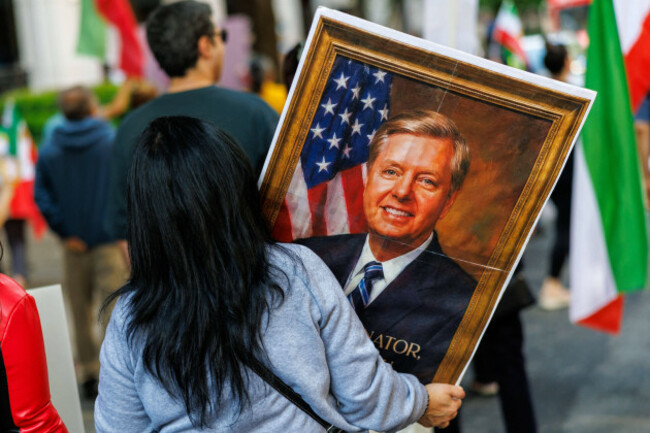
With McCain back in the Senate, Graham resumed his role as his indispensable sidekick, faithfully mirroring his mentor’s positions as a military hawk and social moderate. When Trump first threw his hat into the GOP ring in 2015, both men expressed their disdain for the belligerent New Yorker’s openly racist platform. When Trump first turned on McCain, mocking his war record, Graham was outraged. He famously warned in 2016 that ‘if we nominate Trump we will get destroyed… and we will deserve it.’
But when it became clear the axis of power in the GOP had shifted rightward, Graham shifted too, pledging his support for Trump after a game of golf and fuelling a frenzy of speculation as to his motives.
No one has been able to fully explain the origin story of his Faustian pact with Trump. Did he simply believe that jettisoning principles and friendships was a price worth paying to achieve overarching goals? That he was gay was an open secret on Capitol Hill, but he may have feared that Trump, who had an unerring ability to hone in on an opponent’s weak spot and exploit it to the maximum, would seek to humiliate him by outing him. His best defence may have been to ensure Trump regarded him as an indispensable ally.
While he always denied that his transfer of loyalty ruptured his friendship with McCain, the froideur during the Arizona Senator’s final months was evident from the Senate Press Gallery. Graham was no longer a fixture of the bipartisan huddle. Before McCain died from brain cancer in 2018, he chose Joe Biden to deliver the main eulogy while Graham was relegated to a bit part role.
Foreign policy remained his preferred arena of choice, even though his hawkish interventionism initially found few supporters in the Trump White House. A longtime friend and supporter of Israeli Prime Minister Benjamin Netanyahu, he was an early champion of the decision to move the US Embassy to Jerusalem and urged Trump to turn a blind eye to the acceleration of illegal settlements in the West Bank.
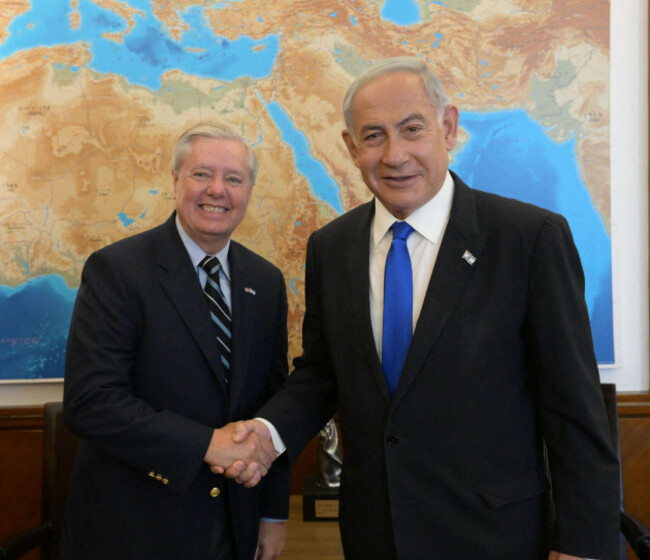
Following the Hamas attack of 7 October 2023 and the slaughter of almost 1200 Israeli citizens, he was a vociferous and unyielding supporter of Israel’s prosecution of the war in Gaza, blaming the deaths of tens of thousands of Palestinian civilians and the humanitarian crisis caused by Israeli siege and displacement tactics entirely on Hamas.
He was one of the main supporters of the US-Israeli war on Iran, parroting the Netanyahu’s argument that a decisive victory could be declared within weeks, if not days.
For all his self-puffery as a foreign policy wonk and elder statesman, his record is littered with miscalculations and no tangible successes; bookended by his support for the wars of choice in Iraq and Iran. His decades of globe-trotting and photo ops have likewise yielded few discernible benefits to the US or its allies.
His commitment to Ukraine didn’t prevent Trump from ending US funding and shifting to a pro-Putin narrative. After the last year’s infamous White House ambush of Ukrainian President Volodymyr Zelenskyy, Graham declared he ‘had never been more proud of Trump’. Zelenskyy, he said, ‘either needs to resign… or he needs to change.’
His death occurred hours after a visit to Ukraine that followed Trump’s public détente with the Ukrainian leader at the NATO summit.
His final reported remark is one of characteristic hubris. “I can’t die now. I still need to do the Russia sanctions, get Iran sorted out and do Israeli-Saudi normalisation.”
Given his record, it’s unlikely he would have achieved any of his goals.
Marion McKeone is an award-winning journalist, writer and documentary maker.
To embed this post, copy the code below on your site














have your say