Sign in. It’s quick, free and it’s up to you.
An account is an optional way to support the work we do. Find out more.
Sign in. It’s quick, free and it’s up to you.
An account is an optional way to support the work we do. Find out more.
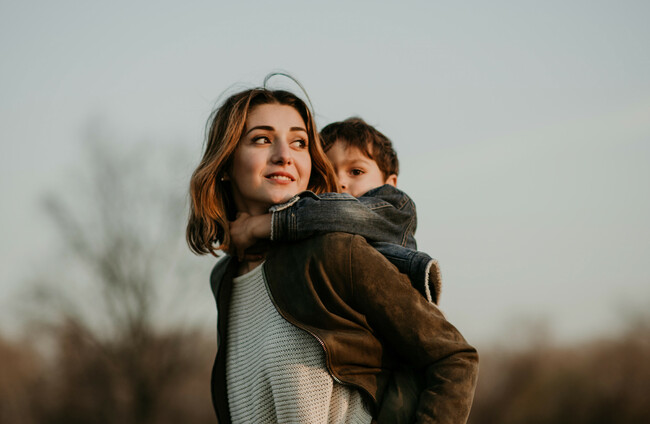

MOTHER’S DAY ARRIVES with its usual trappings: pink-hued advertisements, pre-written messages of gratitude, flowers ordered in haste.
It is a day meant to honour, but it often flattens, reducing something vast and intricate into a singular, sentimental note. Motherhood, in all its forms, refuses such easy containment. It is a shape-shifter — expanding, contracting, dissolving, resurfacing. It is a force that is both intimate and political, held within the body, but also written across history, policy and culture.
To mother is to bear witness. To be a mother, to have a mother, to lose a mother, to reject or long for motherhood — all of these experiences tether us to something deeper than biology. It is to be inextricably bound to another, through birth, through care, through something as ephemeral as memory. It is to hold and to be held, to let go and to be let go of, again and again. But in a world that prizes productivity over care, that measures worth in efficiency rather than tenderness, mothering is too often sidelined, unspoken, made invisible.
Motherhood is also a site of power, of resistance. It is a force that states and institutions seek to control, whether through reproductive laws, economic policies, or the policing of bodies and borders. The question of who gets to mother, under what conditions and with what support, is a question of justice. And yet, too often, the work of mothering — its exhaustion, its quiet triumphs, its sheer persistence — goes unseen, unrecognised, unpaid.
And then there is grief. The grief of losing a mother, of being estranged from one, of longing for a child, or for a version of motherhood that never materialised. The grief of watching a child grow away from you, of failing, of struggling, of reckoning with the ways motherhood remakes and undoes a self. To mother is to experience a thousand tiny deaths, and to love through them anyway.
But motherhood is more than just a personal experience. It is political, historical and cultural. It carries the weight of expectation and myth, of labour both seen and unseen, of stories too often left untold. In Ireland, it is impossible to speak of motherhood without speaking of history — without looking at the Magdalene Laundries, the industrial schools, the babies lost in Tuam.
It is impossible to speak of motherhood without speaking of the abortion referendum, without acknowledging the women forced onto planes to access medical care, or the collective reckoning that came when the country finally said ‘enough’. And it is impossible to speak of motherhood without conjuring the image of the ‘Irish Mammy’—both venerated and burdened, celebrated for her sacrifices, but often expected to give too much.
This Mother’s Day, as bouquets of flowers are bought and cards signed, perhaps it is also a time to sit with the contradictions of motherhood: its joys, its griefs, its impossible demands, its quiet revolutions.
Long before motherhood was institutionalised, before it was tethered to marriage, law, and economy, it was something closer to myth. In ancient Ireland, the land itself was imagined as mother, a source of abundance, of fierce protection, of life-making and loss.
Manchán Magan, in Listen to the Land Speak, reminds us that rivers were seen as goddesses, that cairns and caves mirrored wombs, that the earth was not property but kin. Before the incursions of empire and Christianity, before the enclosure of land and of women’s bodies, mothering was sacred, both human and more-than-human.
And what does it mean that this mythology has been lost, overwritten, or turned into folklore without consequence? What happens when we reimagine mothering not as a duty or a burden but as an act of creation — of relationships, of memory, of resistance?
Motherhood in Ireland has long been entangled with institutions of control. The industrial schools, the Magdalene Laundries, the mother-and-baby homes — these were places where unmarried mothers were hidden away, their children taken from them, their labour exploited under the guise of moral correction.
These institutions, run with the sanction of both Church and State, reinforced the idea that motherhood outside of marriage was something to be ashamed of, something to be punished. The women who lived through them, many of whom still seek justice today, carry the scars of a society that saw them as less than human.
Even for those outside such institutions, the role of mother was narrowly defined. Enshrined in Ireland’s 1937 Constitution, Article 41.2 declared that a woman’s place was in the home, that her ‘duties’ as a mother were essential to the common good. While this article has been widely criticised — and moves have been made recently toward its removal — its legacy lingers. The undervaluing of care work, the expectation that women will shoulder the burden of domestic labour, the slow progress on affordable childcare — these are all echoes of an ideology that continues to shape Irish motherhood today.
Motherhood is also a site of struggle, of activism, of hard-won rights. The fight for reproductive justice in Ireland, culminating in the 2018 repeal of the Eighth Amendment, was in many ways a fight about motherhood: about the right to choose it, to refuse it, to survive it. It was a recognition that forcing women into pregnancy was an act of violence, and that true maternal care cannot exist in a system that denies women autonomy over their own bodies.
This is not just an Irish story. Around the world, motherhood is being reshaped by technology, policy and shifting social norms. Advances in reproductive technologies raise new questions: What happens when gestation itself is outsourced, when artificial wombs and ‘bio bags’ become a reality? The Pod Generation, a film directed by Sophie Barthes, imagines a near future where pregnancies can take place in sleek, corporate-sponsored pods, allowing mothers to ‘balance’ career and family without the inconvenience of carrying a child.
But what does it mean to take the body out of the equation? What is lost when pregnancy, with all its trials and transformations, is treated as another task to be delegated? Will we continue to devalue the physical labour of pregnancy and childbirth, treating it as something to be bypassed rather than honoured? In many ways, the future of motherhood is a battleground — between those who see it as sacred and those who see it as merely another process to be optimised.
I have been blessed with the kindest of mothers — “our mother is a saint” has been the refrain among my siblings for as long as I can remember. She is the steadying hand, the quiet certainty, the one who makes the world feel gentle even when it is anything but. I have also been gifted with a mother-in-law who sings joy into a room, who reminds me that mothering is not just sacrifice but also celebration, a kind of music in the everyday.
And then there are the other mothers — the aunts who mothered me in ways only they could, the Aboriginal Australian mothers who took me in, who shared stories and wisdom that stretched far beyond my own understanding, who showed me how mothering is as much about land and legacy as it is about love.
There are the friends who became mothers before me, their hands outstretched in welcome, and the ones who have never given birth but who mother in ways more profound than language allows. There is my younger sister, who is somehow older in the way she cares, in the way she gives.
And, of course, there are grandmothers — the ones who carried the weight of mothering twice over, who step in when the world offers no support, who fold themselves into the fabric of daily care so seamlessly that we forget the depth of their labour. Grandmothers carry not just children but entire histories, stories passed down in glances, in meals made without request, in hands that are always reaching for someone else.
Motherhood is not a singular act, but a chorus. It is a web of care, stretching across time, across distance, across blood and beyond it. It is the mothers we are born to and the mothers we gather along the way. It is the people who hold us when we need holding, who remind us who we are, who mother even when they are tired, even when the world does not make it easy. It is the work of tending, of witnessing, of staying — of carrying and being carried, again and again.
And then, there is the ‘Irish Mammy’— that ubiquitous figure of warmth, wit, and unwavering devotion. She is immortalised in tea towels and comedy sketches, invoked with both fondness and frustration. She is the mother who puts everyone before herself, who worries, who loves fiercely, who wields guilt like a finely honed weapon.
But the Irish Mammy is also a product of necessity. She exists in a society where state support for families has often been lacking, where maternal sacrifice has been expected, where women have had to hold everything together with little in the way of structural help. The reverence for her is real, but so too is the exhaustion that comes with it.
Perhaps the greatest tribute to the Irish Mammy is not another joke or a nostalgic nod, but real structural change — better childcare, stronger parental leave policies, a recognition that care work is work. If we truly value mothers, we must do more than just celebrate them once a year.
Motherhood is not one thing. It is delight and despair. It is chosen and unchosen. It is an inheritance, a negotiation, a reckoning. It is a relationship that can be sustaining or wounding, or both. It is the deep breath before a birth, the silent grief of a loss, the slow unfurling of love over decades. It is held in the rituals of everyday care — rocking a child to sleep, whispering reassurance in the dark, leaving the porch light on for a teenager who is still learning the shape of freedom.
But it is also found in the absences, in the ache of what was never offered, in the longing for a mother who is gone or was never quite there in the way we needed. It is in the weight of expectation placed upon women, in the unpaid labour, in the unspoken sacrifices, in the exhaustion that is treated as inevitable. It is in the fight for autonomy, for dignity, for the right to mother on one’s own terms — or not at all.
This Mother’s Day, perhaps the greatest gift we can give is not just gratitude, but an honest conversation about what it means to mother — to love, to grieve, to care, to demand more. To recognise that mothering, in all its forms, is a radical act of tending to the world, and that such work deserves more than sentiment — it deserves justice, support, and reverence.
Because if mothering is a door into our humanity, then surely, we owe it more than flowers.
Dr Fiona Murphy is an anthropologist based in the School of Applied Language & Intercultural Studies at Dublin City University.
To embed this post, copy the code below on your site











have your say