Sign in. It’s quick, free and it’s up to you.
An account is an optional way to support the work we do. Find out more.
Sign in. It’s quick, free and it’s up to you.
An account is an optional way to support the work we do. Find out more.
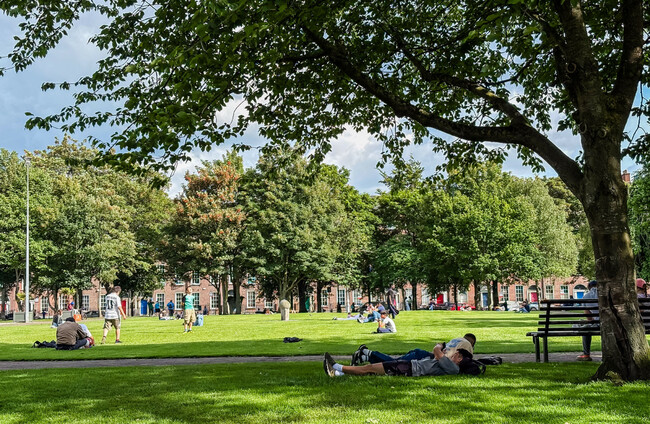

LAST UPDATE | 19 May
DUBLINERS SEEM TO hold a lot of negative sentiment towards Mountjoy Square. It receives a lot of flak, perhaps as an extension of prejudices towards the north inner city more generally. But I am not alone in viewing it as a critical space for residents of Dublin 1.
There are, of course, parks like Blessington Street Basin (which has no grass – great for people with hay fever, I suppose) and Diamond Park (which is a fraction of the size of Mountjoy Square).
These are both fantastic spaces, but they are much more limited in how they can be used. On the south side, there’s no shortage of large, green spaces: Stephen’s Green, Iveagh Gardens, Merrion Square, Pearse Square, St Kevin’s Park and even the private Fitzwilliam Square. They’re all remarkable in their own way, but I’d argue that none of them have as much riding on them as Mountjoy Square does.
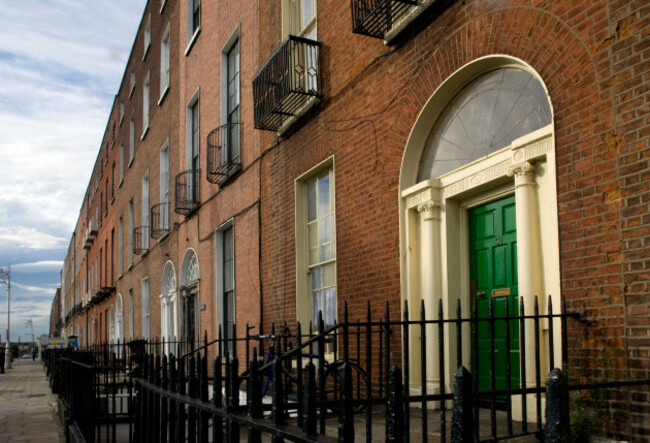
Even in its current state, ahead of the planned regeneration, Mountjoy Square is used extensively. As long as the weather’s fine, it’s rare to pass by at any time of the day and not see it in use.
As one of the very few green spaces in the north inner city where people can sit and socialise without having to spend money, it attracts a diverse selection of people, from all different age demographics.
It’s a crucial space for people who don’t have gardens, balconies or outdoor spaces in their home, and there’s no shortage of people who need this kind of space in Dublin 1. It’s one of the most densely populated areas in the country, with a community largely comprised of renters and residents who have experienced decades of disadvantage.
It’s hard to quantify this, but on a decent summer’s day, Mountjoy Square feels like it must be one of the country’s most used parks per square metre. For those who see past the reputation it has to outsiders and regularly venture inside, it’s a fairly pleasant environment, though it is still in need of love.
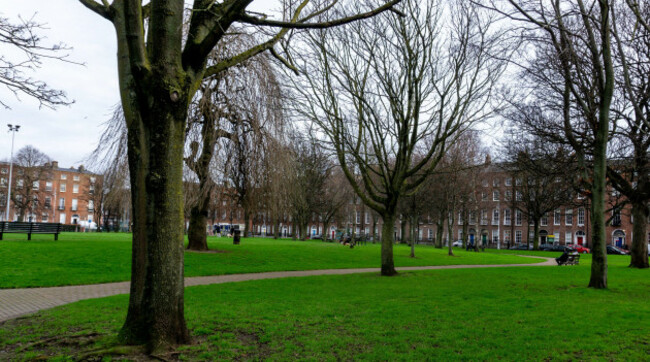
In the mornings and afternoons, it’s a space for older people to stretch their legs and get a bit of fresh air, while kids clamber all over one another in the two busy playgrounds, forging their first friendships. Residents from a broad range of backgrounds walk their dogs in and around the park, populating it with a nice mix of scrappy Jack Russells, clumsy dachshunds and the rehomed greyhounds that signal that rent increases are nigh. If you go at the right time, you’ll even see someone walking a ferret on a leash.
In the existing space dedicated to sports and fitness, teenagers and young adults mix on the basketball court, competing or spectating and sharing tips. The same corner plays host to callisthenics equipment, drawing dedicated individuals who swing by in the mornings. There are often people training with skipping ropes, presumably lacking the space to do so in their own accommodation.
Besides this, a community is created on the concrete football pitch, where 1815 FC host regular matches. Anyone is welcome to join. Besides those games, it’s not unusual to see more impromptu sessions popping up between kids and teenagers in the park.
All of these amenities aside, it’s also just a well-needed space for people to sit in the sun, reading a book or eating lunch on their break from work. After all, there aren’t many other public places to sunbathe in the sprawling concrete streets of Dublin 1.
Those who look down their noses at Mountjoy Square disregard its historical significance, too. It has sat at the epicentre of much of the city’s history, playing witness to Dublin’s development and decline.
From Georgian Dublin to the tenements, to today’s housing crisis and dereliction, the neighbourhood is a microcosm that lets us quickly glance at Dublin’s vital signs.
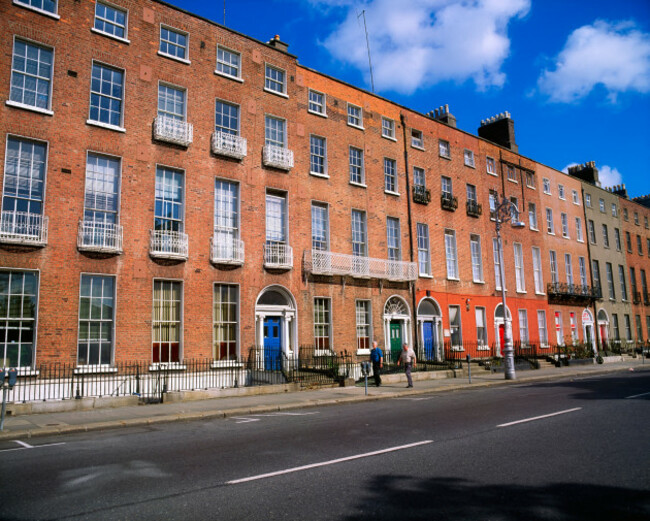
It has huge literary significance too, with the surrounding buildings previously housing Seán O’Casey and W.B. Yeats. James Joyce spent his childhood there, as did Brendan Behan, who grew up just around the corner (before ending up in Mountjoy Prison, a little further down the road). In the case of Joyce and O’Casey, it clearly shaped their perspectives of Dublin, with Belvedere, the park and Fitzgibbon Street making it into Ulysses, and the subtly titled “Hilljoy Square” making it into O’Casey’s Shadow of a Gunman.
Given the park’s proximity to Seán Love and Roddy Doyle’s Fighting Words and the Irish Writers Centre, the great Irish writers of tomorrow could well be wandering around the park as you read this.
There is little that Mountjoy Square’s naysayers and supporters share in common, except for the belief that the planned redevelopment is a positive step forward. The park definitely needs investment and updates for accessibility, so that it can continue to improve city life for an even broader range of individuals. Toilets and a decent café certainly wouldn’t go amiss. But the extent to which it’s demonised is definitely unfair.
If we were to imagine potentially losing this space, there’d be huge repercussions for everyone in the surrounding neighbourhoods. The park deserves more credit for what it currently is and how it’s already used.
Its future development will be a barometer of what we can expect this city to turn into in generations to come. At the centre of regeneration discussions, there has been temptation from the council to try and repurpose it into some kind of tourist attraction, eating away at space that could be used for sports facilities, impinging on the small bit of space that locals are clinging to as it is.
Sure, more festivals and events would be welcomed by everyone in the surrounding areas, but finding the equilibrium of the community’s unique needs, while celebrating the square’s history, should be a priority. Dublin doesn’t need another Merrion Square. We already have one.
Kelly Earley is a writer and podcaster from Coolock, who has a deep interest in culture, technology, community and social justice. She writes for The Journal every week.
To embed this post, copy the code below on your site














have your say