We need your help now

Support from readers like you keeps The Journal open.

You are visiting us because we have something you value. Independent, unbiased news that tells the truth. Advertising revenue goes some way to support our mission, but this year it has not been enough.

If you've seen value in our reporting, please contribute what you can, so we can continue to produce accurate and meaningful journalism. For everyone who needs it.

Alamy Stock Photo

Nature What has holly got to do with Christmas?

Nature expert Jack Morley explains holly’s connection to Christmas and why it’s an important plant for Irish wildlife.

EVERY DECEMBER, HOLLY appears on cards, wreaths and doorways across Ireland — but why this tree?

And what makes cuileann, as it’s known in Irish (and therefor ‘Cullen’ in names of people and places) as it’s known in Irish, so deeply tied to both our Christmas traditions and our wildlife?

The answer lies in a mix of ecology, ancient folklore, and a surprising amount of mythic drama.

A lifeline in winter for Irish wildlife

Holly’s glossy evergreen leaves help wildlife through the toughest months.

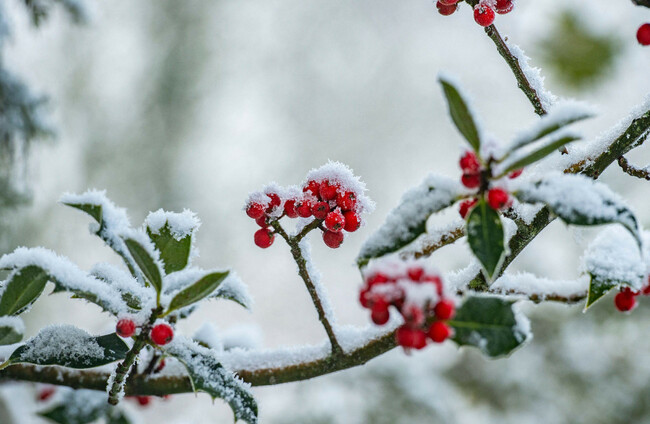
When its tiny white flowers bloom from May to August, they feed bees and pollinators. By autumn these become the familiar bright red berries — a crucial winter food source for Robins, Blackbirds, Song Thrushes, Redwings, Fieldfares, Mistle Thrushes, Blackcaps and even the occasional Waxwing.

Sheltered among the holly’s sharp branches, Wrens, Dunnocks, and Robins build their nests, safely hidden from predators. Beneath them, Hedgehogs hibernate in the dry carpet of fallen leaves. In spring, the Holly Blue butterfly relies on the tree’s flower buds to nourish its caterpillars.

Several moths—such as the yellow-barred brindle, double-striped pug, and holly tortrix—also feed on holly foliage. The leaves further sustain the larvae of the holly leaf miner fly, which leave behind their characteristic winding “mines” as they tunnel through the leaf tissue.

Holly doesn’t just look like Christmas — it keeps nature going when almost everything else has shut down.

Why are some leaves spiny and others aren’t?

Most of us learned that holly has spiny leaves low down to deter grazing animals — but that isn’t the full story.

Studies in Europe and the US have shown something more interesting: Holly produces spines in response to damage, not height.

When a leaf is nibbled by deer, livestock or even trimmed by people, the next leaves that grow are usually smaller and much spinier. If a tree is left undisturbed, it will often grow smoother leaves — even close to the ground.

This explains why holly in hedges or grazed fields is spiky all over, while holly in quiet gardens or old woodlands may be surprisingly smooth. It’s not measuring height — it’s responding to injury. A wonderfully nerdy botanical term for this is “spinescence”.

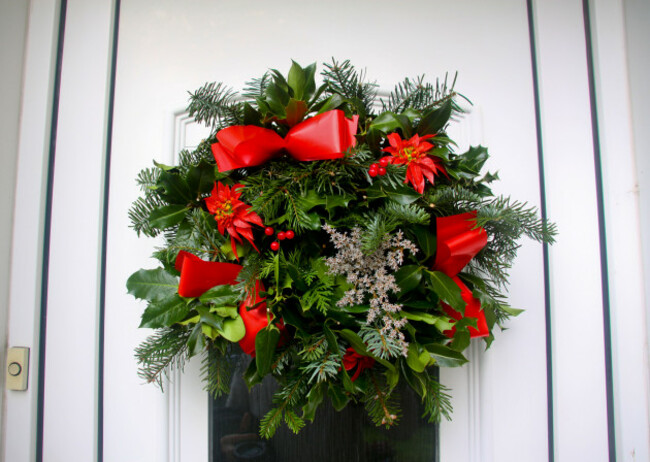
christmas-holly-wreath-on-upvc-front-door-image-shot-122013-exact-date-unknown Alamy Stock Photo Alamy Stock Photo

A tree steeped in myth, magic and tradition

Of all Ireland’s native trees, holly is among the most deeply rooted in mythology. The Old Irish considered it one of the noble trees, never to be cut down fully. Sprigs could be taken, but some people would first ask the tree’s permission and leave a piece of silver at its roots in thanks.

In ancient lore, holly played a starring role in the seasonal battle between light and dark.

At the summer solstice, King Oak lost his crown to King Holly, who then ruled the darker half of the year. When winter reached its deepest point, holly’s evergreen leaves and bright berries symbolised endurance — life holding steady against the cold.

The tree’s wood was valued too. Cú Chulainn was said to use holly for spear shafts and chariot axles; later, it became a favourite for chess pieces, inlays, tool handles and even horse whips, as holly was believed to hold sway over horses.

Its evergreen nature led the ancient Gaels to associate holly with eternity and resilience, reflected in the Ogham letter Tinne, meaning “fire” or “iron bar.” Sprigs were hung outside houses to keep away evil spirits, jealousy, and witchcraft, and some believed the scent of holly opened the heart.

Leaves from a female holly were even tucked under pillows in the hope of dreaming the future.

When Christianity arrived, holly was easily woven into new stories. Its prickly leaves became linked with the crown of thorns, and its berries with the blood of Christ. One tale says that an angel stands on every point of the leaf, and that any prayer said before a holly sprig on Christmas Eve would be heard.

Traditionally, once holly was brought into the house, it was not to be removed until Little Christmas on 6 January.

Even today, it remains one of the most recognisable symbols of the season.

Slow-growing but tough, holly thrives in hedgerows, gardens and woodlands. As a native tree, it supports far more insects, birds and mammals than imported ornamental hedges. It’s a fantastic evergreen native alternative to the scourge of invasive cherry laurel that lines many properties and spreads into our delicately balanced Irish woodlands.

Holly hedges on farms add shelter and food in winter. Garden hollies provide nesting cover and berries for wildlife. And throughout the countryside, holly helps keep biodiversity alive when it’s needed most.

Holly is much more than a festive symbol. It’s a survivor of ancient forests, a protector in Irish folklore, a winter refuge for wildlife, and a bright thread stretching from pre-Christian myth to modern Christmas traditions.

As we move through the darkest weeks of the year, the holly tree stands just as our ancestors saw it: evergreen, enduring, and full of life — a quiet guardian of winter.

You can follow Jack Morley’s Irish nature journey on his Instagram @the_rewildlife or on YouTube @TheRewildlife. If you have land you’d like to rewild, you can learn more here: Rewildyourland.ie.

Readers like you are keeping these stories free for everyone...
A mix of advertising and supporting contributions helps keep paywalls away from valuable information like this article. Over 5,000 readers like you have already stepped up and support us with a monthly payment or a once-off donation.

View 6 comments
Close
6 Comments
This is YOUR comments community. Stay civil, stay constructive, stay on topic. Please familiarise yourself with our comments policy here before taking part.
Leave a Comment
    Submit a report
    Please help us understand how this comment violates our community guidelines.
    Thank you for the feedback
    Your feedback has been sent to our team for review.

    Leave a commentcancel

     
    JournalTv
    News in 60 seconds