We need your help now

Support from readers like you keeps The Journal open.

You are visiting us because we have something you value. Independent, unbiased news that tells the truth. Advertising revenue goes some way to support our mission, but this year it has not been enough.

If you've seen value in our reporting, please contribute what you can, so we can continue to produce accurate and meaningful journalism. For everyone who needs it.

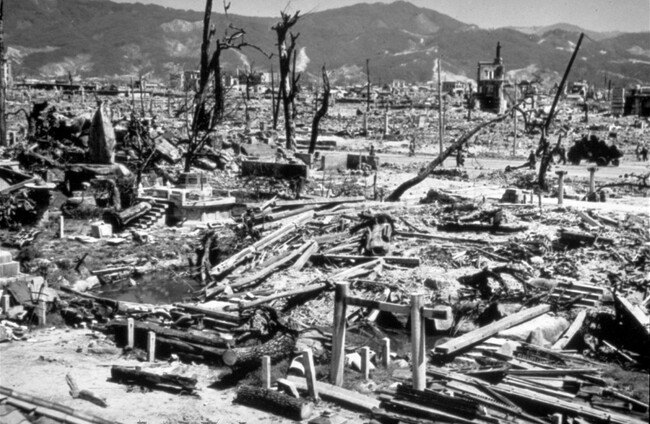
6 Aug, 1945 file photo, shows the destruction from the explosion of an atomic bomb in Hiroshima. Alamy Stock Photo

Never again 80 years after Hiroshima and Nagasaki, the world still faces nuclear threats

On the anniversary of the atomic bombs, Niall O’Keeffe of the Irish Red Cross says we cannot go backwards on nuclear weapons, we must learn the lessons of the past.

“Through months and years of struggle for survival, rebuilding lives out of the ashes, we hibakusha, or survivors, became convinced that no human being should ever have to repeat our experience of the inhumane, immoral and cruel atomic bombing.

“Our mission is to warn the world about the reality of the nuclear threat and to help people understand the illegality and ultimate evil of nuclear weapons. We believe that humanity and nuclear weapons cannot coexist indefinitely.”

(Setsuko Thurlow, 2014)

EIGHTY YEARS AGO, on the 6th and 9th of August 1945, the world knew the destructive power of nuclear weapons. The Japanese cities of Hiroshima and Nagasaki were completely wiped out by the atomic bomb.

Hundreds of thousands of people died from both immediate and long-lasting consequences, including illnesses caused by exposure to ionising radiation. Livelihoods were devastated, and the natural environment suffered great damage that impacted the well-being of generations of Japanese.

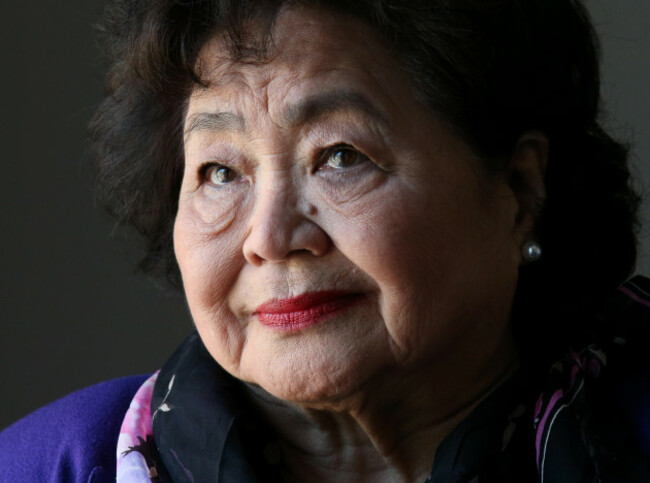
Setsuko Thurlow was 13 years old when the atomic weapon destroyed her city. That day, she became a hibakusha, a survivor. She dedicated her whole life to anti-nuclear activism, and today, at 93 years old, she is one of the last hibakusha remaining to tell this horrific story.

nuclear-disarmament-campaign Hiroshima survivor Setsuko Thurlow in Edinburgh. Alamy Stock Photo Alamy Stock Photo

After eighty years, listening to the stories of the hibakusha is more urgent and necessary than ever. It is our turn to carry on that message and make sure the world remembers long after they are gone.

Today, as we pause to remember those who lost their lives in Japan, we also reflect on the urgent need to ensure that such devastation is never repeated.

The world eighty years later — where are we now?

The bombings in Japan changed the world forever. Yet, eighty years after the atomic bombings, the world seems to be walking away from promises of disarmament. States are spending billions on modernising their arsenals.

Today, the consequences of a nuclear attack would likely be even more devastating than Hiroshima and Nagasaki. An estimated 12,000 nuclear weapons still exist in the world, the equivalent of 135,000 Hiroshima bombs.

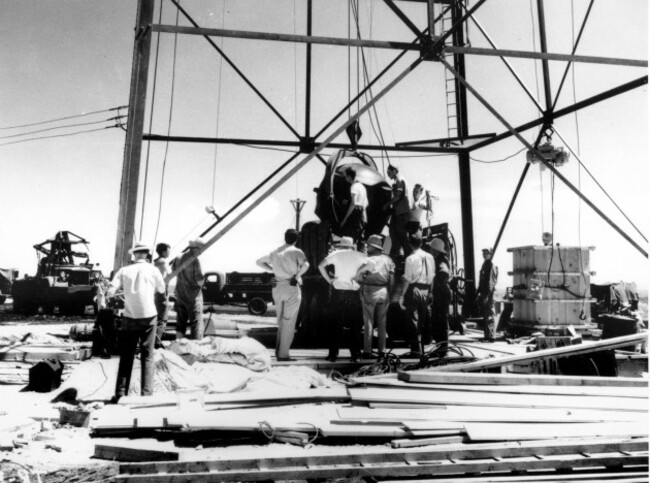
file-in-this-july-1945-file-photo-scientists-and-workmen-rig-the-worlds-first-atomic-bomb-to-raise-it-up-into-a-100-foot-tower-at-the-trinity-bomb-test-site-in-the-desert-near-alamagordo-n-m-t July 1945, file photo, scientists and workmen rig the world's first atomic bomb to raise it up into a 100-foot tower at the Trinity bomb test site in the desert near Alamagordo. Alamy Stock Photo Alamy Stock Photo

Just recently, France proposed opening a dialogue about extending its umbrella over other European countries and signed a deal with the UK to coordinate nuclear deterrence in the face of European threats.

International mechanisms meant to regulate nuclear proliferation are being eroded, and nuclear rhetoric is being normalised again. States are threatening one another with nuclear warfare and echoing Cold War theories as necessary for national defence and war deterrence. We have seen recent conflicts and tensions involving nuclear powers, showing once again the growing risk of their use, whether intentional or accidental.

Using nuclear weapons

International humanitarian law, the rules of war, don’t expressly mention nuclear weapons, but they do require a distinction between civilians and combatants. They require attacks to be proportional, and they prohibit indiscriminate attacks.

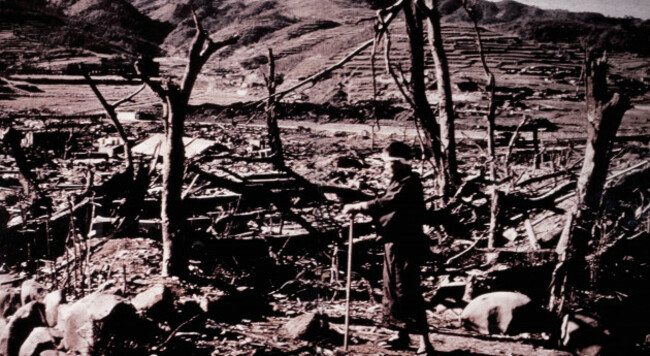
One only needs to look at images of Hiroshima or Nagasaki and ask themselves if nuclear weapons could ever be used in a way that wouldn’t violate these rules of war. Their very nature and scale of destruction make it extremely unlikely.

jan-1-1940-destruction-of-nagasaki-japan-after-atomic-bomb-explosion-1945-credit-image-glasshousezumapress-com Destruction of Nagasaki, Japan After Atomic Bomb Explosion,1945. Alamy Stock Photo Alamy Stock Photo

No state can accurately foresee the level of damage that it would cause when deploying a nuclear weapon today. What we can see is the suffering and devastation that was caused in Japan, and after 80 years of technological advancements, the consequences today are unimaginable.

The Red Cross studied how it would respond to such a crisis and came to a chilling conclusion – no humanitarian response would be adequate. A nuclear attack today would have such consequences that no state or humanitarian organisation, including the Red Cross, could adequately respond to the unimaginable humanitarian need they would create.

This is why the Red Cross is adamant that nuclear weapons must become a thing of the past. The humanitarian consequences are simply too great.

Call to action — banning nuclear weapons

In 2017, Setsuko Thurlow was able to witness something many other survivors never got to see – the adoption of the Treaty of Prohibition of Nuclear Weapons. After more than 70 years of waiting since the day she was trapped in the rubble, States finally came together to ban nuclear weapons.

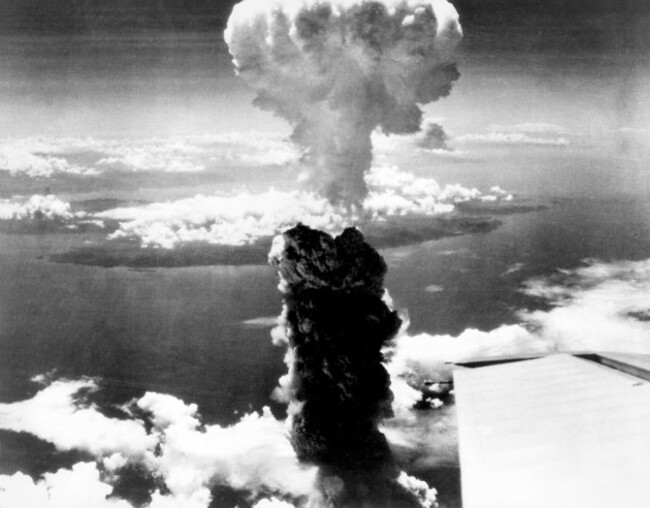
the-united-states-with-the-consent-of-the-united-kingdom-as-laid-down-in-the-quebec-agreement-dropped-nuclear-weapons-on-the-japanese-cities-of-hiroshima-and-nagasaki-in-august-1945-during-the-fina The United States, with the consent of the United Kingdom as laid down in the Quebec Agreement, dropped nuclear weapons on the Japanese cities of Hiroshima and Nagasaki in August 1945. Alamy Stock Photo Alamy Stock Photo

Ireland is one of only four European countries to have joined this treaty, something we can feel proud of, but the threat of the mushroom cloud continues to loom overhead.

The repercussions of a nuclear exchange are global. We cannot accept narratives that tell us that these weapons are necessary. We need all states to join the treaty and ban nuclear weapons.

Today, we pause to remember the hundreds of thousands of victims. We must listen to the words of those who survived, the ones urging the world to ban these weapons. We owe it to them to make sure their message is carried loud and clear long after they are gone – never again.

Niall O’Keeffe is Head of International and Migration at the Irish Red Cross.

Readers like you are keeping these stories free for everyone...
A mix of advertising and supporting contributions helps keep paywalls away from valuable information like this article. Over 5,000 readers like you have already stepped up and support us with a monthly payment or a once-off donation.

Close
35 Comments
This is YOUR comments community. Stay civil, stay constructive, stay on topic. Please familiarise yourself with our comments policy here before taking part.
Leave a Comment
    Submit a report
    Please help us understand how this comment violates our community guidelines.
    Thank you for the feedback
    Your feedback has been sent to our team for review.

    Leave a commentcancel

     
    JournalTv
    News in 60 seconds