Sign in. It’s quick, free and it’s up to you.
An account is an optional way to support the work we do. Find out more.
Sign in. It’s quick, free and it’s up to you.
An account is an optional way to support the work we do. Find out more.
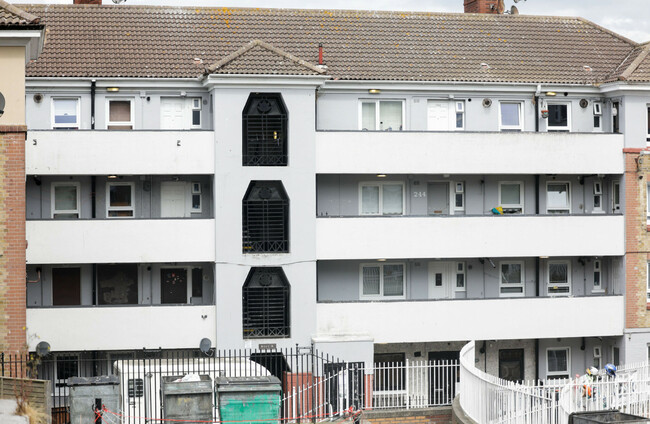

OLIVER BOND HOUSE was built in the 1930s as part of Dublin Corporation’s slum clearance programme.
It lifted thousands of people out of disease-ridden tenements, providing them with modern, clean and affordable homes. Designed by the city’s first housing architect, Herbert Simms, it is one of the largest remaining inner-city flat complexes.
From 1932 to 1948, the Corporation, ably led by the determined Simms, delivered 17,000. It was one of the most ambitious public housing drives in the history of the state.
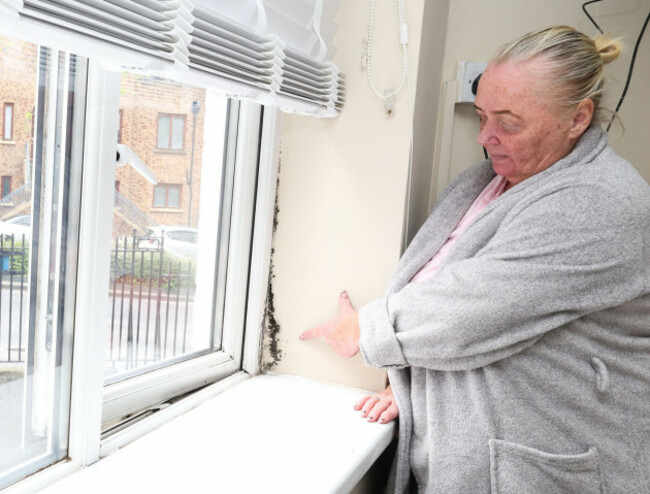
Over the decades, often starved of funding by central government, Dublin Corporation failed to maintain these fine buildings. Today, the flats are small, damp-ridden and in breach of the state’s own standards.
For years, residents and their allies campaigned for improvements. Upgrade schemes came and went, but the underlying problems remained.
In 2014, supported by the Community Action Network, residents from 20 communities, including Oliver Bond House, took the Irish State to the European Committee of Social Rights in Strasbourg.
In 2017, the Committee found that the State was in breach of Article 16 of the Revised European Social Charter. The government had failed to take sufficient and timely measures to ensure the right to housing of an adequate standard.
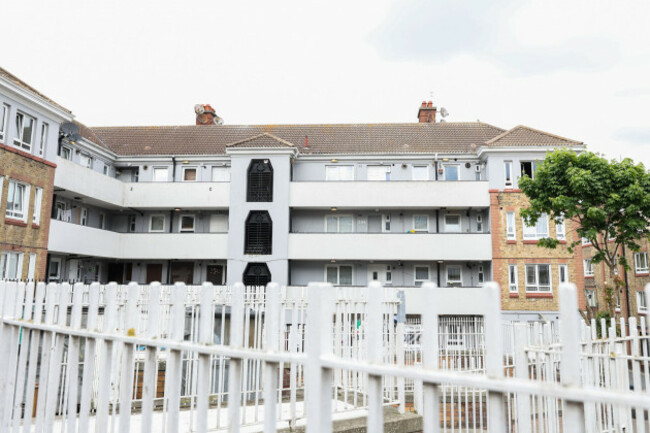
In response, Dublin City Council undertook an assessment of more than 6,000 flats across 100 schemes built from the 1930s to the early 1980s. A report presented to Councillors in March 2018 set out options to address the problems. An update report was presented to the Council in 2022.
In 2023, Dublin City Council secured Stage 1 approval from the Department of Housing for the first phase of the regeneration of Oliver Bond House in Dublin’s Liberties.
The proposal involved three blocks of flats, L, M and N, on the corner of Oliver Bond Street and Bridgefoot Street. Seventy-four homes would be retrofitted and amalgamated into 46 flats to meet modern space standards and to address issues of damp and mould. An additional 12 new homes would be built in one of the courtyards inside the complex. There would be a net reduction of 16 homes.
Dublin City Council then engaged the local community alongside detailed design work on the proposal. This resulted in a revised scheme being submitted to the Department last December for funding approval.
The new scheme involved the same reduction in the number of flats, from 74 to 46, within the three blocks, but a more efficient design allowed for the conversion of four ground-floor flats into a much-needed community space.
In place of the 12 new-build flats in the courtyard, the Council proposed 43 new homes on an adjacent piece of Council-owned land in Bridgefoot Street. There would now be a net increase of 15 homes.
However, in April, the Department refused the funding application. They said that they could not support ‘such a large reduction in homes during a housing crisis.’
Their assessment was based on an argument that building 13 new flats within Oliver Bond House could be considered part of the scheme, but building a larger number of homes on an adjacent site could not.
The Department insisted that the Council maintain 68 of the 74 flats in the three blocks, but reduce the occupancy to adhere to modern space standards. One-beds would become studios, and two-beds would become one-beds.
The Department’s proposal is fundamentally flawed. Their refusal to consider the 43 new-build apartments on Bridgefoot Street as part of the regeneration scheme makes no sense, given that a smaller number of new builds were part of the original Staged 1 approval.
Worse still, the Department’s proposal would see fewer people living in blocks L, M and N. The Dublin City Council proposal would provide for 144 bed spaces, in 46 flats, a reduction of 26% on the current 196 bed spaces in the 74 homes. However, the Department’s proposal would see a 41% reduction in bed spaces to just 114, in 68 flats.
In addition to fewer residents, the department’s proposal would reduce all the flats to studios or one-beds. The Council’s proposal would have a more sustainable mix to make room for families, as well as couples and singles.
At a recent Oireachtas Housing Committee meeting, the officials from the Department of Housing and Dublin City Council confirmed all of these details. The Department also made clear that James Browne, minister for housing, had not been asked for nor given approval to his official’s rejection of the Dublin City Council plan.
On Tuesday evening, the minister met with the Oliver Bond Regeneration Forum, made up of residents, officials, elected representatives and Gardaí. The meeting was frank, with residents detailing the appalling living conditions which the state has left them. They impressed on the minister the need to support the Dublin City Council plan.
Immediately after the meeting took oral questions in the Dáil. He conceded that the scheme must include a mix of unit sizes and that Bridgefoot Street is part of the overall scheme. Residents will now anxiously await the outcome of further engagement between the Council and the Department.
The department’s proposal will not address the structural problems in these flat complexes. It will cause significant delays, and it will result in fewer people living in these flats. It will also set a poor template for other flat complex regeneration schemes.
The Council’s plan is a good one. It provides for good quality homes while maintaining both the cohesion of the local community and the important contribution of Herbert Simms to our capital’s built environment.
Minister Browne must back the Dublin City Council proposal so that the hard-working, rent-paying tenants of Oliver Bond House and other flat complexes can finally have the modern, safe and affordable homes that they deserve.
Eoin Ó Broin is Sinn Féin spokesperson on housing and author of Flats & Cottages: Herbert Simms and the housing of Dublin’s working class 1932-1948 (Merrion Press 2025).
To embed this post, copy the code below on your site















have your say