We need your help now

Support from readers like you keeps The Journal open.

You are visiting us because we have something you value. Independent, unbiased news that tells the truth. Advertising revenue goes some way to support our mission, but this year it has not been enough.

If you've seen value in our reporting, please contribute what you can, so we can continue to produce accurate and meaningful journalism. For everyone who needs it.

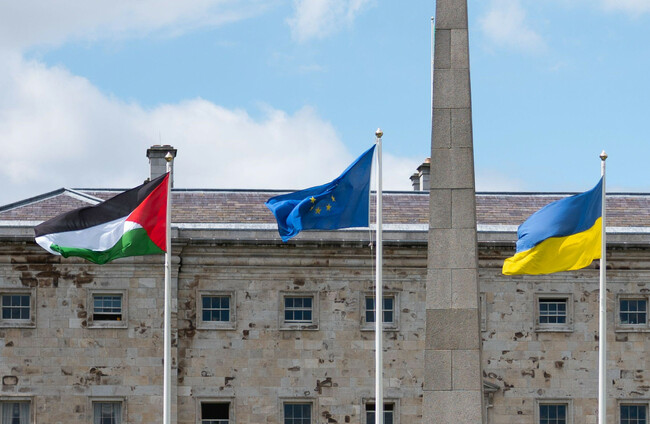
Flags for Palestine, the European Union and Ukraine flying outside Leinster House. Alamy Stock Photo

Opinion Leaders say we need a 'conversation on migration'. The public are way ahead of them

Finian Murphy shares what he learned about how Europe is responding to big social issues from travelling by train.

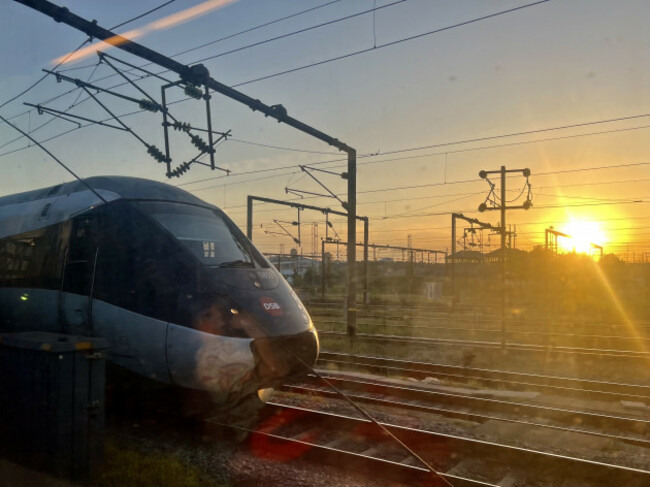
THIS SUMMER, INSPIRED by the late Manchán Magan’s Europe by Train series, my family and I travelled by train from Dublin/Holyhead to Malmö, Sweden, crossing the UK, France, Belgium, the Netherlands, Germany, and Denmark.

The journey began with Palestinian flags in the windows of homes along the road – a striking reminder that, in the face of a genocide in Gaza, Ireland has been vocal in its solidarity.

From village fundraising to packed city protests, the message has been clear: this is wrong, and we will not stay silent.

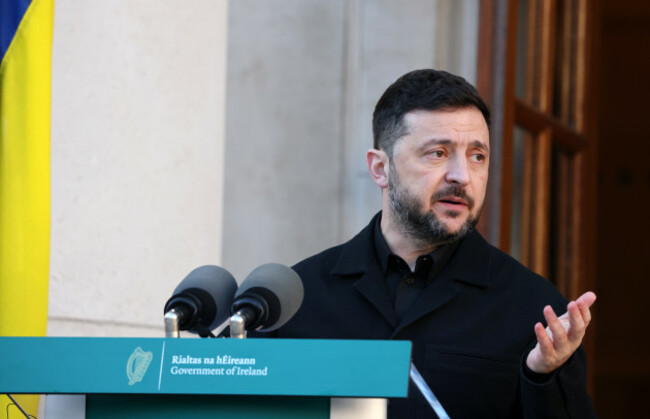
Many Irish communities have also welcomed refugees from Ukraine over the last three years. On his first official visit to Ireland yesterday, Ukrainian President Volodymyr Zelenskyy expressed “special gratitude” to the Irish communities who have taken in refugees, saying thanking “every Irish home that has sheltered our people here”.

I was curious about how other European cities were responding to migration, global conflicts, and the climate crisis – the defining challenges of our time. These European nations carry deep histories of empire, oppression, displacement, and refuge.

Today, they are central to European debates on “managing migration,” tackling climate change, and addressing humanitarian crises driven by autocratic leadership and military aggression. 

753President Volodymyr Zelenskyy Visits Ireland_90738970 Ukrainian President Volodymyr Zelenskyy outside Government Buildings. Eamonn Farrell / Rollingnews.ie Eamonn Farrell / Rollingnews.ie / Rollingnews.ie

In November 2025’s Consumer Mindset report, 73% of respondents aware of the recent Citywest riots reported negative emotions such as sadness, disgust, anger, or fear. Similar levels were seen in response to Simon Harris’s comments that “our migration numbers are too high”.

The risk now is assuming public engagement with migration comes mainly from anxiety, rather than the reality that most people experience positive integration daily.

Irish leadership could learn a great deal from the successes – and mistakes – of other European countries when it comes to policy on big ticket issues like migration.

Opinion across Europe

Our first leg of our family train journey brought us to London, where Mayor Sadiq Khan was urging the government to recognise a Palestinian state. However, the UK was also seeing a surge of ethnonationalism, with over 150,000 people attending the “Unite the Kingdom” rally.

As we entered the Eurotunnel to France, Macron and Starmer had just agreed a deal to return undocumented arrivals from Britain, reflecting public support for restrictive immigration. In contrast to Ireland, polling showed division about Gaza: one in four still justified Israel’s military actions, one-third were unsure, 28% sympathised with both sides, and 21% chose a side.

Our train north into Belgium passed more flags of solidarity along the tracks into Brussels. Weeks earlier, Fontaines D.C. had ended their Rock Werchter set with “Free Palestine,” earning wide applause. Belgium would later recognise Palestinian statehood at the 2025 United Nations General Assembly.

In Amsterdam, a very small pro-Palestine rally gathered outside Central Station. Yet across the city – home to corporations tied to boycott lists – solidarity felt muted despite 78% of people opposing Israel’s actions. The quiet streets contrasted sharply with public opinion.

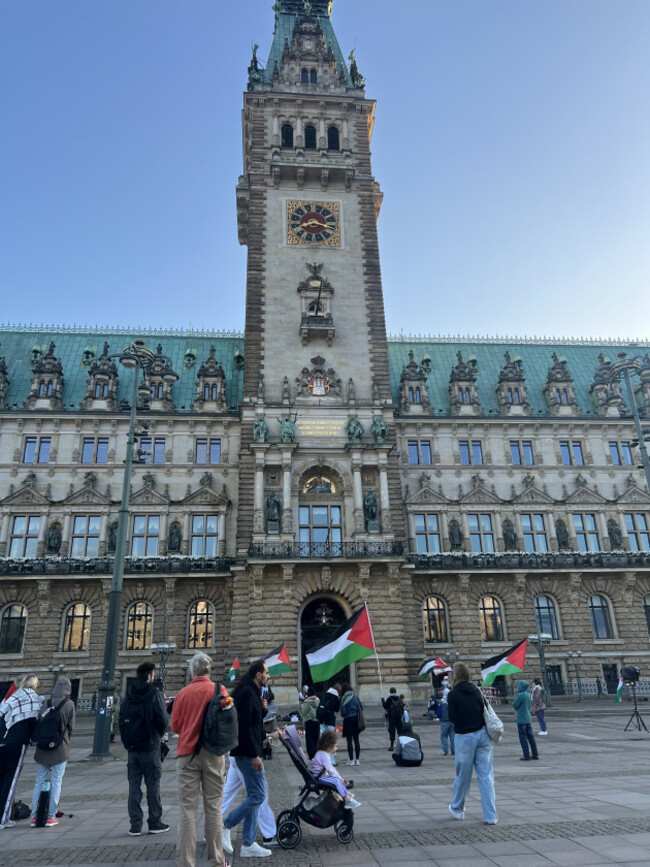
IMG_8452 Finian Murphy Finian Murphy

East in Hamburg, a sombre vigil for Gaza victims was under police surveillance. Crackdowns – as seen in the assault on Irish activist Kitty O’Brien – had clearly stifled protest.

The modest turnout underscored how easy it is to look away.

Heading north, we reached Copenhagen, where one of Europe’s richest and “happiest” countries has shifted since 2019 to a tougher migration stance: deterrence, stricter conditions, and promoting return.

Finally, crossing the Øresund Bridge into Malmö, Sweden, the contrast was immediate. In a city where more than a third of residents are immigrants from countries like Iraq, Syria, and Afghanistan, solidarity felt lived and deeply understood.

Enduring solidarity

Returning home after summer travels, the contrast was sharp. Irish people have consistently demanded sanctions, Palestine recognition, and have mobilised in large numbers.

As we discussed diversity in our society and migration more generally, what stood out the most is our new-found confidence to speak.

I shared some of the experience of my journey from this summer recently when I was invited to host the annual European Migration Network Ireland conference, hosted by the ESRI and the Department of Justice, Home Affairs and Migration.

A wide mix of researchers, policy experts, NGOs, migrants, and frontline workers gathered to examine evidence and lived experiences of integration in Ireland. We discussed how issues like migration, integration, and community cohesion have become central in public debate. 

Irish people now speak out against injustice with clarity rooted in our own history of dispossession. That resolve is reinforced by culture – from Sally Rooney backing Palestine Action and Liam Cunningham joining the Gaza flotilla, to Hozier urging action and Kneecap defending their right to speak.

But we cannot be complacent.

This summer, members of the Indian community were racially attacked in Ireland. While over 60% condemned the attacks (29% were unaware), Irish tricolours have also been raised in mimicry of British nationalist movements often associated with the far right and racism.

IMG_8453 Finian Murphy Finian Murphy

Yet our Republic is built on guaranteeing rights and equal opportunities. These values – universalism, compassion, solidarity – are visible nationwide. In September. thousands joined the United Against Racism march, and in October over 170 civil society groups joined the National Demonstration for Palestine.

Across Ireland, groups show practical solidarity. The Hope and Courage Collective supports resilience against hate. Sanctuary Runners bring people together every week, especially asylum seekers and refugees. In October 2025, Helping Irish Hosts, who welcomed thousands of Ukrainians, launched a new project Co.Here connecting displaced people with local communities through social engagement.

As leaders call for a “conversation on migration,” the public is already living it – working, socialising, and building communities alongside migrants. Evidence from the ESRI and others shows Ireland’s views on migration are among the most positive in Europe. Challenges emerge where people lack confidence in their own future: communities facing housing shortages or poverty often have less hope and, understandably, less capacity to welcome others.

We now have an opportunity to re-affirm compassion and universalism. Leaders can either point to a “problem” most people don’t see, or address the real issues – housing, inequality, and community wellbeing – that will give everyone greater hope in a shared future, one in which welcoming newcomers remains part of who we are.

Finian Murphy is a researcher and strategist focused on public sentiment, culture and communities.

Readers like you are keeping these stories free for everyone...
A mix of advertising and supporting contributions helps keep paywalls away from valuable information like this article. Over 5,000 readers like you have already stepped up and support us with a monthly payment or a once-off donation.

Close
JournalTv
News in 60 seconds