We need your help now

Support from readers like you keeps The Journal open.

You are visiting us because we have something you value. Independent, unbiased news that tells the truth. Advertising revenue goes some way to support our mission, but this year it has not been enough.

If you've seen value in our reporting, please contribute what you can, so we can continue to produce accurate and meaningful journalism. For everyone who needs it.

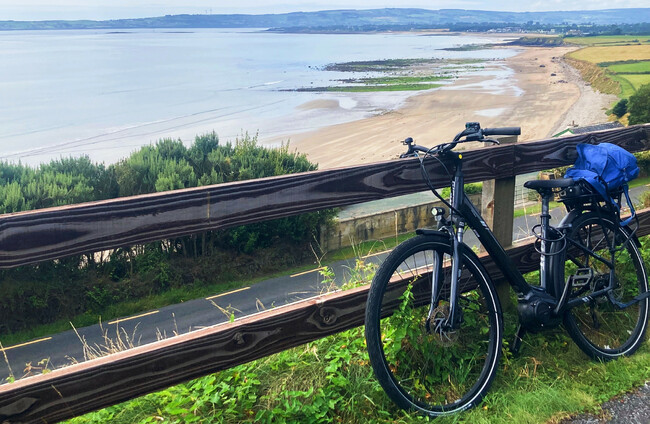
Irish holidays I've been dozens of places by bus, boat and train - there are pleasures and pitfalls

Novelist Anna Heussaff describes her journeys across Ireland by public transport and the gaps that still need to be addressed.

IN EARLY SUMMER, I spread a map of Ireland on the table and pondered my plans. Discover new places or revisit old favourites? Historic sites, scenic peninsulas, long sandy beaches? Was there a bus route wherever I decided to go?

Since 2022, 62 new bus routes and 106 enhanced routes have been introduced across rural Ireland. Local Link buses now travel 24 million kilometres a year, more than four times their pre-Covid distances. The majority run several times a day, compared to the old days of buses that operated only a few days a week.

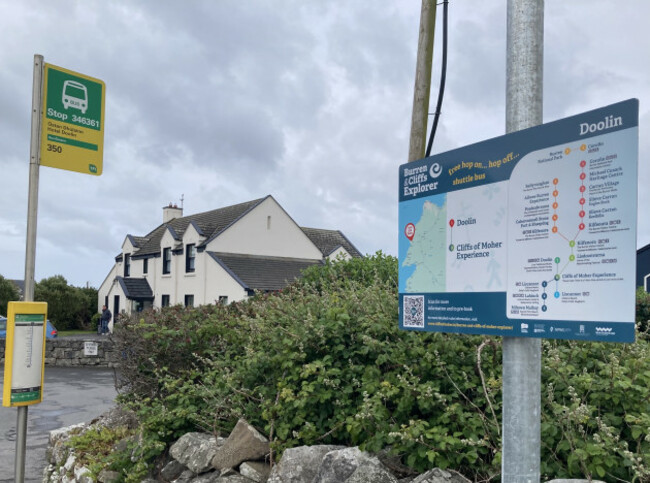
IMG_6089 A bus stop in Doolin, Co Clare Anna Heussaf Anna Heussaf

We often think about staycations as being synonymous with ‘car holidays’, but the growth of our public transport network means that you can explore the best of what Ireland has to offer while also cutting your transport emissions.

It does, though, depend on where you go; we’ve great links to some of Ireland’s wonderful sites, but other tourist hotspots are still underserved.

So, what are the pleasures and pitfalls of holidays by public transport, and what are the service gaps and issues still to be addressed?

Taking the scenic route

Two summers ago, I tried out several new bus routes in Wexford, west Cork, Wicklow, Mullingar and west Donegal, reporting on them on Raidió na Gaeltachta’s Tús Áite programme.

This summer, I had a new Bealach Glas series, talking about the five holiday jaunts I took on 20 different bus routes, both local and long-distance, as well as four train trips and three by boat.

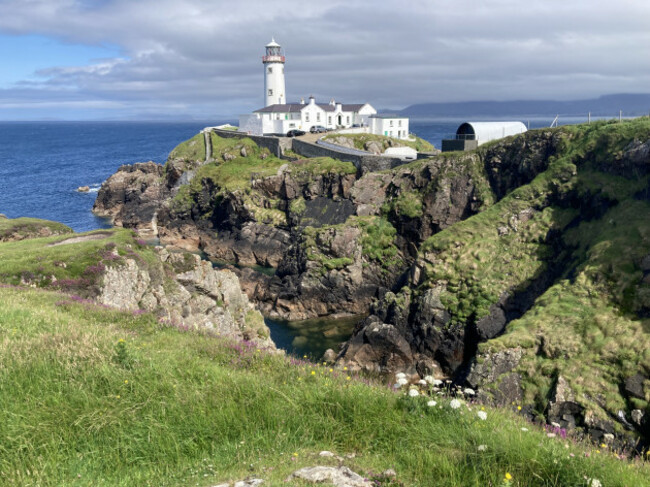
I’ve gone to Malin Head, Ireland’s most northerly point, on the 954 Local Link bus from Carndonagh, and the 952 in the opposite direction to Derry city. The 973 from Letterkenny took me to neighbouring Fanad Head, with its magnificent lighthouse. A frequent ferry from Buncrana to Rathmullan links both peninsulas.

IMG_6868 The lighthouse in Fanad, Co Donegal Anna Heussaff Anna Heussaff

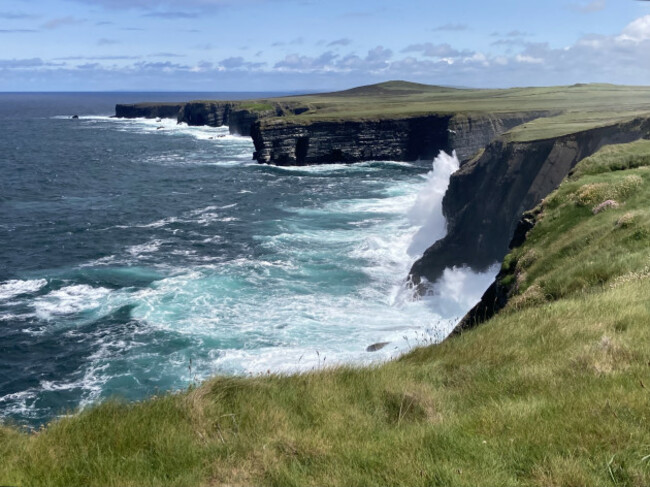
On the west coast, I enjoyed Loop Head’s dramatic lighthouse and cliff walks on the 339 route from Kilkee.

And down south, I availed of the 361 from Dungarvan to Youghal to access the Waterford and East Cork greenways, with a lovely seaweed bath at Sólás na Mara near scenic Ceann Heilbhic along the way. 

On my travels, I visited the very moving National Famine Museum at Strokestown in Co Roscommon. Using the same Bus Éireann route 22, I went on a guided tour of Queen Maeve’s ceremonial site at Ráth Cruachan.

But across the border in Co Armagh, I had to taxi or take a half-hour walk to Ulster’s great mythological and archaeological site of Eamhan Mhacha (or Navan Fort), because there’s no weekend bus service from Armagh town.

I could visit Clonmacnoise and Birr Castle on a new bus route from Athlone to Roscrea, though unfortunately, there’s no bus to the world-famous Newgrange passage tombs.

In the sunny southeast, Wexford town has four summer shuttles to local beaches, but up the coast there are no buses from Dublin or Wicklow town to Brittas Bay’s great beaches. 

For our one million visitors a year to Glendalough, the St Kevin’s bus from Dublin still runs only twice a day. And for the crowds in Killarney, there’s no public bus to Ross Castle and Moll’s Gap.

From here to there

A bit of big-picture thinking and the resources to back it up could really open up further access to Irish attractions by public transport.

Passenger numbers on Local Link buses hit 100,000 a day last November, with 4.7 million journeys in 2024, an annual increase of almost 50%. This is clearly a huge success story – and there’s room for a lot more.

Tourist hotspots with poor transport links could imitate an initiative that was taken in Co Clare this summer to reduce car traffic of 1.3 million visitors to the Cliffs of Moher.

The Burren Explorer is a pilot free shuttle service backed by Clare County Council, the National Parks and Wildlife Service and Fáilte Ireland. Buses run from the cliffs to Doolin, Liscannor and Lahinch, with connections to other Burren beauty spots.

IMG_6213 Cliffs near Loop Head in Clare Anna Heussaff Anna Heussaff

The Connecting Ireland Rural Mobility Plan aims to improve access to key destinations, but although the importance of tourism is acknowledge in the plan, heritage sites and beaches are not yet dedicated strands of it.

The Plan is trying to serve many aims essential to local communities, including getting people to local colleges, schools, workplaces, shopping centres, hospital appointments and social opportunities. Having started from a dismally low base, it’s hardly a surprise that we’re not there yet.

With the news this month that children between the ages of five and eight will now to able to use public transport for free with a TfI Child Leap card, families have an extra incentive to try out trips by public transport.

Most of my trips were solo, benefitting from my free travel pass. Fares for adults are 20% cheaper than before Covid-19 and 50% cheaper for young people up to the age of 25. For families or groups of friends going on holiday by car, it’s still worth trying out local trips by bus.

The TfI app helps a lot with planning bus journeys. That’s the hard work done. Once en route, I’ve found most trains and buses to be comfortable, clean, more relaxing than driving and with a better view of the countryside than the most polluting SUVs could offer.

For the most part, trains and Local Link buses have been very punctual, but this summer I did have two delays of over an hour.

One was due to a missing Expressway bus and the other, which was on a Big Green Bus, was caused by heavy traffic on a sunny Friday. In general, of course, fewer cars on the roads would speed up travel for all, including people whose only option is driving.

Connections to local buses can vary enormously. For example, the TfI app told me that by arriving in Ennis on the 336 from Kilkee at various times of the day, I could either run for a Dublin train leaving seven or 13 minutes later, or sit around for up to 90 minutes.

That’s an area where there’s still plenty of room for improvement. Timetabling arrivals and departures in a way that gives passengers between 20 and 30 minutes would benefit locals and tourists alike; enough time to make it to the next leg of your journey without having to sprint but not so much you’re left sitting around at a stop reading bus schedules or graffiti for entertainment.

Stop the bus

Rural bus stops are another issue. If a bus passes your home but the stop is a 15-minute walk away on a busy or dark road with no footpath, the service is useless to you. I’ve been on many buses this year that stopped on request at places deemed safe by the driver, but early last year, the National Transport Authority (NTA) instructed drivers on the 361 route in west Waterford to use only the authorised stops, in spite of them being located in a few places at distances from each other of 5km, 9km and 13km.

That kind of approach risks turning people against buses. After a lot of consultation, a local rural transport campaign group proposed up to 13 additional stops which have been agreed by Waterford City and County Council. They await NTA approval – but, as in most areas, the strong preference is for stops on request in addition to the main stops.

According to the Department of Transport, ‘there is currently no national policy requiring request stops for TFI Local Link services’, but they say that the NTA, which oversees these operations, ‘promotes flexibility – particularly in rural and remote areas – where such stops are safe and practical.’

Another gap is that many bus routes run only until 7pm.

Additionally, there’s a real need for far more footpaths and cycle paths outside our towns and villages, such as to newer housing estates, campsites and workplaces, and that means more landowners freeing up the necessary land for them. 

Watching our footprint

By far the busiest bus stop I’ve seen is at Dublin Airport as frequent flying continues to skyrocket, pumping out dangerous greenhouse gas emissions.

We’ve had a summer of raging wildfires across Europe, record-breaking heat in Japan and South Korea, devastating floods in Pakistan and new climate extremes across the USA where fossil fuel companies spent a reported $200 million dollars on Trump’s Republican Party election campaign last year.

Many governments across the world, including China’s, are acting to reduce climate emissions. But as in Ireland, they’re not moving half fast enough – and if our future matters to us, we all have to learn new habits in our homes and communities.

I certainly recommend my experience of flying a lot less and trying holidays by bus and train in Ireland as well as by ferry, train and Eurostar to the continent. These are choices that millions of impoverished people hit hardest by climate disasters don’t have.

Anna Heussaff is a novelist and a climate commentator, working mainly in Irish.

Readers like you are keeping these stories free for everyone...
A mix of advertising and supporting contributions helps keep paywalls away from valuable information like this article. Over 5,000 readers like you have already stepped up and support us with a monthly payment or a once-off donation.

Close
JournalTv
News in 60 seconds