We need your help now

Support from readers like you keeps The Journal open.

You are visiting us because we have something you value. Independent, unbiased news that tells the truth. Advertising revenue goes some way to support our mission, but this year it has not been enough.

If you've seen value in our reporting, please contribute what you can, so we can continue to produce accurate and meaningful journalism. For everyone who needs it.

Alamy Stock Photo

Watching the kids When parental fear meets GPS tracking

Niamh O’Reilly asks if parental panic is quietly turning into digital surveillance — and wonders where we should draw the line.

I VIVIDLY REMEMBER once losing my toddler in IKEA on a busy Sunday afternoon. I’d recently given birth to my second child, and for some reason, thought an outing to possibly one of Ireland’s busiest stores at one of its busiest times with a newborn and toddler in tow was a good idea (Post-partum hormones are such fun.)

One moment, my toddler was walking beside me, the next he was gone. I’ve never felt fear like it in my life. Every worst-case scenario played out in my head. Every movie about child abduction, every terrifying headline, every parent’s worst nightmare.

We called out his name, went back through the snake-like labyrinth layout of IKEA, desperately hoping to find him climbing on a couch or distracted by buttons on a display kitchen. But nothing. That’s when I really started to panic; my heart pounded inside my chest as I mentally sold my soul to the highest bidder to get my son back in eyeshot.

Eventually, after what felt like hours (it was probably a full five or six minutes to be fair), a member of staff said he had been found, and the relief hit me so hard I felt wobbly.

Parents’ worry

Nine years on, and the thought of it still gives me occasional palpitations, and what parent can’t relate to that feeling? We’ve all, at some point, lost sight of our young children in a supermarket or playground, and for those few moments or longer, the panic and worry that consumes you is almost otherworldly.

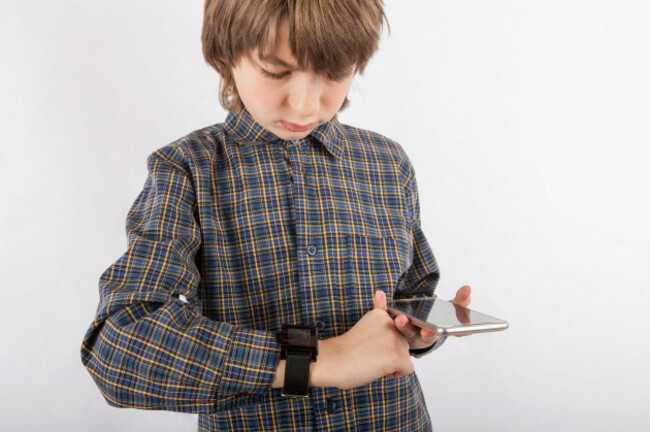
boy-pairing-his-smart-watch-with-a-smartphone Alamy Stock Photo Alamy Stock Photo

So, in a world where technology is evolving at a pace we can hardly keep up with, is it any wonder that so many parents are now tracking their children’s movements as a matter of course? On face value, it seems to make perfect sense. The technology exists, so why wouldn’t parents use it to keep children safe when they are out and about?

In the US, about half of parents regularly monitor their adolescents’ movements via location-tracking apps. Evidence in Ireland is more anecdotal, but chat to any parent of young children or teens and conversations around whether to track or not are being had with increasing regularity within families and social circles, with growing numbers of parents tracking their children via smartphones or apps.

Smartphone apps like Life360, Apple Find My, or Google Family Link allow users to track a child’s location and even set up boundary or safety zones, which alert the parent in the event their child goes outside of these locations.

study-humans-human-beings-people-folk-persons-human-human-being-laugh Alamy Stock Photo Alamy Stock Photo

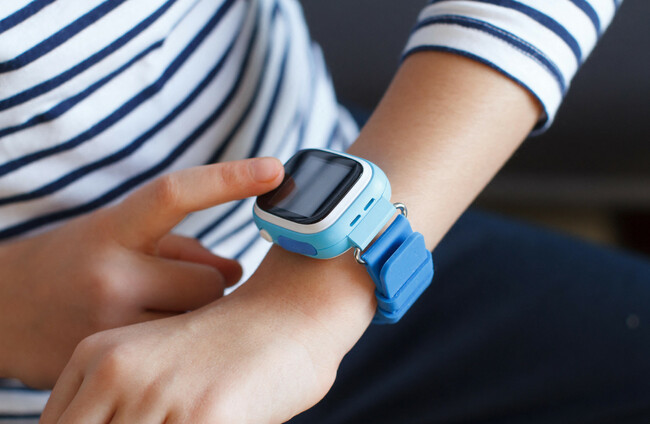
Some apps can even allow you to activate the microphone on your children’s devices so you can listen in on their conversations or what’s happening around them. And if your child is too young for a smartphone, wearable devices like smartwatches are being marketed as appropriate for children as young as five.

Dystopian?

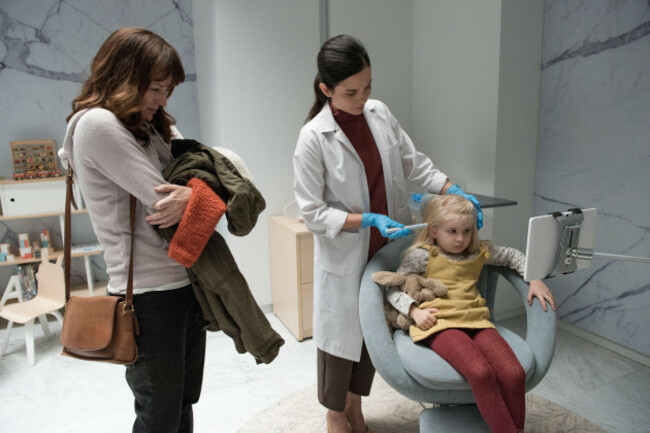
If that all feels a bit too much like an episode of Black Mirror, then you’re not wrong. The show covered this very topic. In 2018’s Arkangel, a mother, concerned after briefly losing her three-year-old, decides to take the ‘logical’ next step and get a child monitoring chip implanted in her daughter’s head, so she can never lose her again.

Arkangel takes place in a dystopian version of the very near future, where the technology allows the mother to go one step further in the dysfunctional lawnmower parenting playbook. This lets her physically block her child from seeing anything the mother deems undesirable or bad.

At first, it is small things like a barking dog, or a scary movie, but as her daughter grows up, her mother begins to block more and more of the world she deems unfit; think blood, violence, sex, pornography, and so on. 

black-mirror-l-r-rosemarie-dewitt-jenny-raven-aniya-hodge-in-arkangel-season-4-episode-1-aired-december-29-2017-ph-christos-kalohoridisnetflixcourtesy-everett-collection Black Mirror's Arkangel. Alamy Stock Photo Alamy Stock Photo

Unsurprisingly, all this smothering has a negative impact on the daughter’s normal growth and development. What was more surprising, however, was how quickly her mother became addicted to overprotecting and monitoring her child, even when it resulted in irreparable damage to their relationship.

Of course, that’s just a TV show playing out something to its extreme ends for dramatic effect. We’re not actually putting monitoring chips in our children’s heads. But it’s hard to ignore that for many parents, what starts out as harmless tracking of their child for safety reasons can quickly veer into addictive and unhealthy surveillance behaviour.

For a growing number of parents, it’s becoming a habit they can’t seem to shake. According to recent data, 67% of parents in the UK use an app to even track their university-going child’s location. Many would argue this is helicopter parenting gone unchecked in the digital age, crossing the line into darkly obsessive territory.

Peace of mind

Still, for parents of young children and teens, who feel like they are growing up faster these days and are exposed to more dangers, the idea of being able to track their location in an emergency feels like an extra layer of security and peace of mind.

My son recently turned nine and is starting that transition to wanting a bit more freedom. Like most parents of young children, I’m resisting the introduction of smartphones for as long as possible, so we decided to get him smartwatch with a GPS tracker for his birthday, which allows me to track his location through an app on my phone. It does not allow him access to the internet or apps. It lets him count his steps or contact us if needed.

So far, I haven’t had the need to track his location for emergency purposes and have resisted the odd look to randomly check on his location. There was a potential mix-up at school collection one afternoon, and I was able to use the tracking to confirm where he was. But at nine years of age, checking up on where he is, is not something that’s a huge issue yet. I can see plenty of upcoming scenarios where it will come into its own, however, such as on holiday or busy events over the summer, or in crowded shopping centres.

guy-study-humans-human-beings-people-folk-persons-human-human-being Alamy Stock Photo Alamy Stock Photo

While we don’t use it much at present, even now, I can see how having the ability for an innocent look at his location as he gets older could have the potential to become addictive. With these apps sitting on parents’ phones, the temptation to log on routinely to track your teenager’s location to see if they are where they said they would be is probably a slippery slope that’s hard to resist.

It’s easy to see how teens would rail against that and how issues would arise, or ways around it would be found. Worse still is parents continuing to monitor their adult child’s comings and goings, which feels altogether unhealthy, especially when it’s done covertly.

We all want to find that balance between safety and allowing space for our growing children to experience independence and to learn about making decisions and mistakes for themselves. It feels as though these apps, while offering a perceived layer of safety in the main, can have the opposite effect when used in the wrong way. They have the potential to drive a wedge between parents and children, especially if trust is eroded and tracking is done in a hidden and ongoing manner, far longer than it should be.

Niamh O’Reilly is a freelance writer and wrangler of two small boys who is winging her way through motherhood, her forties and her eyeliner.  

Readers like you are keeping these stories free for everyone...
A mix of advertising and supporting contributions helps keep paywalls away from valuable information like this article. Over 5,000 readers like you have already stepped up and support us with a monthly payment or a once-off donation.

Close
JournalTv
News in 60 seconds