We need your help now

Support from readers like you keeps The Journal open.

You are visiting us because we have something you value. Independent, unbiased news that tells the truth. Advertising revenue goes some way to support our mission, but this year it has not been enough.

If you've seen value in our reporting, please contribute what you can, so we can continue to produce accurate and meaningful journalism. For everyone who needs it.

Alamy Stock Photo

Psychiatric care and prisons Why is the State relying on prisons to fill the gaps in a broken system?

The RTÉ Investigates reveals how underfunded mental healthcare is, leaving people in crisis in prison cells instead of hospitals, writes Saoirse Brady of the Irish Penal Reform Trust.

WATCHING RTÉ INVESTIGATES: The Psychiatric Care Scandal over two evenings earlier this week, made for disturbing but necessary viewing.

This harrowing documentary laid bare the reality of what we in the Irish Penal Reform Trust (IPRT) routinely hear: the anguish of family members who fear for the well-being – and in many instances the lives – of their loved ones in prison experiencing a severe mental health crisis.

We also hear directly from people with experience of the criminal justice system who are crying out for help that never comes. Very often, families watch their loved ones’ health deteriorate to the point where they hear the news that they dread most. This week, through Conor Ryan’s sensitive retelling of their stories, families’ grief and pain flowed through the screen into homes around the country. Yet, they are merely a fraction of the people impacted by this scandal.

Relying on the wrong sector

The programme exposes what many families, clinicians and advocacy organisations already know: Ireland is relying on prisons to manage people with severe mental illness because the State has failed to provide adequate and appropriate healthcare despite our domestic and international human rights obligations, including under the European Convention on Human Rights, the UN Convention on the Rights of Persons with Disabilities (CRPD) and the International Covenant on Economic, Social and Cultural Rights (ICESCR).

At a time of record prison overcrowding, where oversight bodies, including the European Committee for the Prevention of Torture (CPT) have described conditions in prison as inhumane and degrading, the State can no longer turn to the prison system to make up the shortfall for its failed mental health system. The prison system was never designed nor intended to provide the levels of psychiatric care that current demand requires. That is the role of the HSE’s under-resourced and overwhelmed National Forensic Mental Health Service.

The documentary highlighted people who had already been diagnosed with serious mental health conditions – some were bipolar, some had schizophrenia, or others were experiencing psychosis – yet despite being in touch with mental health services, they were denied the support and treatment that they clearly required, even when they legally challenged the right to that treatment.

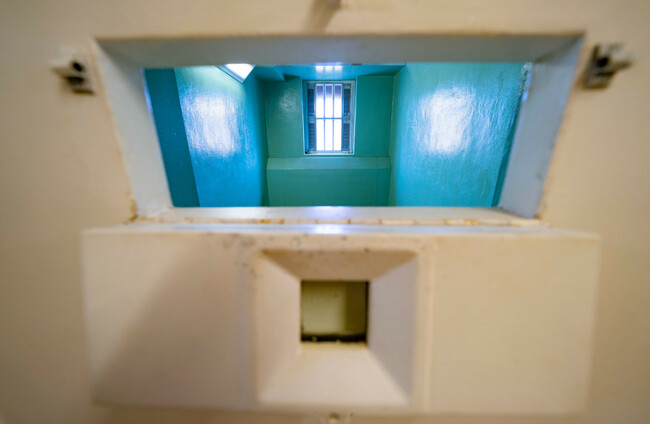
Instead, due to a lack of suitable alternatives, residential facilities or access to outpatient care, the only place apparently available for these people was the inside of a prison cell. Notably, while some people had been convicted of an offence, often minor in nature, others spent long periods of time in prison despite never having received a sentence, as they were too unwell to stand trial.

Trauma-informed approach

Many of the men featured in the programme had been profoundly affected by trauma in their past: childhood abuse, vicarious trauma (witnessing violent death), bereavement or serious injury. Prison is not a therapeutic place; it cannot address trauma nor heal people who are unwell. Yet people who are seriously ill are imprisoned for weeks or months, without necessary psychiatric interventions, while they wait for a hospital bed that, given the current record waiting list for the Central Mental Hospital (CMH), may never arise. In too many cases, we have seen tragic consequences when people facing utter despair have taken their own lives in custody or shortly after release.

None of the information in the documentary was particularly new to myself or my colleagues, yet seeing it all brought together – the increase in preventable deaths in custody, the wholly unacceptable conditions in which people are forced to live, the deficiencies in the mental health system and the enormous strain placed on the criminal justice system – paints a very stark and upsetting picture. We hear the worry in the voices of parents, partners, siblings and children who ring to ask how they can secure access to medical help for their family member or have them moved to a safer therapeutic environment.

Too often, they have no way of knowing what action, if any, has been taken to help their family member who is on the brink, and they live in fear that every phone call will bring more bad news.

This is the inevitable outcome of years of policy decisions that have left prisons absorbing the consequences of unmet mental health needs, untreated trauma and addiction. The aims of A Vision for Change 2006 to move mental health care towards community-based settings and away from austere institutional settings were laudable. However, without proper resources and the political will to prioritise and implement that vision, the unintended consequence seems to be that Ireland has experienced the Penrose Effect whereby one type of outdated institutional setting (psychiatric hospitals) closed but have been exchanged for another institution (prison), neither suitable for people who should be cared for as patients, not problems to be warehoused.

Unacceptable conditions

The Central Mental Hospital (CMH), a facility that cost approximately €250 million and was supposed to herald new standards in mental health care when it opened in 2022, gives rise to particular concern. One third of the facility’s units have not opened, and 50 beds remain empty while people remain in squalid prison conditions, with staff who are not equipped to support people in need of specialised psychiatric healthcare.

The high use of seclusion is particularly alarming, given that it should only ever be used in exceptional circumstances and for short periods up to a maximum of 72 hours. Yet, we heard on Tuesday night of one individual spending over 20,000 hours in isolation. Such a breach of human rights is horrifying by any metric.

Clearly, this issue will not be solved overnight. However, it is also clear that the Government must take responsibility and demonstrate leadership at the highest level to address the concerns raised. Ministers in both the Departments of Justice and Health, along with key statutory agencies, previously came together under the aegis of the High-Level Taskforce on Mental Health and Addiction and made key recommendations for reform.

While some progress has been made, it simply isn’t enough. It is high time that the State stops expecting the prison system to solve complex social issues. Modern Ireland needs properly resourced, therapeutic settings where people with serious mental illness can receive treatment in a safe environment which respects their dignity and rights.

Instead of focusing solely on what happens after the mental health crisis that leads a person to harm themselves or indeed others, finding themselves before a court, the Government needs to focus on person-centred models of care and create clear pathways to divert people from the criminal justice system.

In this vein, the suspension of therapeutic bail must be reviewed as a matter of urgency. The emphasis should be on prevention, early intervention, and providing community-based healthcare where possible. People in need of intensive psychiatric support should be provided with a hospital bed, not a mattress on a prison floor.

This week’s programme opens the door to having a meaningful conversation on how to change the lives of so many people and deliver on 20-year old promises. The Government should grasp that opportunity with both hands.

Saoirse Brady is the Executive Director of the Irish Penal Reform Trust.

Readers like you are keeping these stories free for everyone...
A mix of advertising and supporting contributions helps keep paywalls away from valuable information like this article. Over 5,000 readers like you have already stepped up and support us with a monthly payment or a once-off donation.

Close
4 Comments
This is YOUR comments community. Stay civil, stay constructive, stay on topic. Please familiarise yourself with our comments policy here before taking part.
Leave a Comment
    Submit a report
    Please help us understand how this comment violates our community guidelines.
    Thank you for the feedback
    Your feedback has been sent to our team for review.

    Leave a commentcancel

     
    JournalTv
    News in 60 seconds