We need your help now

Support from readers like you keeps The Journal open.

You are visiting us because we have something you value. Independent, unbiased news that tells the truth. Advertising revenue goes some way to support our mission, but this year it has not been enough.

If you've seen value in our reporting, please contribute what you can, so we can continue to produce accurate and meaningful journalism. For everyone who needs it.

Alamy Stock Photo

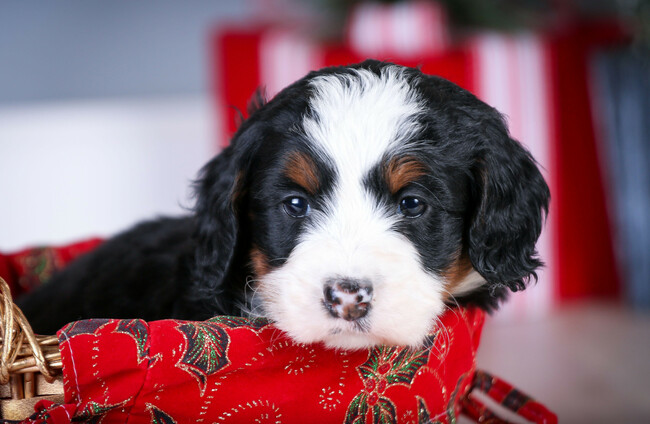
Dog behaviourist If you're thinking about getting a puppy for Christmas, think again

Christmas is one of the least suitable times of year to bring a puppy home, writes Suzi Walsh. Here’s what to consider instead.

EVERY YEAR, THE same scene plays out: a puppy appears under the Christmas tree. It seems like a moment of pure joy. Yet for many of those puppies and many of those families this is the beginning of a very hard story, not a happy one.

We are in the midst of a quiet epidemic in dog welfare. Anxiety, fear, reactivity, and aggression in pet dogs are more common than ever, and shelters and rescues are overflowing with unwanted dogs.

We are seeing serious behaviour problems in younger and younger dogs, issues that are extremely difficult to resolve. This is not due to bad luck, and it is not because of “bad dogs.” It is the predictable outcome of how we breed, buy, and raise puppies.

You cannot “train away” a bad start

One of the hardest truths in dog training and behaviour work is this: you cannot escape a bad breeder, and you cannot simply “fix” a puppy who has missed out on good early socialisation. You can absolutely help such a dog and improve their quality of life, but you cannot rewind their brain development.

Puppies are not blank slates. Even before birth, their brains are shaped by their mother’s stress levels, nutrition, and environment. After birth, puppies go through sensitive periods when their brain is incredibly plastic.

During roughly the three to 14-week age window, experiences are not just memories: they physically shape how the brain wires itself. Safe, gentle exposure during that time helps a puppy become resilient, flexible, and able to cope with the world.

Fear, pain, neglect, or deprivation during that same window greatly increase the risk of lifelong anxiety and behaviour problems.

This is why puppies raised in puppy farms, large commercial kennels, or chaotic, overcrowded homes are at such high risk. Many are born to stressed mothers who are bred every season. Many spend those crucial early weeks in barren kennels, with little human contact, no variety of sounds or surfaces, and no chance to learn that the world is mostly safe. No amount of “socialisation classes” can fully undo that poor start.

Is your breeder actually ethical?

Every puppy farm, commercial breeder, and dishonest backyard breeder wants to sell puppies. They are often the best salespeople you will ever meet. A nice website, friendly messages, a few cute photos, and a story about how much they “love their dogs” can be very convincing.

So, here is a simple test: if you believe you got your puppy from a good breeder, ask yourself two questions:

  1. Would they take your dog back at any time, no questions asked, if you could no longer keep the dog?
  2. Are they still regularly in touch with you to see how your dog is doing?

If you answered “no” to both, then unfortunately, you did not buy from an ethical breeder.

A truly ethical breeder takes responsibility for every puppy they produce for life. Such breeders do all relevant health testing for the breed (not just a basic DNA panel). They raise puppies in a home environment, provide extensive early socialisation, perform temperament assessments, and are very fussy about where their puppies go. They are almost solely responsible for your puppy’s early resilience, and they are responsible for screening out preventable health problems through careful breeding.

If a breeder is not doing all of these things, then you are gambling with your future dog’s welfare and with your own heart.

Yes, some people will be lucky and get a relatively stable, healthy puppy from an uneducated or careless breeder. That does happen. But is it worth the risk, for the dog or for your family, when the downside can mean years of fear, costly vet and behaviour bills, or even euthanasia due to severe behaviour issues?

Research suggests that behavioural problems account for roughly one-quarter of the reasons owners relinquish their dogs to shelters. Another study found that among dogs under three years of age, about one in three deaths was associated with “undesirable” behaviours and over 75% of those cases resulted in the dog being euthanised.

Why Christmas is the worst time to take that risk

Christmas is one of the least suitable times of year to bring a puppy home. Even in the best of households, the holidays usually mean disrupted routines, visitors, late nights, travel, noise, and constant excitement. For a young animal who needs calm, predictable days to sleep, learn, and feel safe, that environment is a perfect storm for stress.

Here are just some of the issues new owners face when they get a “Christmas puppy”.

Lack of routine: Puppies need consistent toileting, feeding, sleep, and training schedules. During the Christmas period routines are all over the place. House-training and sleep-training often get off to a very rocky start under these conditions.

Overhandling and overwhelm: Well-meaning visitors naturally want to hold, cuddle, and play with the new puppy. The puppy may be passed from person to person, woken from sleep, pulled about by excited children, and kept constantly “on”. Early learning that humans are predictable and gentle can quickly be replaced by the lesson that humans are loud, grabby, and overwhelming.

Missed safe socialisation: Socialisation for a puppy means short, positive exposures to new experiences in a controlled way. During the busy Christmas season, there is less time to take the puppy out to calmly watch the world. By the time the household’s routine settles again after the holidays, the puppy’s sensitive window for socialisation may be closing.

Impulse decisions: Because Christmas is emotionally charged, many puppy purchases are rushed, there is no time to properly research the breeder, confirm health tests, or walk away when something feels off.

Taken together, it’s easy to see why we are having such difficulties with dog behaviour and welfare. We keep repeating the same patterns: buying from poor sources, ignoring the science about early life, and choosing the worst possible time to add a baby animal to our already hectic lives.

What to do instead

If you would love a dog, the message here is not “do not get one.” The message is “plan for one.”

Consider the following guidelines instead of impulse-buying a Christmas puppy.

Be realistic about the right dog for you: Decide what kind of dog actually suits your life, not just your dreams or what you’ve seen on social media. Consider size, energy level, grooming needs, typical breed traits, and how they match your daily routine.

Consult professionals early: Talk to your vet and a qualified canine behaviour professional before you start looking for a puppy. They can help you understand what to expect and how to prepare.

Consider adopting an adult dog: An adult dog from a reputable rescue can be a great choice, especially if the rescue thoroughly assesses the dog’s temperament and offers follow-up support.

If you choose a breeder, do your homework: Expect a responsible breeder to vet you just as carefully as you vet them. Ask about health testing, how they socialize their puppies early on, where the puppies are raised, how many litters they breed per year, and what happens if you cannot keep the dog at any point. A good breeder will welcome these questions.

Choose the timing wisely: Pick a time of year to bring your new dog home when your household can be calm and predictable for several weeks. You want a stretch of time when you can focus on helping the dog settle in, establish routines, and gently expose them to their new world.

Give a “future dog” instead of a surprise puppy: If you find yourself tempted by the idea of a Christmas puppy, consider giving the promise of a future dog. This way you still get the excitement and anticipation during the holidays, but your puppy gets a much fairer start in life at a better time.

A dog is a long-term commitment, a living being whose brain, body, and emotions are shaped by the choices we make long before they come home. We cannot keep pretending that love and good intentions will be enough to undo the damage of poor breeding and poor timing.

This Christmas, if you truly love dogs, give them the gift of patience. Wait, plan, and choose wisely.

Suzi Walsh is an expert dog behaviourist and dog trainer. She has an honours degree in Zoology and a Masters in Applied Animal Welfare and Behaviour from the Royal Dick School of Veterinary. She has worked as a behaviourist on both TV, radio and has also worked training dogs in the film industry.

Readers like you are keeping these stories free for everyone...
A mix of advertising and supporting contributions helps keep paywalls away from valuable information like this article. Over 5,000 readers like you have already stepped up and support us with a monthly payment or a once-off donation.

Close
JournalTv
News in 60 seconds