We need your help now

Support from readers like you keeps The Journal open.

You are visiting us because we have something you value. Independent, unbiased news that tells the truth. Advertising revenue goes some way to support our mission, but this year it has not been enough.

If you've seen value in our reporting, please contribute what you can, so we can continue to produce accurate and meaningful journalism. For everyone who needs it.

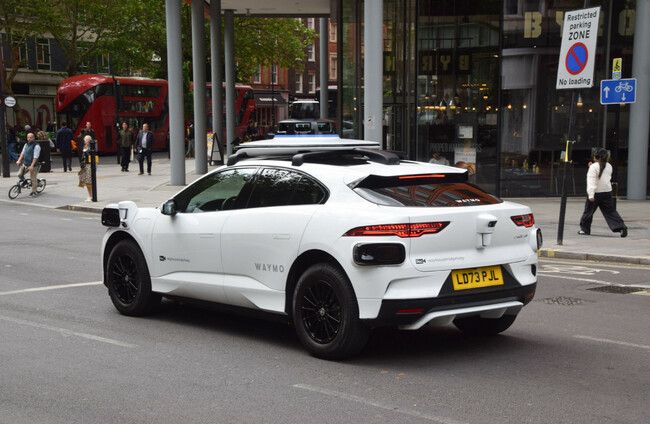
A Waymo taxi being tested in Central London this month. Alamy

Motoring Should we trust self-driving cars?

In theory, removing the human from the loop should make roads significantly safer. But is that the reality?

THE DEBATE AROUND self-driving cars tends to generate a fair bit of attention. Depending on who you ask, the technology is either the near certain future of transport or an overblown Silicon Valley fantasy that will fall apart on a narrow rural road in Ireland.

As ever, the reality is more complicated.

With Tesla pushing to secure approval for its Full Self Driving (FSD) software across Europe, the question has become more immediate for Irish drivers.

What “self-driving” means in practice

This is where much of the confusion begins.

There is no single thing called a self-driving car. Engineers refer to a scale from Level 0 to Level 5, and almost everything on the road today sits at Level 1 or 2.

At Level 2, a car can steer, accelerate and brake under certain conditions, but the driver remains legally responsible and must stay attentive.

A browse of DoneDeal Cars turns up thousands of vehicles with lane assist, adaptive cruise control or automatic emergency braking: all Level 2 features, all requiring an attentive driver behind the wheel.

Tesla’s FSD, BMW’s Highway Assistant and Mercedes’s various systems sit at the same level. For now, Tesla is the only one that has been sold in Ireland, though FSD has not been activated here. Not yet anyway. But that could change in the not-too-distant future.

A truly driverless car, where you could have a nap or read a book, would be Level 4 or 5.

No car company currently sells one to the public anywhere in the world. The closest you can get is a Waymo robotaxi in a handful of American cities, which operates without a human driver but only within zones that have been mapped in advance.

This is also why Tesla’s branding matters.

When a Level 2 system is marketed as “Full Self Driving”, the gap between capability and perception can widen. European regulators have taken a close interest.

Swedish officials were reportedly surprised to learn the system could be permitted to exceed posted speed limits.

Finnish officials questioned whether hands-free operation was appropriate on icy 80 km/h roads.

The Netherlands approved it on 10 April 2026, becoming the first EU country to do so, but several others remain cautious.

Human error and the safety case for automation

In most road collisions, yes, human error is to blame.

The overwhelming majority of road collisions globally involve human error.

In Ireland, the RSA has consistently identified speeding, phone use and drink driving as the dominant factors in fatal collisions. These are all human behaviours rather than mechanical failures.

The case for autonomous systems rests on this reality.

Computers do not get tired, drunk, distracted by a text, or aggressive after a bad day at work. They do not run amber lights because they are running late.

In theory, removing the human from the loop should make roads significantly safer.

US data, where these systems have been tested most extensively, broadly supports the argument. Waymo, Google’s autonomous vehicle division, has now driven more than 320 million kilometres carrying passengers in American cities.

A peer-reviewed study published in the journal Traffic Injury Prevention examined 91 million of those kilometres and found statistically significant reductions in crashes that caused injury, including serious injury, compared with human benchmarks.

Over the same routes, the Waymo system showed a 92% reduction in crashes involving pedestrians, an 82% reduction for cyclists, and 96% fewer injury-causing crashes at intersections. The figures are striking and worth weighing alongside the known risks of human driving.

Incidents, scrutiny and reporting

Crashes have occurred, including fatal ones. As of late 2025, there had been 65 deaths in the United States linked to incidents involving Tesla’s Autopilot and driver-assistance systems; the largest such figure for any single manufacturer, largely because of the size of its fleet.

There is an important caveat, though. Autonomous vehicle companies are required to report every incident to regulators, including minor bumps that human-driven cars rarely report, which can skew comparisons of crash rates. When you account for that reporting difference and compare like with like, the autonomous systems generally come out looking safer, not more dangerous.

The incidents that make headlines tend to be genuinely concerning. A Tesla on Autopilot in California that drove into a stationary emergency vehicle. A cyclist struck by a driverless Uber test car in Arizona. A Waymo that froze in a San Francisco tunnel during a traffic incident. These failures, of course, matter, and they illustrate that getting from 98% of scenarios handled safely to 100% is, in the words of BMW’s director of automated driving, a very big jump.

What this means for Irish drivers

Ireland only passed its first legal framework permitting Level 2 systems on public roads in March 2026. That is how recently this moved from theory to statute. The BMW Highway Assistant that works on German motorways is not available to Irish drivers. Ford’s BlueCruise, widely used in North America, is not offered here. Even on Tesla vehicles sold in Ireland, some features that are standard elsewhere remain restricted.

The honest answer to whether you should trust an autonomous car is: it depends entirely on which car, which system, and which roads you are talking about. A Waymo robotaxi on a street mapped in advance in San Francisco is operating in a very different context from a Tesla on the M50 with a driver who has stopped paying attention because the car told them it could handle it.

That last scenario is arguably the most dangerous of all and not because the technology is reckless, but because human beings are very good at shifting their attention elsewhere the moment they think something else is in charge. The car is not fully autonomous. The driver has been lulled into thinking it nearly is. That gap between perception and reality is where most serious incidents happen.

The technology is real, it is advancing quickly, and the safety data from the best systems is, in places, genuinely impressive. But the roads of rural Kerry are a long way from the mapped suburbs of Phoenix. The question is not simply whether you would trust the car; it is whether the system has been designed, tested and regulated for the roads you actually drive.

Paddy Comyn is the head of automotive content and communications with DoneDeal Cars. He has been involved in the Irish motor industry for more than 25 years.

Journal Media Ltd has shareholders in common with DoneDeal Ltd

Readers like you are keeping these stories free for everyone...
A mix of advertising and supporting contributions helps keep paywalls away from valuable information like this article. Over 5,000 readers like you have already stepped up and support us with a monthly payment or a once-off donation.

View 7 comments
Close
7 Comments
This is YOUR comments community. Stay civil, stay constructive, stay on topic. Please familiarise yourself with our comments policy here before taking part.
Leave a Comment
    Submit a report
    Please help us understand how this comment violates our community guidelines.
    Thank you for the feedback
    Your feedback has been sent to our team for review.

    Leave a commentcancel

     
    JournalTv
    News in 60 seconds