Sign in. It’s quick, free and it’s up to you.
An account is an optional way to support the work we do. Find out more.
Sign in. It’s quick, free and it’s up to you.
An account is an optional way to support the work we do. Find out more.

WELL, IF NOTHING else, at least we’re winning the war on hares. You know, hares. Like rabbits, but big.
Up until this week, Ireland was one of only three EU member states that allowed hare coursing, and following a vote in Dáil Éireann on whether to prohibit the practice, nothing has changed. 125 TDs voted in favour of allowing hare coursing to continue in Ireland, including TDs from Fine Gael, Fianna Fáil, and the largest opposition party Sinn Féin. These people don’t tend to agree on much, but when it comes to harming small animals, there’s a sweet spot to be found.
While the purpose of hare coursing is not to kill the hares, hares are regularly killed during the pursuit. In 2024, a report by The Journal Investigates found that out of 200 hare coursing events in the preceding five years, only four had been monitored by veterinary inspectors sent out by the Department of Agriculture.
One of the strangest details to emerge amidst this debate is the claim that hare coursing is somehow worth €70 million to the Irish economy. €70 million! Let’s try to figure that one out.
Well, first things first, I suppose you’ve got to purchase the hare, which has to cost at least a few hundred euro. You’ve got to buy a jaunty outfit, of course, maybe a flatcap that says something like ‘Hare today, gone tomorrow’ on it. You’ve got to have your greyhounds, or else how would you make the hare fear for its inconsequential little life? And then of course there are the drinks afterwards. Do that a few times a year and eventually that adds up to €70 million, I guess? Straightforward enough.
The Irish Coursing Club has refused to actually publish the independent economic analysis that led to this conclusion, meaning that it cannot properly be scrutinised, debated or referred to with authority as ‘total nonsense’. It might not be total nonsense! We haven’t seen it! But it certainly sounds like total nonsense. Maybe one time they caught a hare made of solid gold and it brought up the average? Maybe the hares pay a lot in corporation tax.
Fianna Fáil TD Niall Collins made the claim that the vast majority of this money directly benefits rural communities, “with €37.9 million attributable to the life cycle of the coursing greyhound itself”. Yeah, because if anything has come to light in the last few years, it’s how well we are treating our greyhounds (6,000 racing greyhounds born in 2021 and 2022 are now dead). Dog’s Trust has called for an end to the sport of greyhound racing in Ireland, too, but we can’t do that either, because, yet again, it’s worth something to the economy.
You can get away with an awful lot in Ireland as long as you can make the claim that whatever awful thing you’re supporting is good for the economy. That much was plain to see this week when Minister for Transport Darragh O’Brien wrote an op-ed in the Business Post singing the praises of the data centres that are now eating up 23% of our electricity.
One argument that O’Brien makes in his op-ed is this: “The other debate around data centres is that we are prioritising them over housing. The choice is not between data centres and housing – a successful economy requires both.”
It seems like the minister might have that backwards. To say that a successful economy requires housing is in much the same vein as saying that a successful economy requires healthy human bodies. Sure, it’s true, but don’t we usually like to think of the economy as something that’s supposed to meet our basic needs rather than the other way around?
This is without even getting into the weeds of what our doubling down on data centres means for household electricity costs in Ireland (currently the highest in Europe) or the global effects on climate change (it’s hot out, in case you haven’t noticed). Nobody is disputing that data centres are important for the way the current world order is operating. The issue is that the current world order fucking sucks, man.
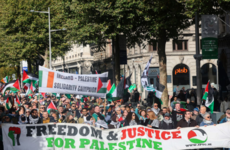
Economic considerations have also been front and centre in discussions surrounding the Occupied Territories Bill, which was passed this week, lickety-split, after it was first introduced by Senator Frances Black more than eight years ago. Critics of the government will point out that it seems much too little and much too late — Israel’s ethnic cleansing of Palestinians in both Gaza and the West Bank has gone so much further than when this bill was first introduced, for example.
Other critics will point out that the intention of the original bill has been gutted by the decision not to include services as well as goods, meaning that the bill fails to account for 70% of the economic activity between Ireland and the illegal settlements in the West Bank. And those critics would be completely correct!
Speaking in the Dáil a few months ago, Taoiseach Micheál Martin himself admitted that economic fears prompted the government to exempt services from the bill, saying, “There is an issue in terms of what will happen if services were included in terms of our own jobs in this country and potential attacks on multinationals who are based here.”
This hobbled bill would, in actual fact, be more accurately referred to as the zombified Territories Bill, shambling into law eight years too late and failing to deliver on its original promise. The bill’s original drafters have distanced themselves from its final form, with activist Conor O’Neill saying: “This was an opportunity to take the huge public interest and demand for real action on Palestine and do something ambitious, but the Government has failed to take it.”
Data centres, killing animals, maintaining trade with a genocidal rogue nation… These apparently make up the cornerstone upon which the gleaming Irish economy is built, to say nothing of a decision this week to grant planning permission for a block of apartments on the mass grave site at what used to be the Bessborough Mother & Baby Home.
It does prompt the question: ‘If all of these industries are so essential to the healthy functioning of the Irish economy, then why does the Irish economy feel so terrible for so many people?’ The whole trade-off of building your economy around such awful things is that at least the economy is supposed to be good.
Instead, what we seem to have is an economy that fails to deliver time and again on fundamental basics like grocery costs, energy costs, fuel costs, housing, access to healthcare and whatever else you’re having yourself. But at least we’re one of only three countries in the EU where you can frighten a hare to death because you’re bored.
To embed this post, copy the code below on your site













have your say