Take part in our latest brand partnership survey

We need your help now

Support from readers like you keeps The Journal open.

You are visiting us because we have something you value. Independent, unbiased news that tells the truth. Advertising revenue goes some way to support our mission, but this year it has not been enough.

If you've seen value in our reporting, please contribute what you can, so we can continue to produce accurate and meaningful journalism. For everyone who needs it.

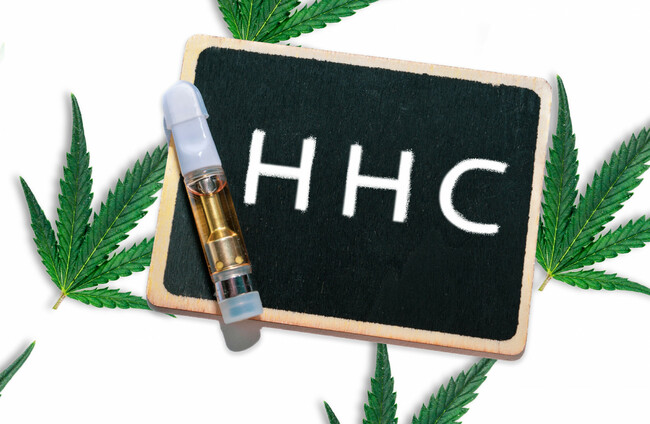
Hexahydrocannabinol. Alamy Stock Photo

Marie Sherlock Time to face the reality of synthetic drug use among young people

The Labour TD says government has been on the back foot when it comes to drugs like this, and it’s running out of time.

THE GOVERNMENT MUST stop sleepwalking through youth mental health crisis induced by the use of certain drugs.

HHC is one of those drugs. It is a synthetic cannabis product, with established links to psychosis and serious mental health damage, and yet it is still being sold legally and openly in this country.

Recently, the College of Psychiatrists of Ireland issued a stark warning about Hexahydrocannabinol (HHC) — that is available without restriction in vape or gummy form. They rightly said it “beggars belief” that such a drug is unregulated. I agree.

But regulation on its own does not work. For us in the Labour Party, the urgent availability of information and awareness on the impacts of this drug is absolutely crucial.

Back in March, I raised my concerns about HHC directly with the Department of Health. This is a synthetic cannabinoid product – often sold as a vape – that has emerged in the last few years and is now becoming increasingly widespread. What we know about this drug is deeply concerning. Its impacts are still being studied, but youth workers, addiction services, psychiatrists and the HSE have been raising the alarm. This is a drug that is doing serious damage.

Young people targeted

The HSE’s clinical lead on addiction, Prof Eamon Keenan, said earlier this year that approximately 20% of young people presenting to addiction services are now using HHC. That figure is staggering, particularly for a substance that has only been around just three years in Ireland.

The Health Research Board recently confirmed that 169 young people have sought treatment for HHC-related problems over the last 18 months. Meanwhile, a study by the College of Psychiatrists found that in University Hospital Galway’s Adult Acute Mental Health Unit, HHC is now the second most common drug linked to psychosis admissions. These startling figures demand serious public health intervention.

When I asked the Government about running a public health campaign to raise awareness of the dangers of HHC, the response was depressingly predictable. They would be outlawing HCC first and then working on education and awareness. From what we can see, no campaign has been developed to date. The same old legalistic approach to a growing public health issue remains.

Instead, the urgent priority must be to roll out a prevention and awareness strategy targeting young people and parents.

We have been here before. Fifteen years ago, large numbers of head shops popped up across our towns and cities selling unregulated new psychoactive substances. They were eventually outlawed after the number of drug-related hospital admissions rose significantly. The banning of those new psychoactive substances and the closure of the head shops did have an overall positive impact-use fell, and so did hospitalisations.

But we know that criminal penalties do not stop curiosity or prevent sale and supply. There will always be some new drug. We also know that fear-based approaches don’t address the root of addiction or mental health struggles. And we know that young people are the most vulnerable when we fail to act early.

Health-led approach

That’s why the Labour Party supports a health-led approach. We want to decriminalise drug use – because we recognise that addiction is a health issue. Decriminalisation would allow us to focus on prevention, harm reduction, and treatment. It would allow us to support, not punish, those who are struggling. And it would allow us to start taking seriously the impact that drugs like HHC are having on a generation of young people.

If we are serious about protecting our young people, we need a radical rethink. That means further investment in local, fully staffed adolescent addiction services. It means prioritising psychoeducation – in our schools, our homes, and our communities. And it means putting in place robust mental health supports, especially for those who are neurodiverse.

We already know that our youth mental health services are overstretched and underfunded. Many young people are waiting far too long for assessments or diagnoses – particularly for ADHD.

A recent study by CityWide and Trinity College Dublin found that 21% of people with ADHD had used substances, with cannabis the most common drug reported. It’s clear that many young people are self-medicating with cannabis and synthetic cannabis products like HHC because they can’t access the care they need. That is a failure of our system.

The law alone will never “fix” this. But a functioning mental health and addiction service just might. It is clearer than ever that Ireland’s current reactive approach to drugs is not working. We need to move forward – with honesty, compassion and urgency. We must talk openly about harm reduction, break the stigma surrounding addiction, and give young people the tools and support they need to navigate this world.

The Government must stop simply relying on legislation as a solution to a complex problem. In the case of HHC, education is our most powerful weapon – and yet, you have to it’s hardly to be found. If we continue to ignore the warning signs, more young people will fall through the cracks. The price of inaction is too high. We must act now – before this ticking time bomb explodes.

There is a crisis in youth mental health in this country. Young people today are facing unprecedented pressures – online, socially, financially and emotionally. They are doing so without the proper support. Time and again, we see the Government fail to address concerns around online harm, under-resourced mental health services, and the needs of neurodiverse young people. Now, we are seeing the consequences of their failure to act on a dangerous new drug that is spreading among young people, largely under the radar.

This needs to change.

Marie Sherlock is a Labour TD for Dublin Central.

Readers like you are keeping these stories free for everyone...
A mix of advertising and supporting contributions helps keep paywalls away from valuable information like this article. Over 5,000 readers like you have already stepped up and support us with a monthly payment or a once-off donation.

Close
36 Comments
This is YOUR comments community. Stay civil, stay constructive, stay on topic. Please familiarise yourself with our comments policy here before taking part.
Leave a Comment
    Submit a report
    Please help us understand how this comment violates our community guidelines.
    Thank you for the feedback
    Your feedback has been sent to our team for review.

    Leave a commentcancel

     
    JournalTv
    News in 60 seconds