We need your help now

Support from readers like you keeps The Journal open.

You are visiting us because we have something you value. Independent, unbiased news that tells the truth. Advertising revenue goes some way to support our mission, but this year it has not been enough.

If you've seen value in our reporting, please contribute what you can, so we can continue to produce accurate and meaningful journalism. For everyone who needs it.

Shutterstock

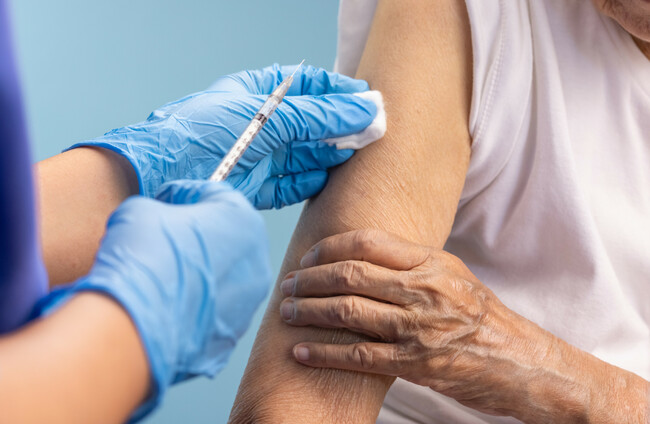
Professor Rónán Collins Getting the winter flu vaccine is an effective way to reduce the risk of stroke

The RCPI national clinical lead for the stroke programme says we should have a comprehensive vaccine schedule to protect older population as we do for children.

AS ANNUAL FLU season approaches, many older people will be aware of the call to get the flu vaccine with their local GP or pharmacy.

Flu causes serious illness in older and at-risk groups, and the current recommendation is that all people aged over 60 should get the flu vaccine each year. Although less seasonal in pattern, a similar recommendation exists for the over 60s and those with weaker immune systems to get an annual Covid-19 vaccine.

Both flu and Covid can cause serious illness, which can lead to severe strain on the health service. However, we also have other seasonal threats at winter, like Respiratory Syncytial Virus (RSV).

The virus is normally considered an issue for younger toddlers, with a hospitalisation rate of 2,500 per 100,000 children under one year. But the hospitalisation rate of 75 per 100,000 older adults is not insignificant – especially when one considers the other consequences of infection in later life.

RSV and shingles

RSV is a very significant illness in later life and is probably the second greatest cause of acute respiratory illness after flu in older people over winter. Last year was a bad RSV year, with a reported 500 known hospitalisations in older adults in the 2023-2024 season and an estimated 34,000 to 58,000 infections across the country, the majority undetected or occurring in community and nursing home settings.

About two in every 1,000 people get shingles every year, the majority (80%) of whom are in the over 50s category. About 11 per 1,000 people over 80 get shingles. Like a bad memory, shingles is the reactivation of the chickenpox virus you had as a child, often re-emerging when you are ‘run down’ by other illnesses or disease.

A common belief is you can contract shingles, but this is not true. You already had the virus lying dormant since the days of your chickenpox, waiting for its chance to re-emerge. It’s a nasty illness associated with a painful ulcerating, weeping rash that follows a rather distinct geographical shape as it erupts along the line of a nerve.

Occasionally, shingles can be sight-threatening if it occurs near the eye (Herpes Zoster Ophthalmicus) or it can be complicated by secondary skin infection or persisting debilitating and difficult to control nerve pain. Early detection and treatment with antiviral medications is key, but not as easy as it sounds. The occurrence of sudden severe, tingling-type pain on an area of your skin often occurs a day or two before any rash. Such sudden pain should alert you to watch carefully for the first little blisters, known as vesicles, in that area. If they start to appear early, treatment from your GP may save a lot of trouble later.

We have effective vaccinations for both flu and Covid-19 available for free to the over 60s and I would encourage people to get them annually. We also have effective vaccines for RSV which have significantly reduced the amount of toddlers getting ill with the virus, but these are not yet provided to older people, the second most affected group. A similar situation exists with regard to the shingles vaccine. Yet both are available in the UK to the over 65s (RSV) and over 75s (shingles).

Increased risk

One might well wonder why the clinical lead for stroke is writing about vaccines.
Well, we know very definitely that flu, RSV and shingles all increase your risk of stroke in the weeks after illness. Broadly speaking, each illness increases your risk of stroke and heart failure by somewhere between two to eight times. My colleague Martin O’Donnell in Galway showed some time ago in the INTERSTROKE study that vaccination against flu is probably one of the cheaper and more effective measures we could take to prevent stroke on a worldwide basis.

Flu and RSV are also often associated with acute confusion states (delirium) as inflammation leads to increased ability for toxins to cross the brain’s protective mechanism, the blood-brain barrier. These infections may also accelerate the onset of dementia and there is an emerging body of strong evidence that vaccination may reduce both stroke and risk of dementia by as much as 20%.

Viral infections cause inflammation and during the inflammatory process, the body releases substances called cytokines. These may inflame the vessel wall (vasculitis) or cause instability in pre-existing cholesterol plaques along your arterial walls that may fissure like a lava spill. causing fresh clot like a jelly crust to form on its surface which may then break off and travel in the bloodstream to block a smaller artery in your brain.

The released cytokines also cause stress in heart muscle, provoking myocardial infarction (heart attack) or heart failure in those with vulnerabilities. At times, they also may lead development of an irregular rhythm called atrial fibrillation, sometimes referred to as AF or A-Fib. AF causes one in three of all strokes in Ireland. The irregular mixing action of AF leads to clot forming in a chamber of your heart like cement sticking to the inside of faulty mixer, which may fall off the chamber wall and be pumped to your brain vessels to cause blockage and stroke

Effective prevention

As a student of medicine interested in stroke, I often wondered why we saw more strokes in winter. Theories abounded in my earlier days of medicine about changes in temperature, atmospheric pressure or pollution from winter fires. All along the answer was ‘staring up our nose at us’, so to speak. Winter viruses.

One in four of us will suffer a stroke. One in ten will die from that stroke and half will be left disabled in some form after it. At least 90,000 people are living with some disability after stroke in Ireland. Having devoted a fair share of my professional life to treating acute stroke and trying to improve our systems of care, I am increasingly interested with our population forecasts in our need to prevent stroke. Failure to do so will lead to a 58% increase in stroke numbers as forecasted by the ‘Burden of Stroke in Europe’ report

If I was Minister for Health, I’d be focused on the challenge of healthy ageing and preventing stroke and disability. Vaccines are one simple and relatively cheap measure to reduce the risk and burden of winter hospital admissions, heart failure and stroke in Ireland.

We should have comprehensive vaccine schedule to protect our older population as we do for our children.

Professor Rónán Collins is a consultant physician in geriatric and stroke medicine at Tallaght University Hospital, and the RCPI national clinical lead for the stroke programme. 

Readers like you are keeping these stories free for everyone...
A mix of advertising and supporting contributions helps keep paywalls away from valuable information like this article. Over 5,000 readers like you have already stepped up and support us with a monthly payment or a once-off donation.

Close
JournalTv
News in 60 seconds