We need your help now

Support from readers like you keeps The Journal open.

You are visiting us because we have something you value. Independent, unbiased news that tells the truth. Advertising revenue goes some way to support our mission, but this year it has not been enough.

If you've seen value in our reporting, please contribute what you can, so we can continue to produce accurate and meaningful journalism. For everyone who needs it.

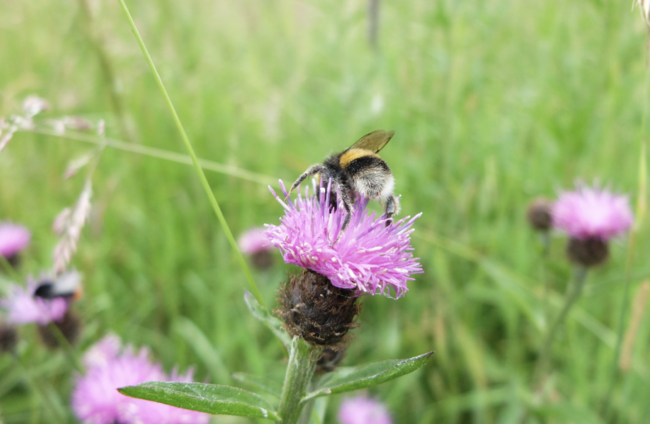
Bumble Bee on Knapweed flower at World Bee Sanctuary. Clare-Louise Donelan

The Bee Guy World Bee Day won't save our little bee friends

On the international day for celebrating bees, The Bee Guy shares 20 cool facts about these amazing and very much endangered creatures.

IT’S WORLD BEE Day today. That’s in the same week that keen gardeners will be glued to the Chelsea Flower Show, which is now underway in London.

The annual pilgrimage for the world’s leading gardeners certainly makes for soothing evening TV (Pimms on the lawn, anyone?) and no doubt, along the way, there will be talk of ‘oh, this plant is great for pollinators’ and ‘it’s important to encourage wildlife’ as the week goes on.

vogue-williams-during-press-day-at-the-rhs-chelsea-flower-show-at-the-royal-hospital-chelsea-in-london-picture-date-monday-may-18-2026 Vogue Williams during press day at the RHS Chelsea Flower Show, at the Royal Hospital Chelsea in London. Monday, 18 May. Alamy Stock Photo Alamy Stock Photo

But the difficulty here is that while the world’s horticultural elite are busy building beautiful gardens and habitats for insects and bees to thrive, it is all happening while the actual habitats of these creatures are being systematically destroyed.

So, no amount of prize giving at garden shows or international bee or pollinator days will make up for the destruction of hedgerows, the intensive farming, the spraying of chemicals and the rampant industrialisation that is truly threatening the very existence of these beloved creatures.

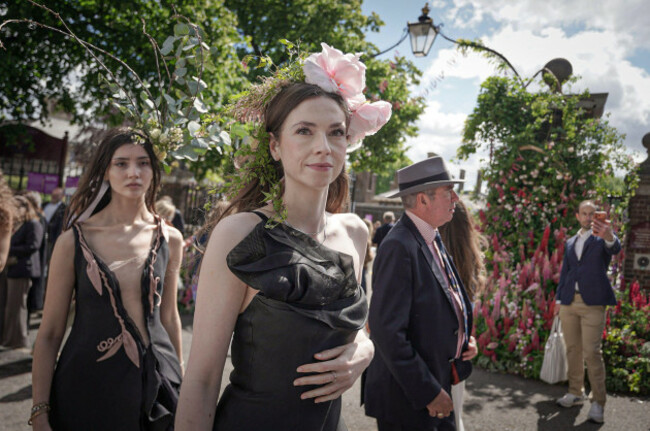
london-uk-20th-may-2026-9th-annual-flower-walk-sees-striking-dressed-models-wander-around-the-various-chelsea-floral-installations-during-rhs-show-fashion-by-catherine-walker-co-one-of-kate-mi Alamy Stock Photo Alamy Stock Photo

But today, it is important that we celebrate the might and wonder of bees, the best pollinators in town.

Here’s the thing: World Bee Day was actually created for honey bees. It was named after Anton Janša, a beekeeper from Slovenia, who was a pioneer of modern apiculture. But honey bees, as cute and lovable as they are, aren’t in trouble. I’ve written extensively about this before. There are more of them on the planet right now than there probably ever have been.

The bees that are in trouble — the wild bees, the bumblebees, the solitary bees — don’t have a day named after them. They don’t have keepers. They don’t make honey for humans. And one species in 10 of them is heading for extinction. And that’s from a number that has doubled in the last 10 years.

I’m often told by my editors that my language is ‘too flowery’, and I need to be more hard-hitting when I present the case for bees. But I love flowers! However, today, on World Bee Day, I’m not going to use flowery language. No poetry. Because things are too serious.

So I’m just going to instead present 20 facts about bees that might change how you think about them — some bad, some good, but all facts.

Fact 1: World Bee Day is today

The United Nations have designated 20 May each year since 2018 as World Bee Day.

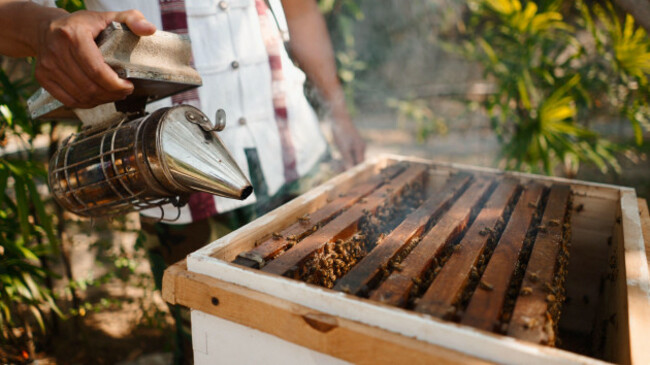
beekeeper-smoking-beehive-calming-bees-for-honey-production-and-agricultural-work Alamy Stock Photo Alamy Stock Photo

This day was chosen as it is the birthday of Anton Janša, a beekeeper whose practices laid the foundations for modern beekeeping.

Fact 2: Anton Janša kept honey bees and hives

But there are an estimated 26,000 species of bees across the planet, and only eight of these species are honey bees.

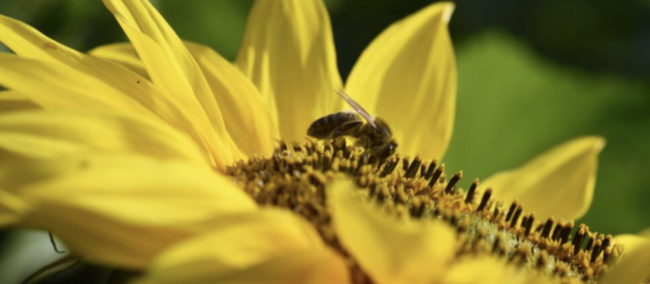
Screenshot 2026-05-20 at 11.45.09 Honeybee on a sunflower at the World Bee Sanctuary. Clare-Louise Donelan Clare-Louise Donelan

The majority of bee species are solitary bees, and there are in and around 250 species of bumblebee worldwide.

Fact 3: Honey bees are not endangered

There are more honey bees on the planet right now than there probably ever have been in the history of honeybees.

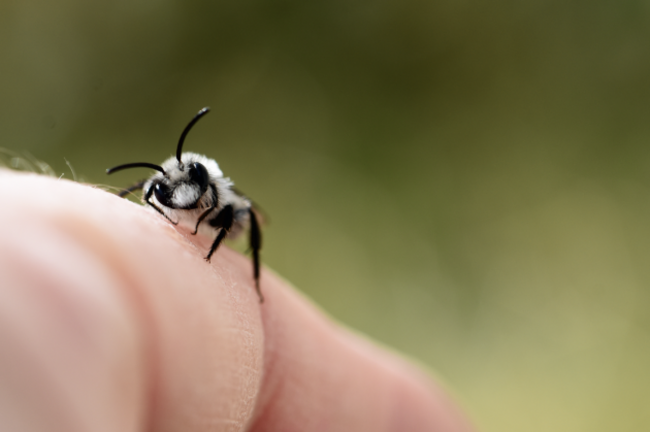
Screenshot 2026-05-20 at 11.40.41 Solitary bee, the Ashy Mining Bee at the World Bee Sanctuary. Clare-Louise Donelan Clare-Louise Donelan

They are primarily a kept species from which humans extract labour and honey. Labour, as they are used en masse to pollinate crops. Honey needs no explanation. The point is they are not endangered.

Fact 4: Bumblebees and solitary bees are endangered

It is estimated that 40% of bees (and other pollinators) are endangered worldwide. 25% of bee species are no longer showing up on recordings.

There has been a 76% decline, by mass, in flying insects over a 27-year period on nature reserves in Germany. On nature reserves. The safe places. Yes, the safe places.

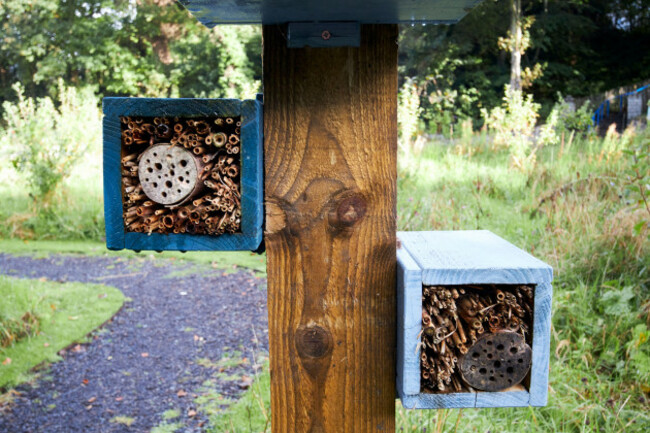
bee-and-insect-hotels-in-swan-park-buncrana-county-donegal-republic-of-ireland Alamy Stock Photo Alamy Stock Photo

I was told by a leading academic eight years ago that it is presumed that we are losing bees at a rate of 5% per annum. Hard-nosed enough for you?

Fact 5: What is driving this decline is human activity

A dramatic loss of, and degradation of, habitat. Pesticide use. Spread of disease. Pollution. And to top it all off, man-made climate breakdown.

In less than 100 years, we’ve messed it all up. It’s not a debate any more. Not an argument. 

It’s a fact. The science is in. The proof’s in the silence. Unpalatable as it is to most, but glaringly obvious to those who work at the coal-face of nature advocacy, is the fact that what we choose to eat and how we choose to produce that food is the greatest driver of bee, insect and nature decline.

We’re eating the life support system we rely upon to exist. How ridiculously stupid.

Fact 6: We know

I don’t think the above facts will shock anyone. We know. Deep down…we know. Yet nothing changes. It’s still getting worse year on year.

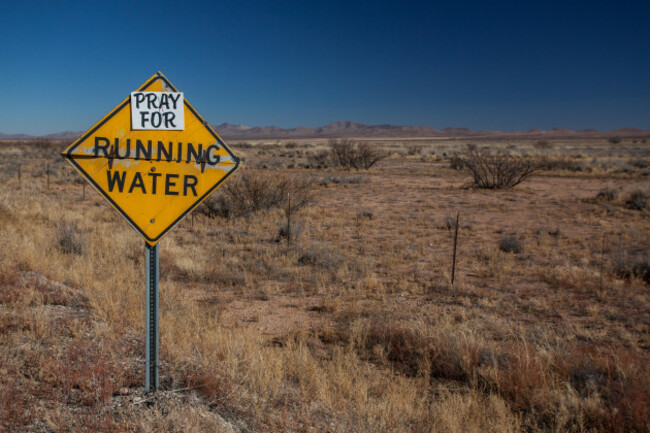
pray-for-running-water-a-humorous-sign-pointing-to-drought-in-southwestern-new-mexico-in-the-age-of-global-climate-change Alamy Stock Photo Alamy Stock Photo

So maybe understanding what we are losing, knowing bees a bit better, learning a little about these wonderful, vital, gentle creatures and their characters, lives and ways will light a spark.

Fact 7: Bees have been around for 130 million years

They are a plant-based evolution of wasps. If you didn’t already believe bees were magic, this should do it.

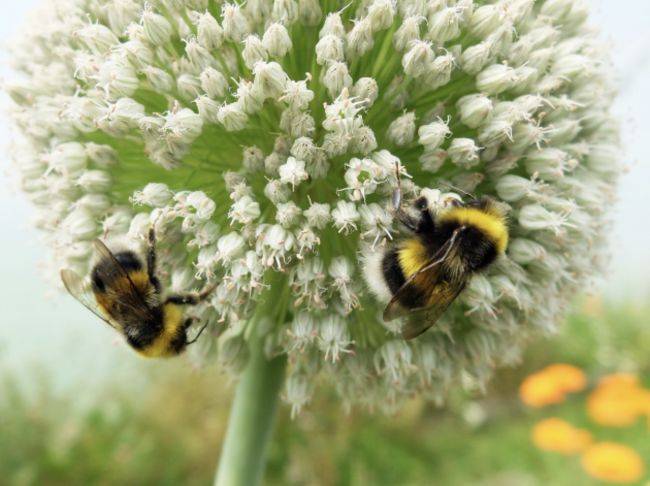
Screenshot 2026-05-20 at 13.24.18 Bumblebees at the World Bee Sanctuary. Clare-Louise Donelan Clare-Louise Donelan

They foraged at the feet of dinosaurs. Think about that in the context of our consequence.

Fact 8: Bumblebees are capable of flying higher than Mount Everest (29,000ft)

But they don’t. They could if they wanted to, but they’re smart, so they’d fly around rather than over the mountain.

Which they did – see next fact! The highest they have been observed flying in the wild is 16,000 ft above sea level.

Fact 9: Bumblebees trace their ancestry back to Tibet

They spread out from here, cross the planet (flying around, not over, Mount Everest on their way!), and even today, the location with the richest diversity of bumblebee species on the planet is the highest highland on earth, the Tibetan Plateau. Maybe this is why they are so docile and chill by nature – but I can’t fact that.

Bonus Fact: Bumblebees have no ears!

Fact 10: Only female bees sting

Male bees don’t sting. This isn’t a choice thing – they have no stinger.

All female bees (queens and workers) develop a stinger, but the equivalent part of the body in males develops into the genital capsule.

Fact 11: Bumblebee nests are short-lived, messy affairs

They last for the most part from early spring until late summer/early autumn when they come to a natural end.

The male bees, female workers and old queen die off, and the new queens disperse to hibernate.

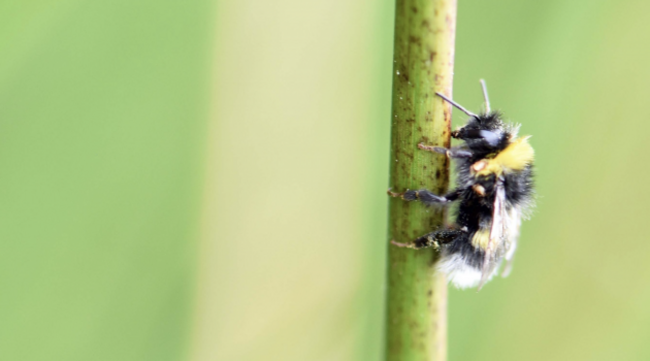
Screenshot 2026-05-20 at 11.55.53 Small bee clings to a read at the World Bee Sanctuary. Clare-Louise Donelan Clare-Louise Donelan

During hibernation, bumblebee queens avoid freezing to death by producing glycerol, which acts like antifreeze, preventing water in their bodies from turning into ice.

Fact 12: Bumblebees could pollinate in greenhouses in space

Research to test if bees function at low atmospheric pressure shows honeybees can’t fly below 66.5kPa, yet down at 52kPa plants will grow and bumblebees will pollinate.

Fact 13: Bumblebees leave a scent mark

This is a sticky secretion, which they leave behind whenever they land on flowers and can distinguish between their own scent marks, those left by fellow nest-mates, and those left behind by bees from other colonies.

Fact 14: Solitary bees account for over 90% of bee species

It’s hard to imagine the solitary bees, given we’re so primed to think of bees hanging about in their thousands in hives. But solitary bees don’t live in colonies.

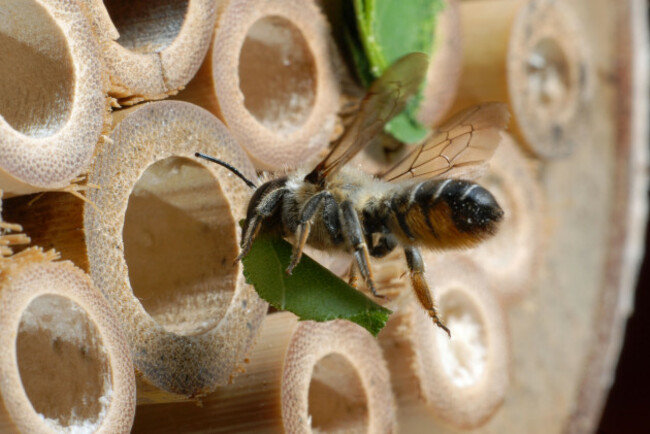
a-leafcutter-bee-megachile-centuncularis-on-a-bamboo-home-for-solitary-bees A leafcutter bee, Megachile centuncularis, on a bamboo home for solitary bees. Alamy Stock Photo Alamy Stock Photo

Don’t have a queen. Don’t make honey or wax. They aren’t aggressive, don’t swarm and rarely sting. They vary in size but are generally smaller than bumblebees.

Fact 15: Bumblebees love a good old groom!

They groom themselves often and even manage to multitask by grooming whilst flying at the same time.

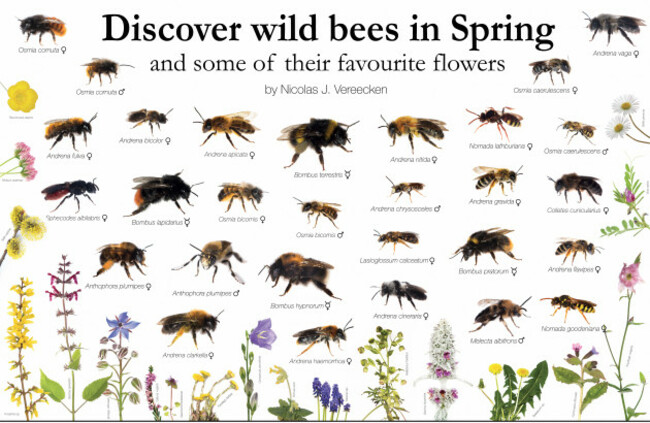
wild-bees-in-spring Alamy Stock Photo Alamy Stock Photo

They groom pollen, which attaches to the hairs on their bodies, into the pollen baskets (corbiculae) on their hind legs. Grooming also helps to dislodge mites, other parasites, and dirt, maintaining bee health.

Fact 16: Bumblebees have two antennae

They use these along with their mouths to smell and taste. Having two antennae means they can detect the direction a smell is coming from. They also use their antennae to communicate with other bees in their colony: touching antennae to the antennae of another bee is a bee handshake!

Fact 17: Bumblebees create tiny hurricanes to fly!

The back-and-forth motion of bumblebee wings creates vortices in the air like tiny hurricanes, the eyes of which have lower pressure than the surrounding air, and keeping these eddies of air above the wings helps bumblebees stay aloft.

Bonus Fact on bumblebee love: For most species of bumblebee, the queen will usually only mate with one male

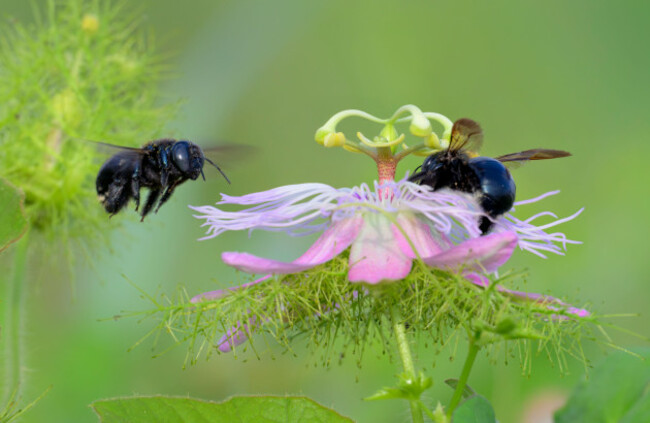
southern-carpenter-bee-xylocopa-micans-female-approaching-flower-of-scarletfruit-passionflower-p-foetida-where-another-female-is-feeding-texas Southern carpenter bee (Xylocopa micans) female approaching flower of scarletfruit passionflower with another bee. Alamy Stock Photo Alamy Stock Photo

Most males never actually get to mate successfully (less than 10%), but if given the chance, will indeed mate with more than one queen. Yeah…I know, I know…

Fact 18: Female bumblebee workers aren’t always that good at foraging 

Initially, it may not go well for them, as they often crash onto flowers and land awkwardly. Researchers found that the foraging ‘rate of return’ for workers new to foraging was not maximised until at least 30 trips had been made from the nest.

Often, the energy spent foraging was greater than the energy returned in nectar. Like us, bees have to figure stuff out and improve with experience.

Fact 19: Bees have five eyes

They have two large compound eyes, one on either side of the head, and they also have three small, simple single-lens eyes on the upper front of the head called ocelli.

These ocelli are very sensitive to UV light and seem to act as sensors for light levels, but are not capable of forming useful images.

Fact 20: Bees need flowers

Bees need flowers. Bees need flowers.

Bees and flowers have evolved together over millions of years.

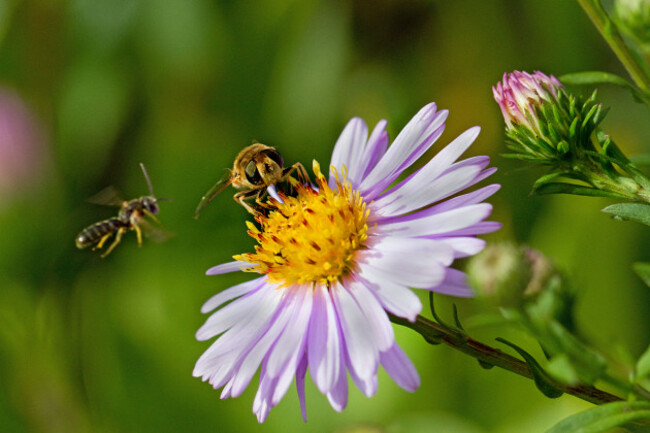
bees-and-hover-flies Bees and hover flies. Alamy Stock Photo Alamy Stock Photo

Many, many flowers rely on bees (and other pollinators) for pollination, and in return, they provide food in the form of nectar and pollen.

Nectar = Carbs = Sugar = Energy

Pollen = Protein + Nutrients + Fats.

It’s a mutually beneficial relationship.

So there you go.

No flowery language.

No poetry.

Just 20 facts of hundreds I could provide to you about these wonderful but increasingly endangered creatures. Hopefully, they might inspire a curiosity and caring in those who know little about bees and provide a reminder of sorts to the experts and professional advocates that bees and saving bees is not about honey bees and not just about the economic value they provide to us and the economy.

Bees don’t belong on the balance sheet; they belong on your balcony. In your garden. In your park. In healthy, unruly hedgerows. In every field, by every stream and in every thriving native woodland and forest.

They have a right to just exist.

To be.

They have been doing it for millions and millions of years, way, way before us.

This was their planet before we happened.

We should know and respect that on this World Bee Day and all days…for if the bees are happy and healthy, we will be too.

Paul Handrick aka The Bee Guy, is the founder of the World Bee Sanctuary in Co. Wicklow, now open to visitors by appointment. You can get your daily bee fact by following him on social media channels. www.worldbeesanctuary.org
X – @the_beeguy Bluesky – @thebeeguy.bsky.social Mastodon – @thebeeguy@mastodon.ie Instagram – @world_bee_sanctuary

Readers like you are keeping these stories free for everyone...
A mix of advertising and supporting contributions helps keep paywalls away from valuable information like this article. Over 5,000 readers like you have already stepped up and support us with a monthly payment or a once-off donation.

Close
Comments
This is YOUR comments community. Stay civil, stay constructive, stay on topic. Please familiarise yourself with our comments policy here before taking part.
Leave a Comment
    Submit a report
    Please help us understand how this comment violates our community guidelines.
    Thank you for the feedback
    Your feedback has been sent to our team for review.

    Leave a commentcancel

     
    JournalTv
    News in 60 seconds