Sign in. It’s quick, free and it’s up to you.
An account is an optional way to support the work we do. Find out more.

Sign in. It’s quick, free and it’s up to you.
An account is an optional way to support the work we do. Find out more.
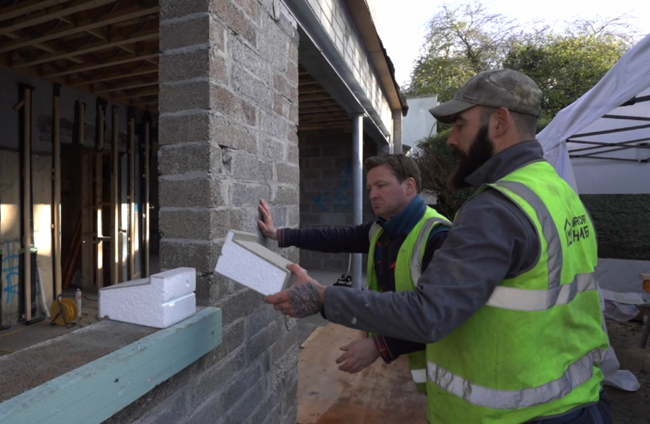

“I DO FEEL there’s a serious opportunity for Ireland to really get up to spec. We’re going to be leaders in what we’re doing in the building and construction industry.”
A builder and quantity surveyor, Keith McGrory is MD of McGrory Homes in Waterford city. He’s also one of a new generation of construction workers specialising in retrofitting: making changes to an existing building to upgrade its energy efficiency.
Keith’s eyes were opened to new opportunities in areas like retrofitting and renewables when he started to upskill a few years back. “After the last downturn when there was a bit of time and there was less work, I really wanted to open my horizons in construction,” he says.
While studying for his degree in Construction Quantity Surveying in Waterford Institute of Technology, Keith had the chance to explore new energy efficient building technologies – and relished every chance to learn more. “I really spent time identifying where all of this was going,” he recalls.
Time to specialise
Fast forward to 2021, and Keith is one of over 1000 people who’ve completed dedicated retrofitting and NZEB (nearly-zero energy building; that is, a building with very low or zero energy consumption) courses at the Waterford Wexford Education and Training Board’s NZEB training centre.
WWETB is leading the way in upskilling tradespeople like Keith in sustainable building technologies, and in a joint initiative with Wexford County Council, was recently designated as a UN Centre of Excellence.
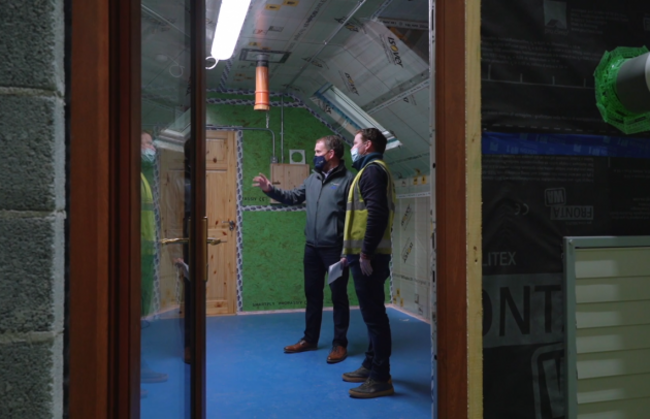
With demonstration models of everything from wall insulations to an entire retrofitted house, students at the NZEB training centre have the chance to experience, in person, the products and processes they’re likely to be using when retrofitting a home.
“That’s what really helped me: the touching, the feeling of the products, seeing how it worked. It really teases out the critical points for the practical minded builder,” says Keith. He describes the training as an “added tool” in his arsenal, an extra layer of knowledge that helps him to carry out retrofitting work to the best standard possible.
Looking to the future
Training centres of excellence like the WWETB will play a vital role as Ireland works to achieve its climate action goals in the coming years. The government’s Climate Action Plan, published last month, sets out measures for the residential sector to reduce emissions by over 50% by the end of 2030.
Within that timeframe, it’s hoped that 500,000 homes can be retrofitted to a Building Energy Rating of B2 or higher, and that 400,000 older heating systems will be replaced with more energy efficient heat pumps.
Home retrofit is a top priority in the National Development Plan for 2021 to 2030, with €8bn allocated to helping Ireland achieve these ambitious targets. Around 16,000 new jobs will be created from 2024 – for engineers, electricians, administrators, architects and more – as the sector scales up.
A powerful opportunity
Keith says now is an exciting time in the construction industry, with huge opportunities for Ireland to lead the way in retrofitting and sustainable building methods.
There’s a regeneration of the whole industry. If we embrace it, it’s not just that we’re making better buildings… we’re staying at the forefront. We are going to be leaders in what we’re doing with the building and construction industry.
To hear more about Keith’s training with the WWETB, watch the video here.
You can read more about the Climate Action Plan, and about how the government is supporting Ireland’s target to reduce residential emissions, here.
To embed this post, copy the code below on your site












have your say