We need your help now

Support from readers like you keeps The Journal open.

You are visiting us because we have something you value. Independent, unbiased news that tells the truth. Advertising revenue goes some way to support our mission, but this year it has not been enough.

If you've seen value in our reporting, please contribute what you can, so we can continue to produce accurate and meaningful journalism. For everyone who needs it.

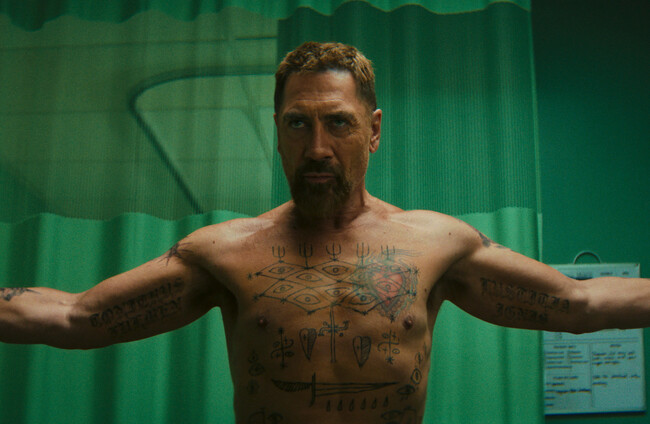
Javier Bardem as Max Cady

Review: Is the new TV remake of Cape Fear worth watching?

The 10-part series is on Apple TV.

DO WE NEED a remake of Cape Fear? A 10-part TV series remake no less, with each episode clocking in at just under an hour?

That is, of course, the first question to be asked about this latest Apple TV series. It’s a reimagining of the Cape Fear story, which has been told three times already: once in the book The Executioners by John D McDonald, and twice on screen, in a 1962 film starring Gregory Peck and Robert Mitchum and then Martin Scorsese’s remake of that, starring Robert De Niro, in 1991.

This latest series is based on the book and films, and Scorsese serves as one of a host of executive producers (as does Steven Spielberg). These days the screen industry continues its love affair with IP, ie work that has already been tried and tested. Apple TV has already remade Presumed Innocent, which was also a film and book, and made it into a high-quality, intense TV show, so it has form in this area (as well as creating many excellent original series).

Now comes Nick Antosca, who was also showrunner on Netflix’s Brand New Cherry Flavour, with his take on Cape Fear. 

Crime and punishment

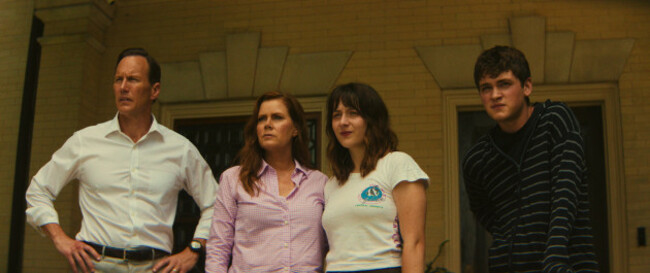
Cape_Fear_Photo_010502 The Bowden family Apple TV Apple TV

There are plenty of reasons why Cape Fear is an enticing story to delve further into. The basic plot is that a dangerous prisoner named Max Cady is released from prison and wants revenge on the lawyer he blames for putting him away.

Each time the story is retold, the crime and reasons for Cady’s anger evolve. In the two movies, Max Cady was guilty of rape. In this TV series he was jailed for the murder of his wife. While in the films he is angry at his defence attorney, in the series he is angry at two married attorneys: Anna Bowden (Amy Adams), who was his defence lawyer, and Tom Bowden (Patrick Wilson), who was the prosecutor of his case. Cady blames them for his being jailed for 17 years, and suspects nefariousness as the pair got married after the case.

A key change here is that Cady is exonerated of the crime and gets out of jail. He also makes almost immediate contact with the Bowdens. Where the 1991 film made a deliciously terrifying meal out of a cat-and-mouse game between Cady and his lawyer, Sam Bowden, this time around the stalker and prey meet very early on.

Cady shows up at a fundraiser being held by Anna Bowden and the organisation she runs, SJLP. He’s welcomed to the fundraiser by Anna’s colleague, because SJLP works at releasing innocent prisoners and Cady is a fine example of someone exonerated. Cady even encourages those present to take out their phones and donate.

Disturbed character

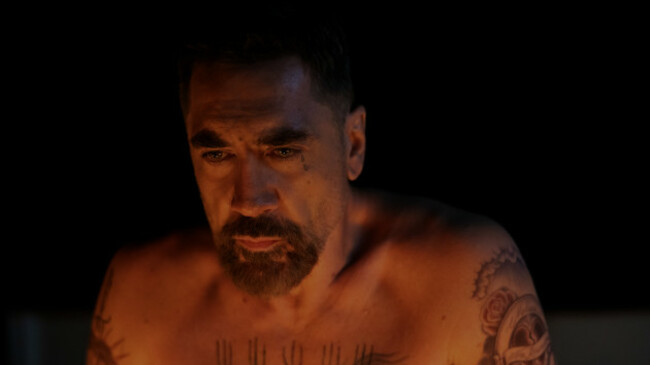
Cape_Fear_Photo_010405 Javier Bardem as Max Cady

It’s a fine example of how Bardem plays Cady as disturbed and disturbing, but a man bearing a certain swagger and charisma. He is suitably menacing as Cady, harnessing the intensity of De Niro but adding some smoothness to the character.

That Cady has been found innocent means that, despite clear signs of him being a menace, the audience feels a level of sympathy for him, too. That sympathy is toyed with as the series goes on, because the Bowdens and their teen children get entangled in strange incidents that they suspect involve Cady.

Cady claims in the second episode that he never murdered anyone until he went to jail; that jail, in other words, turned him bad, meaning the Bowdens have messed up his life in more ways than one. 

The Bowdens themselves have built a privileged, successful life thanks to their work as lawyers. But from the first scene, we know that Anna in particular feels a little uncomfortable about this – that their wonderful life and big house come from representing some of the most vulnerable people in society. This is one of a number of modern threads woven into the original story. 

Other threads involve the behaviour of their teen children: Zack (Joe Anders, aka son of Kate Winslet) and Natalie (Lily Collias, excellent in the underseen Good One). Zack is surly, prone to self-harm and spends a lot of time online chatting to people claiming to be hot women. Natalie is trapped in the role of ‘good girl’ in the eyes of her parents, while her brother pushes her away.

Amy Adams is particularly excellent as Anna Bowden, employing a southern accent and delivery that’s so laconic it feels like it’s covering over for an anger coiled up inside her. She tries to be loving, selfless and calm when dealing with frustrating people and situations, but it feels like we are watching a pot about to boil over.

She’s well matched by Wilson as her husband, who is driven to distraction by the fear that his family is being targeted by Cady. Both of the Bowdens possess a Southern charm and a sense of manners that are put under serious pressure as Cady gets more enmeshed in their lives. 

Tension

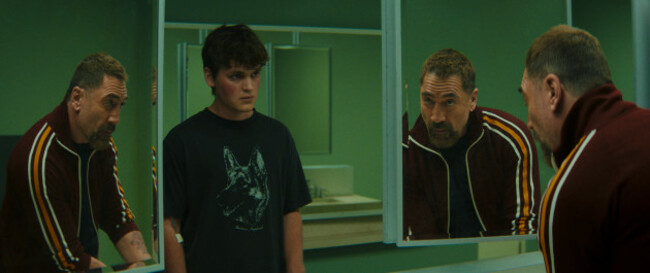
Cape_Fear_Photo_010206 Javier Bardem as Max Cady and Joe Anders as Zack Bowden Apple TV Apple TV

Further amping up the tension is the way that the score and visuals are employed. For starters, there’s the classic Bernard Herrmann score. This is a score built for intensity, and which dismisses subtlety to make us viewers feel like we’re about to jump out of our skin.

Visually, there’s a Hitchcockian approach to the cinematography, with orbit shots and Dutch angles evoking how discombobulated the Bowden family members feel. 

Fear and paranoia are stoked by audio cues too. Security tech has certainly come on since the 1962 and 1991 films, but such technology is also prone to glitches. This is cleverly used to provoke tension in each episode, and at times, the sound of alarms and noises would literally put the heart across you. 

Cape Fear wants to keep you on edge, and on edge you stay, anticipating the next approach from Cady or the next drama awaiting the Bowdens. The Bowdens aren’t the ideal paragons of virtue they might appear to be initially, making things even more thrilling. 

This tightening of the tension means that Cape Fear feels intensely heightened in a way that those who love a good 90s thriller (like, of course, the 1991 Cape Fear) will enjoy. Some moments are quite OTT, including one involving a severed toe that had this reviewer hooting with laughter as I tried to shield my eyes from the grisly visuals. 

The final few episodes aren’t available to review yet, so it remains for this reviewer to find out how this story is wrapped up (or if an attempt will be made to leave the door open for a second series). Thus far, Cape Fear is a case for what can happen when enough resources and fresh ideas are put into a reboot.

It’s an absorbing series that takes the original Cape Fear story into a new direction, but keeps enough links to the 90s thriller vibe to make us feel like we’re watching something nostalgic. The modern troubles it digs into – parental control, teen issues, social media, drugs – mean it feels connected to audience fears as much as the serious fears plaguing the Bowdens.

But as always with such remakes, the question remains of how much the recycling of IP is actually needed. This is a story that could be told on its own, without the connection to the Cape Fear IP. And yet, can we blame showrunner Nick Antosca for utilising a 90s classic as a jumping-off point? Given the pressures on the industry right now, it’s hard not to blame him – especially when Max Cady is such a rich, complex character through which to explore a whole host of contemporary fears and anxieties.

Cape Fear is streaming on Apple TV now.

Close