Sign in. It’s quick, free and it’s up to you.
An account is an optional way to support the work we do. Find out more.
Sign in. It’s quick, free and it’s up to you.
An account is an optional way to support the work we do. Find out more.
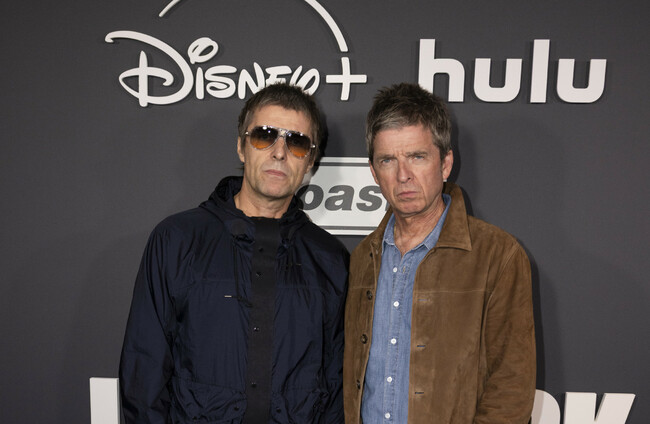
WHEN IT WAS announced in 2024 that rock’s favourite bad boy brothers Liam and Noel Gallagher were going to tour together for the first time since a Parisian bust-up in 2009, there was some scepticism.
Tickets quickly sold out, and fans were buzzing about seeing the guys back on tour. But simmering beneath the excitement was a latent anxiety that it might all fall apart. This was a band, after all, that had form in sibling fights and cancelling tours.
We know what actually happened: Oasis toured again, extremely successfully. The 1990s came alive in the second half of 2025. It all went so well that a 2027 tour is planned.
But what was really going on behind the scenes as they prepared for their comeback? The new documentary Oasis: Don’t Look Back In Anger promises to fill us in.
So do we learn anything new, and is it worth watching?
Retro rehearsals
The documentary opens with a quick flashback to the band’s rise to fame in the early 90s, culminating in the infamous fight that led to a cancelled tour in 2009. We quickly get a sense of both Liam and Noel’s relationship. They might admire each other’s talent, but they nonetheless find it easy to drift into antagonism. Their relationship has a biblical feel to it – it’s always brother versus brother.
Don’t Look Back In Anger comes from writer and creator Steven Knight (Peaky Blinders, House of Guinness) and directors Dylan Southern and Will Lovelace, and aims to chart the reunion tour as it happened. With Knight involved, you know that it won’t be completely subtle, though it stays pretty down to earth throughout.
The tension around Liam and Noel’s fragile détente propels the first half of the documentary forward. The viewer is on the alert for cracks, as are the other Oasis members. During rehearsals, we watch as Liam steps away from the mic, heading out a fire door. Both we and the band wonder if he’s done a runner. Turns out he was just taking a break.
Though he’s now in his 50s, Liam still has the attitude of a teenager who doesn’t want to tidy his room. Noel is the older brother who’ll tidy his room but won’t be quick forgiving his younger brother for his brattiness. (Liam is “a pain in the arse”, as Noel puts it.) They’re a pair who were born to be in the limelight: mercurial and self-aggrandising.
But they’re also members of one of the greatest rock bands of all time, who manage to sideswipe any suggestions of wearing their influences on their sleeve by creating songs that instantly transport the listener back to better times. They set out to become icons, and icons they became.
Rehearsals
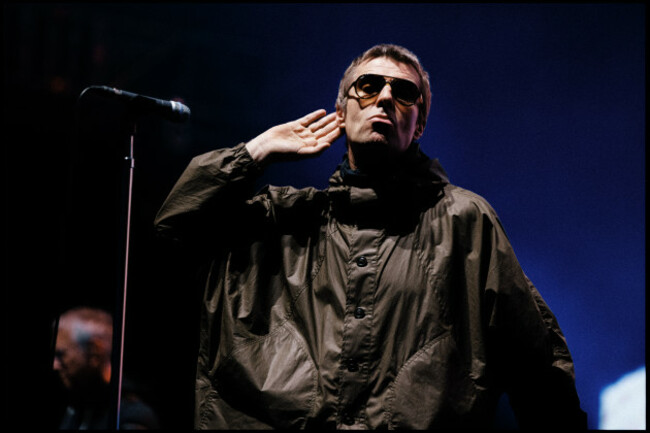
For the first third of the film we are with them during rehearsals. It’s intense. Noel is a focused taskmaster who wrings the best performances possible out of the willing band. One of the curious and appealing things about Oasis is the air of carelessness around their public personas, which is the opposite to the band’s dogged approach to live performance.
That’s not to say they enjoy rehearsals. Soon Noel even claims he can’t picture the gigs actually happening. Liam clearly has little patience for it all either. But watching him in rehearsals, leaning towards the mic with his hands clasped behind his back while the band play at full throttle… well, it’s pretty spine-tingling. He might come in the door in a bad mood and leave in a bad mood (per his brother), but when Liam switches it on there’s no denying the power of Oasis.
At their first gig in Cardiff, the hours of rehearsal slot into place. The most moving parts of the documentary are what this means to their fans. We see people singing along, arms around each other, lost in the bliss of nostalgia. Oasis don’t exist for the band members, or for the Gallagher brothers – they exist for the fans. And the band knows this.
As the documentary progresses, the fan stories rack up. We meet a woman in Brazil who has named her dog after her idol Bonehead, and a mother whose non-verbal son loves the track Talk Tonight.
The thread linking the fans’ testimonies together is how Oasis helped them find themselves when they felt lost. The documentary helps us to witness the power of the band to bring people together, and help people find moments of joy and release.
This is also felt in reverse, as the fans help the band to understand their own power. They recognise that Oasis acts as a portal back to the past. And aren’t we hungry for some time travel right now? As Liam and Noel themselves outline in the documentary, things “went to shit” after they broke up. The world now has “dickheads in charge who don’t seem to know what they’re doing”, as Liam puts it. The world today is complex, annoying, distressing, discombobulating. The Oasis tour gave people a chance to escape all of that for a night.
It’s not just the original fans that care, either. Noel is moved by how the songs mean just as much to a new generation, and says he got teary-eyed watching dads and sons arm-in-arm in the crowd.
Successful telling
The film was the year’s highest-grossing documentary at the UK and Ireland box office, proving that fans want to relive the joy of last year’s tour. It’s well-made, and mostly compelling, though two thirds of the way through things do become slightly repetitive (something that you might not notice so much in a cinema, but might stick out at home).
As a subject, Liam is reticent. He only says what he wants to say. We turn to Noel for analysis, and we do get some great insights. He tells us that Bonehead “is the sound of Oasis”, but it would have been great to hear more from Bonehead himself. What’s it like working with brothers so at odds? How does he feel about what he has helped to create musically? There’s a lot still to learn.
There are plenty of enjoyable Liam-isms, like: “It takes a lot of caring to not give a f*ck.” Towards the end, Liam says that he and Noel are “only people”. “We’re vessels,” he says, in his surprisingly philosophical way.
The documentary is certainly successful in telling the story of the tour, particularly from the fans’ point of view. And yes – Ireland does feature. Backstage at Dublin’s Croke Park gig, Noel mentions their family connections to Ireland and how much the show means to them. But sometimes this reviewer wished for things to dig a little deeper. There aren’t enough clips of the brothers together, though we all know that you can’t make them do anything they don’t want to do. When we do see them yapping in the same room, it brings a new vibrancy to the doc.
There’s a neat narrative placed on the tour, with a sentimental ending that hints at the brothers being at a new phase in their lives. It’s not the same power struggle anymore – mostly.
Fans will lap the documentary up, because it gives us what we want: a trip back to the most nostalgic summer in recent times. There are plenty of live moments, loads of lingering shots of the crowd, and all the Oasis bangers you could wish for. It would have been wonderful if it had given us a few more band-wide insights, but you don’t always get what you want, do you? The fact the tour happened at all is a miracle.
Oasis: Don’t Look Back In Anger is streaming on Disney+ now.

To embed this post, copy the code below on your site







have your say