Sign in. It’s quick, free and it’s up to you.
An account is an optional way to support the work we do. Find out more.
Sign in. It’s quick, free and it’s up to you.
An account is an optional way to support the work we do. Find out more.
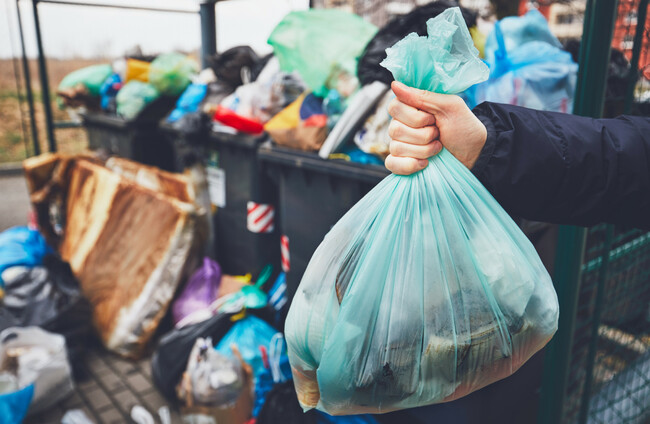
IRELAND’S RISING LEVELS of waste make it difficult to maintain or increase recycling rates, the Environmental Protection Agency (EPA) has warned.
The EPA’s national waste statistics report for 2020 published today reports on the most recent official data on waste generation and management in Ireland.
The report outlines that Ireland is generating too much waste, but it’s not just a waste management problem.
The EPA said there are wider climate and environmental impacts of increasing waste, such as the land use, resources, chemicals and the energy involved in the creation of products that become waste.
The EPA found that in 2020:
Ireland is continuing to meet many of its current EU targets, the report noted. However, it added that targets for 2025 and beyond are extremely challenging.
It said Ireland’s “increasing levels of waste are undoing our efforts to recycle more, and our rate of recycling has stagnated”.
For example, the municipal waste recycling rate was 41% in 2020. However, it must reach 55% by 2025 to meet the targets. The plastic packaging recycling rate was 29% in 2020, but it must reach 50% by 2025.
The EPA did note, however, that disposal to landfill has fallen sharply in Ireland over the past decade. It said this is a welcome development as disposal to landfill is the least desirable option in the waste management hierarchy.
The municipal waste landfill rate in 2020 was 16%, down from 58% in 2010. The share of municipal waste sent for energy recovery increased from 4% in 2010 to 42% in 2020.
Circular economy
The report outlined that Ireland’s waste generation continues to increase in line with economic growth, indicating that the country has not succeeded in moving from a linear economic model of “take, make, use and waste”.
A recent OECD study found that Ireland has a circular material use rate of 1.8%, relative to an EU average of 12.8%.
The EPA said Ireland needs to move to circular economy where resources are re-used, repaired or recycled as much as possible, and the generation of waste is minimised.
“A circular economy is one that is based on less waste and more reuse of materials;
these trends show Ireland is going in the wrong direction,” Sharon Finegan, director of the EPA’s office of environmental sustainability, said.
“Our rising levels of waste are unsustainable and immediate steps must be taken to address these trends. Systemic change is needed across all economic sectors to shift the focus to designing out and reducing waste and promoting reuse and recycling,” Finegan said.
The report also found that Ireland remains heavily reliant on export for the treatment of a number of key waste streams, pointing to some significant waste infrastructure deficits and missed opportunities to foster a circular economy.
Exported waste for treatment in 2020 included:
Commenting on the recycling trends Warren Phelan, programme manager of the EPA’s
circular economy programme said: “Our rising levels of waste are unsustainable and are threatening Ireland’s achievement of EU recycling targets. We urgently need mandatory incentivised charging for the collection of non-household (commercial) municipal waste.
“We need to increase the rollout of brown bins, collect more food waste separately and increase the capture of plastic packaging for recycling at collection and processing stages.”

To embed this post, copy the code below on your site

















have your say