We need your help now

Support from readers like you keeps The Journal open.

You are visiting us because we have something you value. Independent, unbiased news that tells the truth. Advertising revenue goes some way to support our mission, but this year it has not been enough.

If you've seen value in our reporting, please contribute what you can, so we can continue to produce accurate and meaningful journalism. For everyone who needs it.

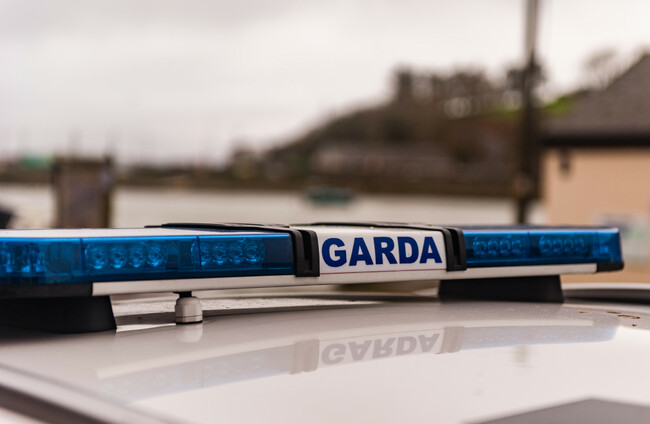
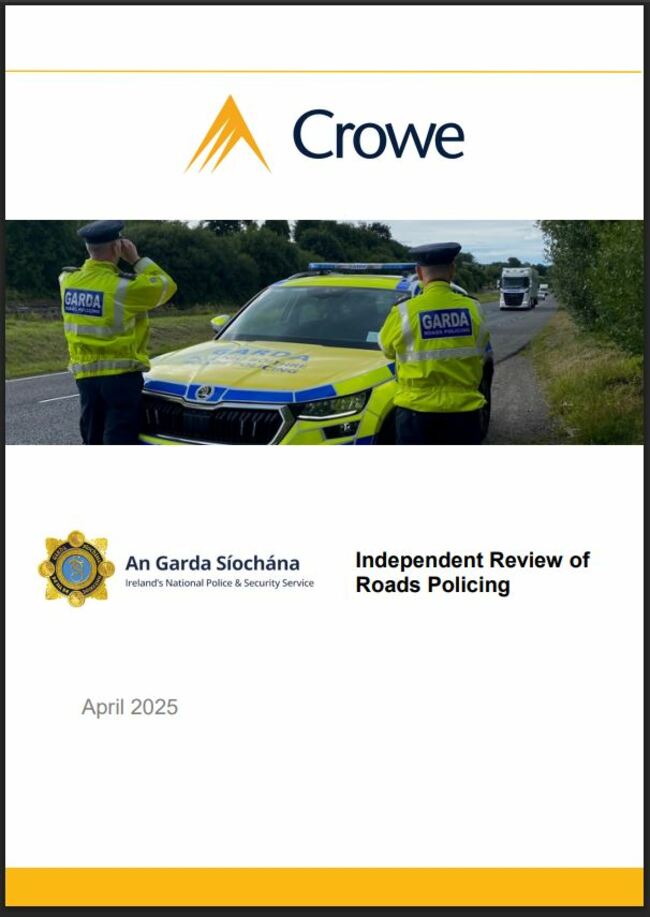
A new report has examined the productivity of gardaí in roads policing units in a sample of divisions around the country. Alamy Stock Photo

Why have some underperforming traffic cops' supervisors let them away with it?

The Crowe report raises serious questions about productivity in Roads Policing Units.

AN GARDA SÍOCHÁNA has a big problem: some of its members tasked with policing Irish roads aren’t carrying out their jobs properly, and their supervisors aren’t pulling them up on it.

The question of safety for people using Irish roads has been at the fore of public attention in recent years as numbers of collisions and fatalities climbed upwards, reaching a high of 182 road deaths in 2023.

In June of that year, the Garda Commissioner’s office received an anonymous letter detailing failures in how gardaí were policing the roads.

An external review was commissioned to look into the matter. The final report was published today, and it shines a bright light on poor practices by some gardaí and their supervisors when it comes to enforcing road safety legislation.

Not pulling their weight

The inquiry, which was conducted externally by Crowe, gathered information about productivity levels in six sample garda divisions, including through data analysis, one-to-one meetings with gardaí, group discussions, and “direct observations” by members of the inquiry team while accompanying gardaí on duty.

It found that many roads-policing gardaí are highly productive, professional, and dedicated to their jobs.

However, some others are doing far less work.

Some may regularly have shifts where they issue no fixed-charge notices, make no arrests, seize no vehicles or record no incidents – the metrics by which productivity statistics are gathered.

Could the variance in productivity be down to different gardaí being assigned different tasks? In small part, potentially. Operating a checkpoint, for instance, may have a low return and therefore influence productivity figures, the report said. However, it was apparent through speaking with gardaí and observing patrols that members who were working at low productivity levels were doing so as a “matter of personal preference”.

Crowe Report The report was finished earlier this year but released to the public for the first time today. An Garda Síochána An Garda Síochána

It was known within divisions that some gardaí in road policing units were deliberately ignoring offences and passing their shifts with little to show for them. There was a sense of “resignation” that while many gardaí were “dedicated, professional and productive”, there was a “significant cohort of officers who are disinterested and whose productivity is comparatively low”.

The report’s findings have sparked concern among senior garda management and will necessitate internal changes to ensure that the issues are rectified.

After years of mounting public concern about the number of people dying or being seriously injured in collisions on Irish roads, attention will be on An Garda Síochána now. How will the force respond to the report’s revelations?

Role of supervisors

It’s not only the actions of ordinary garda members patrolling the roads that will be under scrutiny, but also those of their supervisors.

Frontline garda supervisors and managers have been “shying away” from proactive management or confronting poor performance in roads policing, the report says.

The main reason given for this reluctance to pull people up on poor work standards was a policy document from 2017 that said garda members’ Performance and Learning Portfolios would not include numeric targets focused at an individual level, with targets instead set at a district level. 

This document was “frequently cited” to the inquiry team as to why the performance of individual members was not routinely monitored or evaluated. 

Supervisors and managers also said that they believed any attempt to take a more proactive to performance management “would create difficulties with the Garda Representative Association”.

The report says there was an “inability (or unwillingness) of supervisors and more senior ranks to proactively supervise and manage the performance and productivity of Roads Policing Unit members”.

Responding to the report, the Association of Garda Sergeants and Inspectors (AGSI) has said that supervisors are “committed leaders” but that they are “often hampered by vacancies, members expected to undertake multiple roles simultaneously, and ‘ad hoc’ supervision arrangements caused by stretched staffing levels”.

“The responsibility now sits squarely with management,” said AGSI General Secretary Ronan Clogher.

“This report should mark the point where leadership addresses resources, procedures, training, supervision, and accountability, not by commissioning more studies, but by delivering real change,” he said.

The association said the report shows that Roads Policing Units have a “solid, effective core” but that there is a “small minority that are demotivated and clearly demoralised”.

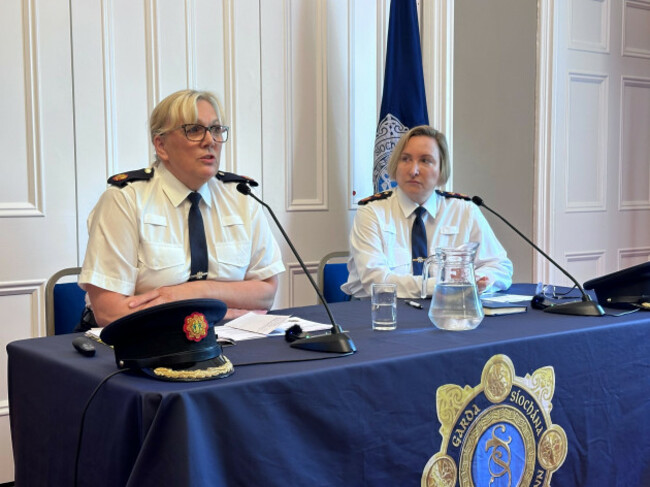
IMG_8829 Assistant Commissioner Paula Hilman and Deputy Commissioner Shawna Coxon at the report's launch today Lauren Boland / The Journal Lauren Boland / The Journal / The Journal

Speaking to media at a press conference in Garda Headquarters this morning, Deputy Commissioner Shawna Coxon said that supervisors may have been reluctant to move straight to disciplinary procedures for poor-performing members but had little other recourse available to them – something which, she said, needed to change.

She said it will be “helpful” to provide a “suite of options in front of supervisors who may have felt that moving to discipline was too harsh”.

Outstanding questions

There are several questions arising from the report that remain to be answered. 

It highlights, for instance, that RPU gardaí observed by the inquiry team appeared to have a higher tolerance for motorists driving above the speed limit than other types of gardaí.

Roads-policing gardaí who were observed during the course of the inquiry tended to allow a speeding margin of around 20 kilometres per hour above the limit before they would arrest a driver for speeding.

In contrast, the report says, observations at a District Court session indicated that motorists who had been stopped by ‘regular’ garda patrols were stopped and issued fines for speeding at much lower thresholds.

Why the discrepancy?

“It was unclear to us why some RPU members appear to enforce speeding laws with a much higher level of tolerance than their “regular” colleagues,” the inquiry team says in the report. 

Presenting the report to media at the press conference this morning, senior garda members detailed that the number of driving offences detected has risen in the first half of this year compared with the same period last year.

But the question that remains, of course, is how many have been missed due to some officers’ poor work ethic.

A question was put to the senior gardaí from media present about whether poor performance by roads-policing members has cost people’s lives.

In response, Coxon said that roads policing is something that is “taken quite seriously across the organisation” and that there was a reduction in the number of road fatalities last year compared with the previous year.

“Having said that, I don’t think about it in the terms that you’re asking,” Coxon said.

“If the number [of deaths] was one, I would still be concerned. They are life-altering to families and we’re very well aware of that, so we are determined to move forward with respect to the recommendations in the report and make improvements.”

Readers like you are keeping these stories free for everyone...
A mix of advertising and supporting contributions helps keep paywalls away from valuable information like this article. Over 5,000 readers like you have already stepped up and support us with a monthly payment or a once-off donation.

Close
77 Comments
This is YOUR comments community. Stay civil, stay constructive, stay on topic. Please familiarise yourself with our comments policy here before taking part.
Leave a Comment
    Submit a report
    Please help us understand how this comment violates our community guidelines.
    Thank you for the feedback
    Your feedback has been sent to our team for review.

    Leave a commentcancel

     
    JournalTv
    News in 60 seconds