Sign in. It’s quick, free and it’s up to you.
An account is an optional way to support the work we do. Find out more.
Sign in. It’s quick, free and it’s up to you.
An account is an optional way to support the work we do. Find out more.
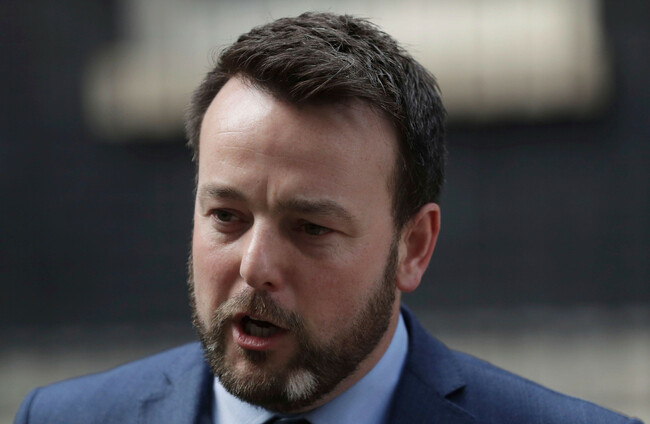
A MOTION TO give the Irish government a consultative role in the northern budget has been tabled in the UK parliament today by the Social Democratic and Labour Party.
If accepted, the motion, tabled as an amendment to the Northern Ireland Budget (No. 2) Bill, will mandate the UK government to engage with their Dublin counterparts on financial settlements in the north.
The party said the aim is enhance cooperation between the British and Irish governments, as well as to prevent a “stealth return” to direct rule.
“For 19 months people have been waiting for the DUP to get back to work. We were told to wait until after the local government elections, then until after the summer and then to autumn,” said SDLP leader Colum Eastwood.
“The DUP can’t be allowed to call the shots anymore, they need to understand that power-sharing will endure, whether they like it or not and whether they take part or not. In the absence of an Executive, the spirit of the Agreement must be facilitated by enhanced cooperation between the British and Irish Governments.”
However, it is unclear what the motion’s chances of success are, and Taoiseach Leo Varadkar has previously said that there is an unwillingness in London to work with his government on a coordinated policy towards the northern executive.
The bill was introduced in June by Northern Ireland Secretary Chris Heaton-Harris due to the ongoing stalemate in the Stormont Assembly.
On its introduction he said he was “deeply disappointed” to be legislating for Northern Ireland again.
“It should not be me or the Northern Ireland Permanent Secretaries making these decisions, but locally-elected politicians,” he said.
The Democratic Unionist Party withdrew from the Stormont Executive due to disputes over post-Brexit trading arrangments. The Assembly has been functionally collapsed since former leader Paul Givan stepped down as First Minister in February 2022.
In May of that year, Sinn Féin became the first nationalist party to take the most seats in a Stormont election. However, the DUP refused to nominate a deputy First Minister, required under the Good Friday Agreement, and an executive could not be formed.
A year later, Sinn Féin repeated this feat in local elections, winning a landslide 144 out of 462 seats, taking a majority on six out of eleven councils.
Despite these gains and calls from Sinn Féin, the SDLP, and the Alliance Party, the DUP did not aquiesce to calls to reengage in forming an executive.
The Assembly has been collapsed for nearly 40% of its existence since its establishment after the signing of the Good Friday Agreement.

To embed this post, copy the code below on your site











have your say