Sign in. It’s quick, free and it’s up to you.
An account is an optional way to support the work we do. Find out more.
Sign in. It’s quick, free and it’s up to you.
An account is an optional way to support the work we do. Find out more.
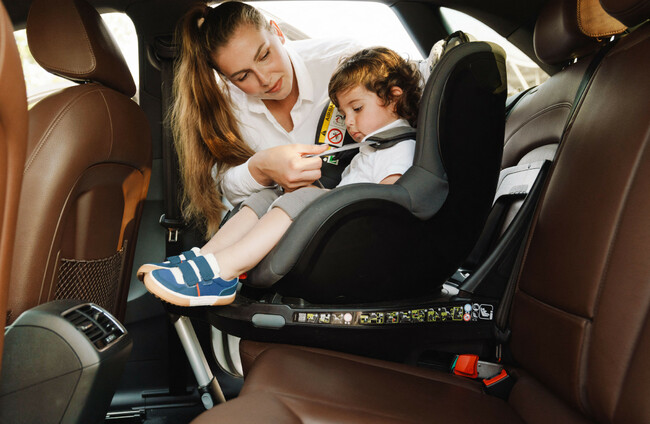
SEVEN OUT OF nine child car seats tested in an EU-organised campaign failed crash tests, with only one passing all tests.
A total of 12 child restraint systems – nine seats and bases for three of them – were randomly selected by market surveillance authorities in eight countries, including Ireland.
The other seven countries were Croatia, Estonia, Finland, Latvia, Malta, the Netherlands and Poland.
They were from seven brands, suitable for ages 0-15 months and beyond, and included both rear- and front-facing sears and were compatible with ISOFIX systems and/or seatbelts.
ISOFIX is a rigid child car seat attachment system that locks seats directly to the car’s chassis, bypassing the need for seat belts.
The car seats were checked against the latest European safety regulations.
They were subjected to three dynamic tests: a front impact at 50 km/h, rear impact at 30 km/h and side impact at 24 km/h.
These were intended to determine the risk of injury to the head, neck and chest and the effectiveness of energy-absorbing materials and barriers.
The main crash test failures were due to components like headrests breaking and insufficient protection of a child’s head, neck and chest from sudden deceleration or compression.
Static checks also looked at the presence of warnings, markings and instructions, corrosion risk of metal parts and whether the seat is suitable for the height of the child declared by the manufacturer.
Six of the nine sears failed checks for these features.
Only one of the nine seats passed all the dynamic tests and selected clauses from the regulation.
Based on the results, six of the products were classified as posing a serious risk, one was high risk and two were deemed to be a medium risk.
Two were recalled from consumers, while assessments are ongoing to determine appropriate measures for the nine models.
Before buying a seat, consumers have been urged to check that markings and information labels are present and to purchase seats placed on the market after September 2024, as they meet the latest safety standard, R129.
This European safety standard came in in 2013 and fully replaced the older R44 standard in September 2024.
Seats that conform to the old R44 standard should be avoided and these are no longer allowed to be placed on the market.
Consumers should also pay attention to ensure the correct installation and securing of the seat: the child car seat must be compatible with the vehicle, correctly installed and always locked in the proper travel position before driving.
Consumers have also been reminded to “take special care with 360° rotating seats”, as the rotating mechanism and locking systems are not specifically tested under current regulations.
Anyone who has these seats should regularly check that the mechanism functions properly and contact the retailer if in doubt.
Meanwhile, the child car seat should be correctly adjusted in size and appropriate for the child’s age and height, and once the child reaches a certain height or weight, the seat must either be turned forward-facing or replaced.
And when choosing between attachment systems, ISOFIX is recommended over seats that are secured using only the vehicle’s seat belt.
The findings and recommendations come from the European Commission’s Directorate-General for Internal Market, Industry, Entrepreneurship and SMEs (DG GROW).

To embed this post, copy the code below on your site















have your say