Sign in. It’s quick, free and it’s up to you.
An account is an optional way to support the work we do. Find out more.
Sign in. It’s quick, free and it’s up to you.
An account is an optional way to support the work we do. Find out more.
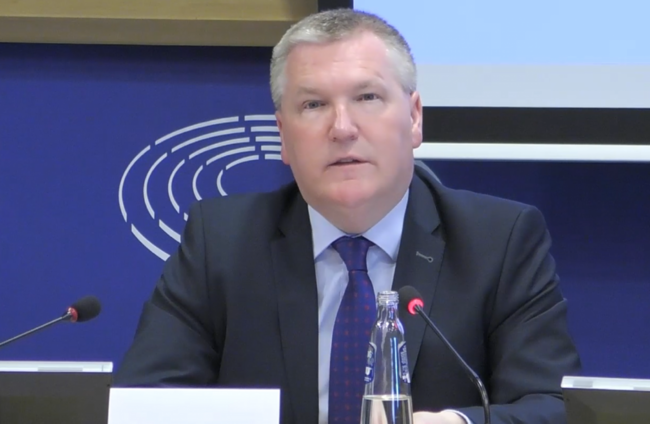
METHODS TO SIMPLIFY data protection record keeping for small European businesses and organisations are currently being examined but will not have any impact on personal security, Irish European Commissioner Michael McGrath has said.
The justice, democracy and rule of law commissioner spoke to the European Parliament’s internal market and consumer committee this morning to update MEPs about his work on consumer protections, as it lies within his brief.
McGrath was asked by Fine Gael MEP Regina Doherty whether the General Data Protection Regulation (GDPR) will be reviewed in order to cut back on layers of red tape that some small businesses must deal with in order to be compliant with the law.
Speaking in Dublin last week, McGrath said proposals to cut back on GDPR red tape for small businesses and organisations are “forthcoming”.
The regulation has sometimes been criticised as being a barrier to growth and innovation, on top of carrying onerous record-keeping obligations.
Responding, McGrath said that the need for balance between providing personal protections and simplifying things, such as record keeping, for businesses was evident, but said that the latter should not come at the expense of the former.
He said that there is currently work ongoing within his Directorate to examine the GDPR within the context of simplifying the paperwork that small businesses and organisations with fewer than 500 workers are obligated to maintain.
While that work has been progressed, the Fianna Fáil politician said he still wants to sit down with businesses in a “roundtable” format to discuss what issues they are facing with the GDPR.
McGrath said there are common misconceptions with the regulations and that those would need to be understood in order to best-address the concerns that small businesses and organisations are facing, as highlighted by Doherty.
With that, however, all new examinations on the GDPR will not have any impact on personal data protections, he said, adding that the continued security of citizens’ information is a “non-negotiable”.
Doherty said that a “smarter approach” to the regulation was needed in order to allow data protection commissioners across Europe to deal with issues such as scams and frauds, rather than time being directed to SME compliance.
McGrath was also quizzed by independent MEP Luke ‘Ming’ Flanagan, during today’s internal market committee meeting in Brussels, on defective blocks – which he said have had a devastating impact on homeowners in his constituency.
The European Commission is currently investigating Ireland over the processes that led to the presence of muscovite mica, or mica, in building blocks for homes. The mineral absorbs moisture, weakens the concrete and causes the homes to crack and crumble.
Ming requested an update on the Commission’s inquiries and asked whether there will be any consequences for the issue. McGrath said that the inquiries process “takes time” and that the final outcome will be required to go before the European Court of Justice.
The Commissioner said that he would write directly to the MEP about particular cases he highlighted during today’s meeting, but assured him that revised construction regulations are being drafted with the scandal in mind.
McGrath commended and recognised Flanagan for his continued activism on the issue.

To embed this post, copy the code below on your site
















have your say