We need your help now

Support from readers like you keeps The Journal open.

You are visiting us because we have something you value. Independent, unbiased news that tells the truth. Advertising revenue goes some way to support our mission, but this year it has not been enough.

If you've seen value in our reporting, please contribute what you can, so we can continue to produce accurate and meaningful journalism. For everyone who needs it.

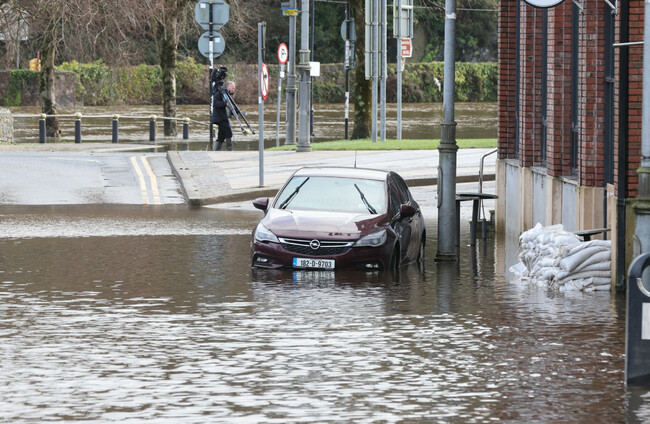
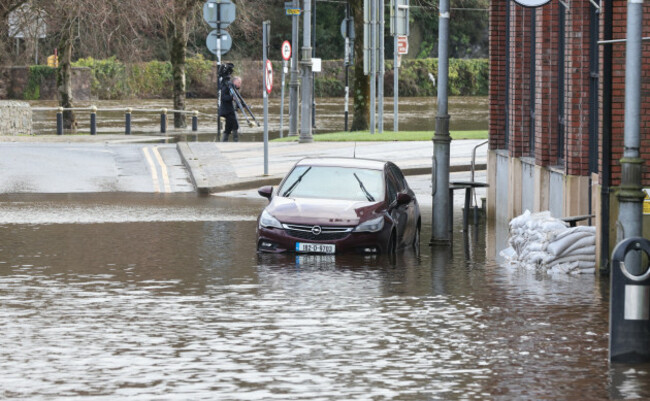
A car abandoned in the flood waters on the Quays in Enniscorthy during the week. RollingNews.ie

Sitdown Sunday: What this week's weather tells us about Ireland's flood warning system

Settle down in a comfy chair with some of the week’s best longreads.

IT’S A DAY of rest, and you may be in the mood for a quiet corner and a comfy chair.

We’ve hand-picked some of the week’s best reads for you to savour.

1. Storm Chandra

Enniscorthy clean up-31_90741982 A car abandoned in the flood waters on the Quays in Enniscorthy during the week. RollingNews.ie RollingNews.ie

Flooding occurred across the east and south-east during Storm Chandra this week.

Rainfall totals for January were above average, but Met Éireann data shows they were not unprecedented by historical standards. Instead, the flooding was caused by a combination of saturated ground, swollen rivers, the storm’s path and, in some areas, tidal conditions.

In the wake of the storm, Alan O’Reilly aka Carlow Weather is calling for increased public access to flood warnings to help further prepare the public in extreme weather events.

(The Journal, approx five minutes reading time)

“I have been calling for flood warnings to be made public for several years now. The National Flood Forecast and Warnings Service was announced in 2016, and in 2020, work began on a Flood Early Warning System. Since July 2021, a flood forecasting system has been available to Met Éireann, with a team of flood forecasters using and developing the system.”

2. From rugby to Game of Thrones

a-knight-of-the-seven-kingdoms-2025-tv-series-created-by-ira-parker-and-george-r-r-martin-and-starring-peter-claffey-dexter-sol-ansell-and-finn-bennett-a-century-before-game-of-thrones-hedge Peter Claffey in A Knight of the Seven Kingdoms. Alamy Stock Photo Alamy Stock Photo

Peter Claffey, an Irish rugby player turned actor, is starring in HBO’s new Game of Thrones spin-off A Knight of Seven Kingdoms. Esquire sat down with Claffey to see how he’s been getting on in Westeros.

(Esquire, approx five minutes reading time)

“Over the six episodes, Claffey brings the knight to life in a compelling character study.

“‘In the rotten world of Westeros, where there’s a lot of really horrible adult themes that you have to deal with, his moral compass is goodness,’ he says. ‘His goodness with animals, things like that. It’s all very admirable.’

“That’s not to say it’s a totally earnest outing. In fact, fans may be surprised by the tone of the show: in his preparation, Claffey spoke to show co-creators Ira Parker and Martin about bringing an ‘almost The Office-style awkwardness’ to the interactions.”

3. Minnesota proved MAGA wrong

editors-note-image-contains-profanity-a-demonstrator-holds-a-placard-that-says-fuck-ice-during-the-demonstration-against-donald-trump-and-the-federal-anti-immigration-police-force-ice-in-front-of A Minneapolis demonstration against Donald Trump and the federal anti-immigration police force ICE in front of the National Assembly. Alamy Stock Photo Alamy Stock Photo

This month’s fatal shootings of Renee Good and Alex Pretti have catalysed growing anger towards immigration agencies and the Trump administration in Minnesota, where thousands have been protesting for weeks. This article in The Atlantic contends that every social theory about liberals and conservatives held by Trump has been broken on the steel of Minnesotan resolve. 

(The Atlantic, approx 16 minutes reading time) 

“What they discovered in the frozen North was something different: a real resistance, broad and organized and overwhelmingly nonviolent, the kind of movement that emerges only under sustained attacks by an oppressive state.

“Tens of thousands of volunteers—at the very least—are risking their safety to defend their neighbors and their freedom. They aren’t looking for attention or likes on social media. Unless they are killed by federal agents, as Pretti and Renee Good were, other activists do not even necessarily know their names. Many use a handle or code name out of fear of government retaliation.

“Their concerns are justified: A number of people working as volunteers or observers told me that they had been trailed home by ICE agents, and some of their communications have already been infiltrated, screenshotted, and posted online, forcing them to use new text chains and code names.”

4. The British college student behind a scam empire

By the time Ollie Holman was finishing secondary school he was selling phishing kits online. By age 21 he had helped build a sophisticated phishing scam that cheated people across Europe out of millions. Here’s the inside story of how a young DJ from London masterminded the scheme – and how it was taken down.

(Dispatch, approx 15 minutes reading time)

“Ollie Holman grew up in Eastcote, in north-west London. He was drawn to computers from an early age. ‘He was always very tech-savvy,’ recalls a close family member. Whenever someone’s phone froze or a laptop misbehaved, Holman was the one they turned to. Within the family, he was adored.’”

7. Self-deporting without your kids

ice-police-agent-immigration-and-customs-enforcement-close-up-of-police-ice-on-the-back-of-vest-worn-by-dhs-department-of-homeland-security-officer Alamy Stock Photo Alamy Stock Photo

Undocumented immigrants in the US whose children are US citizens are faced with a devastating choice: stay and risk arrest and deportation by ICE, or self-deport?

But what about their nearly adult children who don’t want to leave home?

(The New Yorker, approx 37 minutes reading time)

“One day in late spring, the Garcías’ doorbell camera recorded an ICE arrest taking place across the street: several dark trucks encircled a man, and agents pinned him to the ground. The Garcías didn’t know the man or what happened to him.

“Around the same time, a letter from the National Visa Center, a division of the State Department which handles petitions for immigrant visas, arrived at their door; it made reference to an application they had filed more than a year earlier. ‘I already knew that the government has my address,’ Rosalinda told me. ‘But in that moment I realized that sooner or later they are going to come door-to-door. Once that letter arrived, I said, ‘I’m leaving.’”

6. Can AI cause psychosis?

person-typing-on-a-computer-keyboard Alamy Stock Photo Alamy Stock Photo

Therapists are increasingly reporting cases where artificial intelligence (AI) is causing their patients to experience psychosis -  a mental state characterised by a loss of contact with reality, featuring hallucinations and delusions. Experts are warning that the number of people susceptible to psychosis is higher than most know, and AI could start triggering it on a mass scale.

(The New York Times, approx nine minutes reading time)

“It’s not unusual for new technologies to inspire delusions. But clinicians who have seen patients in the thrall of A.I. said it is an especially powerful influence because of its personal, interactive nature and authoritative tone.

Sometimes, the psychotic episodes spurred by chatbots can lead to violence.”

…AND A CLASSIC FROM THE ARCHIVES… 

7. Breatharians

The community of people living on breath alone -  and the inspiring words of their gurus. Breatharianism – the practice of surviving on air and sunlight, rather than food – has caused several deaths. So why are people so drawn to it? Journalist Breena Kerr went to a $1,080 (€920) week-long breatharian retreat to find out.

(GQ, approx 20 minutes reading time)

“All of this talk of enemas and controlled starvation has me really wondering why anyone would try Breatharianism. But when I see it as an offshoot of the out-of-control wellness industry, it makes more sense. Like many dubious methods, it has a seed of legitimate science at its core.

“In 2016, for instance, a Japanese scientist named Yoshinori Ohsumi won the Nobel Prize in Medicine for his research on fasting and the way it kickstarts a regenerative cellular recycling process called ‘autophagy’, Greek for ‘self-eating’. His discoveries gave extra credence to long-held traditions of fasting from around the world and modern techniques that use it as a way to jumpstart healing in the body.”

Readers like you are keeping these stories free for everyone...
A mix of advertising and supporting contributions helps keep paywalls away from valuable information like this article. Over 5,000 readers like you have already stepped up and support us with a monthly payment or a once-off donation.

Close
7 Comments
This is YOUR comments community. Stay civil, stay constructive, stay on topic. Please familiarise yourself with our comments policy here before taking part.
Leave a Comment
    Submit a report
    Please help us understand how this comment violates our community guidelines.
    Thank you for the feedback
    Your feedback has been sent to our team for review.

    Leave a commentcancel

     
    JournalTv
    News in 60 seconds