We need your help now

Support from readers like you keeps The Journal open.

You are visiting us because we have something you value. Independent, unbiased news that tells the truth. Advertising revenue goes some way to support our mission, but this year it has not been enough.

If you've seen value in our reporting, please contribute what you can, so we can continue to produce accurate and meaningful journalism. For everyone who needs it.


Marjorie Taylor Greene speaks at a 2024 Republican presidential rally. Alamy Stock Photo

Sitdown Sunday: How did a MAGA diehard become Trump's biggest critic?

Settle down in a comfy chair with some of the week’s best longreads.

IT’S A DAY of rest, and you may be in the mood for a quiet corner and a comfy chair.

We’ve hand-picked some of the week’s best reads for you to savour. 

1. Trump’s biggest hater

marjorie-taylor-greene-speaks-before-former-president-and-2024-republican-presidential-nominee-attends-a-rally-at-the-mccamish-pavilion-on-the-campus Marjorie Taylor Greene speaks at a 2024 Republican presidential rally. Alamy Stock Photo Alamy Stock Photo

The inside story of how Georgia Congresswoman Marjorie Taylor Greene transformed from a MAGA zealot into the Republican party’s main critic of US President Donald Trump.

(The New York Times, approx 27 minutes reading time)

“Eleven days after Charlie Kirk was killed in September, Marjorie Taylor Greene, the third-term Georgia congresswoman, was watching his memorial service on TV as the luminaries of the conservative movement and the Trump administration gathered to pay tribute to the young activist.

“What stayed with Greene long afterward were the last two speakers who took the stage. First there was Kirk’s widow, Erika, who stood in white before the crowd filling the Arizona stadium, lifted her tear-filled eyes and said that she forgave her husband’s killer. And then there was President Trump. ‘He was a missionary with a noble spirit and a great, great purpose,’ he said of Kirk. ‘He did not hate his opponents. He wanted the best for them. That’s where I disagreed with Charlie. I hate my opponent, and I don’t want the best for them.’”

5. The woman with no name

interior-of-nursing-home-with-blanket-and-pillow-on-empty-bed Alamy Stock Photo Alamy Stock Photo

In 1978 a woman in her seventies or eighties was found dead in her nursing home bed. She was known as Mary Doefour, but nobody knew her real name. She earned her nickname simply for being the fourth Jane Doe to arrive at a mental hospital without identification. When local reporter Rick Baker was tasked with writing up the woman’s obituary, he struggled to find enough information for two lines. Baker made it his mission to give the woman back her name.

(Thar Tribune, approx 25 minutes reading time)

“Mary’s blind, lifeless eyes stared upward. The orderly frowned, drew the thin white sheet up over the old woman’s face, and walked briskly into the corridor to inform her superintendent. She knew nobody would grieve for Mary, yet she still had to report it.

“Mary had no known relatives. After a short stay in the nursing home morgue, her body went to a funeral home. Home after home, even so, Mary had not had a home in decades. The undertaker cremated her and put the ashes into a plain urn like a coffee can.

“He stored it in a dim, unlit back room and phoned the local newspaper to run an obituary, as he always did. It was all standard procedure. He knew almost nobody would care about the few lines, but routine mattered.” 

2. Breaking up with your (AI) boyfriend

Ayrin felt she had found the perfect man when she met ChatGPT’s AI persona of Leo. She made a Reddit community for other people dating AI – a group which now has 39,000 members. But when the software underwent an update last January that Aryin felt made Leo more likely to agree with her, she fell out of love.

(The New York Times, approx seven minutes reading time)

“Ayrin spent up to 56 hours a week with Leo on ChatGPT. Leo helped her study for nursing school exams, motivated her at the gym, coached her through awkward interactions with people in her life and entertained her sexual fantasies in erotic chats. When she asked ChatGPT what Leo looked like, she blushed and had to put her phone away in response to the hunky A.I. image it generated.

“Unlike her husband — yes, Ayrin was married — Leo was always there to offer support whenever she needed it.”

3. The dark side of the surrogacy industry

Thousands of Thai women travel abroad to act as a mae um boon - a surrogate –  but where do they end up? And how are they treated? Eve has bravely shared her story of how she ended up in the dark side of the global fertility industry. Like many others, she lived in Tbilisi, Georgia, and worked as a surrogate for a Chinese company to pay off her family’s debts.

(The New York Times Magazine, approx 60 minutes reading time) 

“The women in House 3 rarely had a chance to speak to the women in House 5, but when they did, the things they heard scared them. They didn’t actually know where House 5 was, only that it was huge and perched somewhere outside Tbilisi, on one of the many hills that surround the Georgian capital. They heard that there were hundreds of pregnant women in House 5, crammed many to a room. They heard that there was limited food in House 5’s communal kitchen — the pork, rice and vegetables their bosses were supposed to provide daily were in short supply — and so the women of House 5 had to fight one another for vegetables or go hungry.”

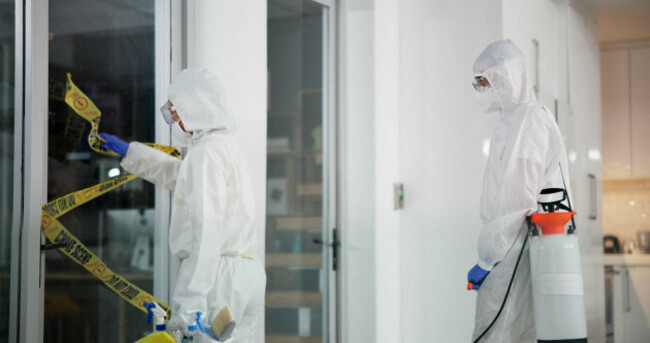
4. Twenty-five years as an extreme cleaner

worker-team-and-barrier-tape-for-forensic-evidence-or-cleanup-for-investigation-or-restoration-people-ppe-suit-and-crime-scene-with-cleaning Alamy Stock Photo Alamy Stock Photo

British extreme cleaner Ben Giles has cleaned everything from murder scenes to whale blubber in his 25 years on the job. His cleaning expertise has made him rich.

“When the entrance to a theatre in London’s West End was discovered to be smeared with blood and faeces one day in March, a distress call went out to the headquarters of Ben Giles, a 49-year-old veteran of the extreme clean, who is based in Cardigan in Wales. Decades earlier, as a young know-nothing, hired by police to clean vehicles, Giles laboured for hours to remove fingerprint dust from the interior of a stolen car – work that now, with the experience of innumerable litter-dashed, liquid-sodden, gunge-roped scenes, would take him about 30 minutes. Job by job, he figured out when to scrape or sand, soak or fog, preserve or dispose. Boilersuited and plastic booted, Giles learned how to eliminate most evidence of spillages, collisions, protests, haemorrhages, severings, explosions, fires and floods, becoming a self-taught stain savant, a walking database of remedies. When you have lifted a layered lasagne of toilet paper and semen from the floor of a submarine yard in Barrow-in-Furness, there’s not much left in the world that can scare you.”

(The Guardian, approx 30 minutes listening time)

6. The men suing Bumble

bumble-app-seen-in-google-play-store-on-the-smartphone-screen-placed-on-red-background-close-up-photo-with-selective-focus-stafford-united-kingdom Alamy Stock Photo Alamy Stock Photo

The dating app Bumble was known for its pioneering strategy – the woman messages first. But in April 2024 that all changed. Bumble creators said the move was made to help women and create more choice, but people with insider knowledge are saying the company’s hand was forced. Reporter Patricia Clarke did a deep dive to see if the feminist principles were actually dropped due to thousands of legal challenges by men’s rights.

“Publicly, the company framed the shift as a response to user fatigue. Women were feeling “exhaustion with the current online dating experience”, its then chief executive, Lidiane Jones, said at the time, adding that the update was about giving users “more choice”.

“Privately, a different story was playing out. Three people with direct knowledge of internal discussions say the change was driven by mounting legal pressure from men’s rights activists and law firms in the US. Between June and August 2023 alone, Bumble received more than 20,000 legal threats alleging that the app discriminated against men by not allowing them to make the first move.”

(The Observer, approx 12 minutes reading time)

…AND A CLASSIC FROM THE ARCHIVES…

7. How sandwiches became so popular

plastic-packaged-sandwich Alamy Stock Photo Alamy Stock Photo

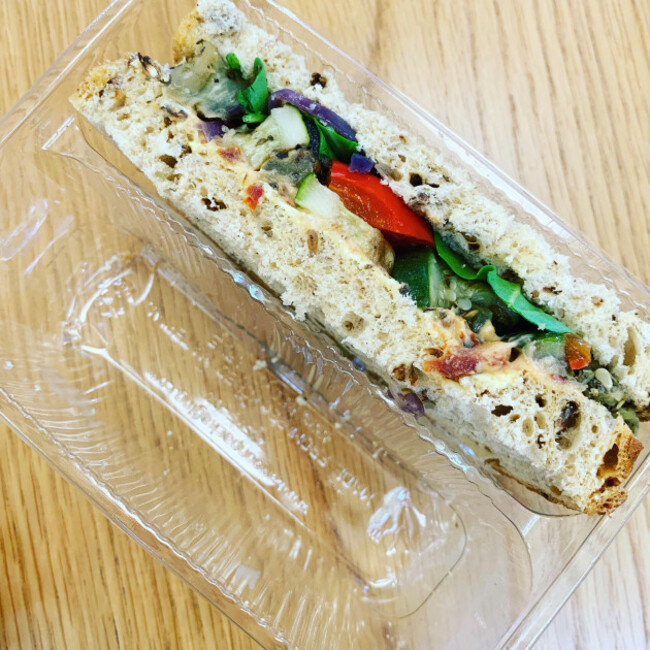
The Guardian reporter Sam Knight takes a look at how pre-packaged sandwiches – which weren’t really a thing until 1980 – became one of the more popular foods. What is it about sandwiches that’s led to such a profitable industry?

(The Guardian, approx 35 minutes reading time)

“The invention of the chilled packaged sandwich, an accessory of modern British life which is so influential, so multifarious and so close to hand that you are probably eating one right now, took place exactly 37 years ago. Like many things to do with the sandwich, this might seem, at first glance, to be improbable. But it is true. In the spring of 1980, Marks & Spencer, the nation’s most powerful department store, began selling packaged sandwiches out on the shop floor. Nothing terribly fancy. Salmon and cucumber. Egg and cress. Triangles of white bread in plastic cartons, in the food aisles, along with everything else. Prices started at 43p.

“Looking upon the nation’s £8bn-a-year sandwich industrial complex in 2017, it seems inconceivable that this had not been tried before, but it hadn’t.”

Readers like you are keeping these stories free for everyone...
A mix of advertising and supporting contributions helps keep paywalls away from valuable information like this article. Over 5,000 readers like you have already stepped up and support us with a monthly payment or a once-off donation.

View 71 comments
Close
71 Comments
This is YOUR comments community. Stay civil, stay constructive, stay on topic. Please familiarise yourself with our comments policy here before taking part.
Leave a Comment
    Submit a report
    Please help us understand how this comment violates our community guidelines.
    Thank you for the feedback
    Your feedback has been sent to our team for review.

    Leave a commentcancel

     
    JournalTv
    News in 60 seconds