Take part in our latest brand partnership survey

We need your help now

Support from readers like you keeps The Journal open.

You are visiting us because we have something you value. Independent, unbiased news that tells the truth. Advertising revenue goes some way to support our mission, but this year it has not been enough.

If you've seen value in our reporting, please contribute what you can, so we can continue to produce accurate and meaningful journalism. For everyone who needs it.


Sitdown Sunday: The men who escaped Alcatraz

Settle down in a comfy chair with some of the week’s best longreads.

IT’S A DAY of rest, and you may be in the mood for a quiet corner and a comfy chair.

We’ve hand-picked some of the week’s best reads for you to savour.

1. Escape from Alcatraz

a-view-in-the-late-afternoon-towards-the-alcatraz-island-from-the-cruise-terminal-in-san-francisco-in-early-springtime Alcatraz prison Alamy Stock Photo Alamy Stock Photo

This feature article reflects on the truly fascinating story of how three men pulled off a seemingly impossible escape from the infamous Alcatraz penitentiary in San Francisco Bay, only to never be seen again.

It comes in a week where US President Donald Trump suggested reopening the prison to serve as ”a symbol of law, order and justice”.

(BBC, approx 7 mins reading time)

With Morris taking the lead, the four prisoners began to concoct an elaborate and audacious plan to escape. Over a period of several months, the men chiselled away at the salt-damaged concrete around the air vent under their sinks. Using metal spoons purloined from the dining hall, a drill made from a vacuum-cleaner motor and discarded saw blades, they dug through to an unguarded utility corridor. To mask the noise of the drill, Morris would play his accordion during the daily hour set aside when music was played to the prisoners. Once they had created a hole large enough to crawl through to the corridor, they climbed up to the empty top level of the cellblock and set up a secret workshop. To hide the cell-wall holes, they fashioned fake papier-mâché grills from prison library magazines. Once they were in their workshop, they set about constructing a 6x14ft makeshift rubber raft and life-vests made from more than 50 stolen raincoats.

2. ‘A deeply profound moment of joy’: world leaders react to Pope Leo XIV

Alamy Stock Photo Alamy Stock Photo

Following the mournful farewell to the late Pope Francis two weeks ago, white smoke billowed from the Vatican chimney on Thursday to tell the world that his successor had been chosen within. Robert Prevost, to be known as Pope Leo XIV, was elected to lead the world’s 1.4 billion Catholics. 

This piece summarises the reaction from world leaders to the news, in case you missed it.

(Time Magazine, approx 13 mins reading time)

“Ukraine deeply values the Holy See’s consistent position in upholding international law, condemning the Russian Federation’s military aggression against Ukraine, and protecting the rights of innocent civilians,” he said. “At this decisive moment for our country, we hope for the continued moral and spiritual support of the Vatican in Ukraine’s efforts to restore justice and achieve a lasting peace.”

3. ‘It’s not that they’re dishonest; it’s that they’re paralysed.’

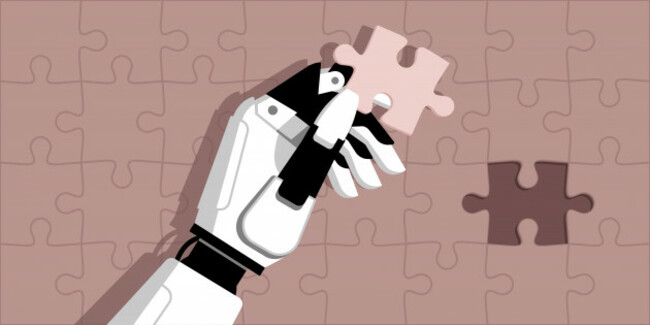
Alamy Stock Vector Alamy Stock Vector

This incredibly insightful piece analyses the tangible impact revolutionary AI chatbots are having, not just on the lives of the everyday person, but on the latest generation of university students.

D Graham Burnett, who goes as far as describing the physical books in his office as “so oddly inefficient”, writes on behalf of those students here, lifting from them the cumbersome expectation of adherence to academic norms to permit to embrace AI. This way, he argues, universities can actually thrive, rather than die, alongside the technology.

(The New Yorker, approx 20 mins reading time)

On the contrary, staggering transformations are in full swing. And yet, on campus, we’re in a bizarre interlude: everyone seems intent on pretending that the most significant revolution in the world of thought in the past century isn’t happening. The approach appears to be: “We’ll just tell the kids they can’t use these tools and carry on as before.” This is, simply, madness. And it won’t hold for long. It’s time to talk about what all this means for university life, and for the humanities in particular.

4. Nature or nurture?: the real impact siblings have on our lives

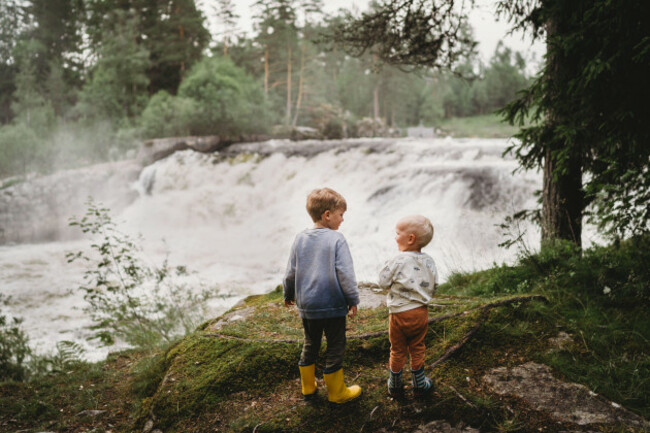
Alamy Stock Photo Alamy Stock Photo

Susan Dominus delves into the deep psychology of the nature versus nurture debate, analysing the malleability of our brains when exposed to our siblings from a young age.

She argues that it is they, our brothers and sisters, who have a larger and more definitive impact on the formation of our adult selves than even authoritative parents.

(The New York Times Magazine, approx 26 mins reading time)

And yet researchers, after analyzing thousands of twin studies, have come to the conclusion that the shared environment — the environment that siblings have in common, which includes parents — seems to do precious little to make fraternal twins particularly alike in many ways. They can be exposed to the same rules of oboe practice, dinnertime rituals, punishments, family values and parental harmony or discord, and none of it really matters in many key regards — siblings’ personalities may very well end up as different as those of any two strangers on the street.

5. A peek into one of Russia’s ‘patriotic education centres’

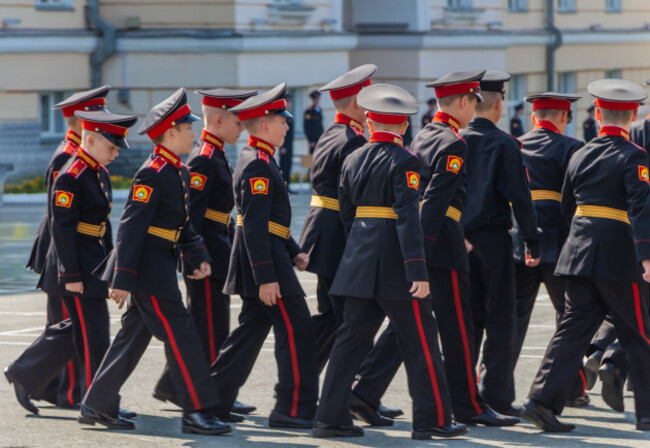
yekaterinburgsverdlovskrussia-08292018thestudents Shutterstock Shutterstock

Here is a sobering documentary piece about how Russia is rearing a new kind of precocious and fervent patriotism amongst its youth in the face of what it portrays as a siege by Western states.

Read about 14-year-old Yegor, A Russian child who is enrolled in a “patriotic education centre as part of an order by Vladimir Putin to breed “a new generation of patriots who love their homeland”.

(The Washington Post, approx 9 mins reading time)

At schools, libraries and youth clubs across Russia, the militarisation of education is now on full display. Funding has been increased for youth movements and patriotic education, and the budget was doubled last month for Russia’s Youth Army. History and literature textbooks have been rewritten, and compulsory weekly patriotism classes have been introduced. Much of what has been revived harks back to the Soviet Union. The Youth Army and Putin’s new youth movement, “Movement of the First,” is a reincarnation of the Komsomol. The new war camps, meanwhile, remind grandparents of their days in DOSAAF, a paramilitary sports organization in the Soviet Union.

6. An ode to your father

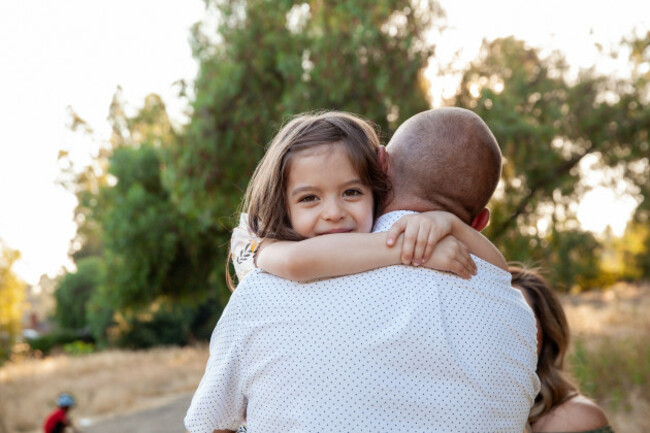
Alamy Stock Photo Alamy Stock Photo

Mariana Serapicos pens this timeless reflection on the heartbreak of losing one’s parent, describing the loss of her dad when she was 10. It was a loss compounded by the fact his once vivacious soul began to slowly fade owing to a debilitating ALS diagnosis. 

Read about Mariana’s final family holiday before his passing, and the graceful acceptance with which she dealt with his loss, all while retaining her childhood innocence.

(Electric Literature, approx 17 mins reading time) 

They were told he didn’t have much time, that it moves fast; he wanted to find a stop sign—he wasn’t ready for our life together to end. He started making plans. The lessons he wanted to teach us, the things we should do, the places he wanted us to see with him before it was too late, before he couldn’t follow us where we needed to be. The hourglass had been turned and I could see time trickling down; the grains were falling too fast. 

…AND A CLASSIC FROM THE ARCHIVES…

Alamy Stock Photo Alamy Stock Photo

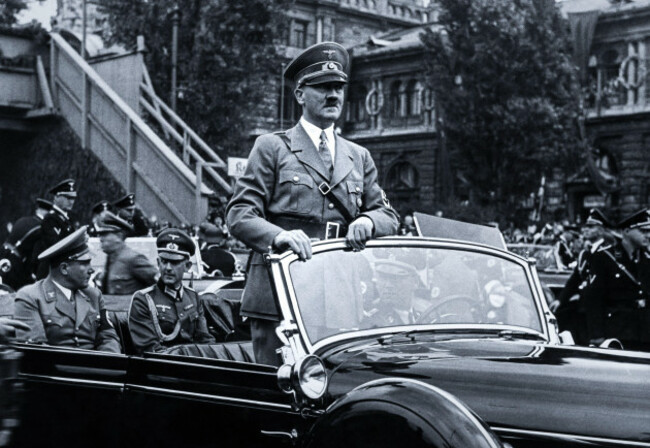
Kevin Wheatcroft, a wealthy 55-year-old British collector, has spent much of his life amassing memorabilia associated with Nazi Germany and its military. Beginning with the acquisition of an SS helmet gifted to him by his father for his fifth birthday, Kevin’s obsession led him to hold a collection worth over £100 million that includes 88 tanks.

This piece from 2015 details the lengths he has gone to in order to memorialise the Third Reich. What is behind this dark obsession, reporter Alex Preston asks.

(The Guardian, approx 23 mins reading time)

I knew Hitler had lived there and so finally persuaded him to open it and it was exactly as it had been when Hitler slept in the room. On the desk there was a blotter covered in Hitler’s signatures in reverse, the drawers were full of signed copies of Mein Kampf. I bought it all. I sleep in the bed, although I’ve changed the mattress.”

Note: The Journal generally selects stories that are not paywalled, but some might not be accessible if you have exceeded your free article limit on the site in question.

Readers like you are keeping these stories free for everyone...
A mix of advertising and supporting contributions helps keep paywalls away from valuable information like this article. Over 5,000 readers like you have already stepped up and support us with a monthly payment or a once-off donation.

View 10 comments
Close
10 Comments
This is YOUR comments community. Stay civil, stay constructive, stay on topic. Please familiarise yourself with our comments policy here before taking part.
Leave a Comment
    Submit a report
    Please help us understand how this comment violates our community guidelines.
    Thank you for the feedback
    Your feedback has been sent to our team for review.

    Leave a commentcancel

     
    JournalTv
    News in 60 seconds