We need your help now

Support from readers like you keeps The Journal open.

You are visiting us because we have something you value. Independent, unbiased news that tells the truth. Advertising revenue goes some way to support our mission, but this year it has not been enough.

If you've seen value in our reporting, please contribute what you can, so we can continue to produce accurate and meaningful journalism. For everyone who needs it.

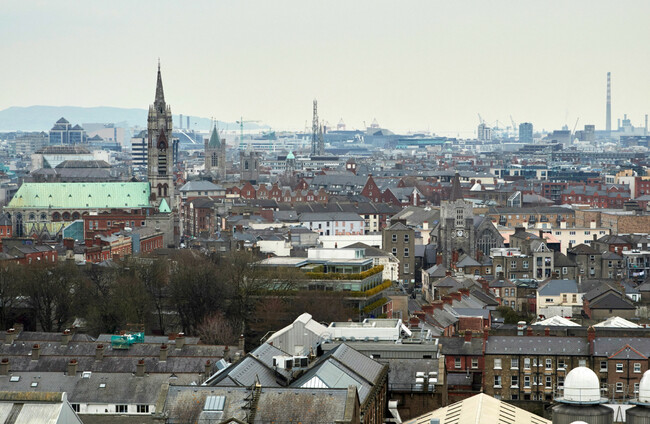
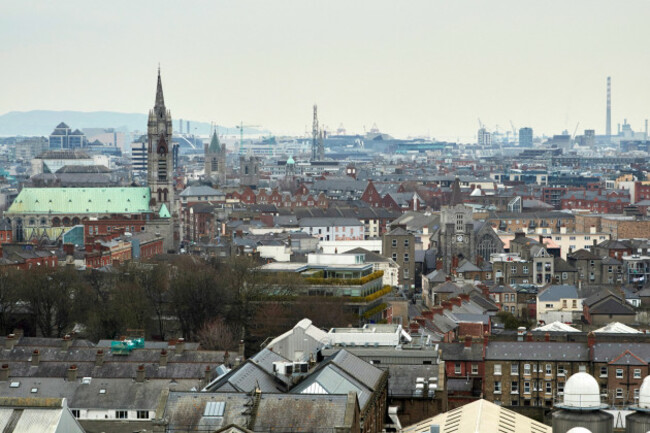
Skyline view over The Liberties. Alamy Stock Photo

Sitdown Sunday: The Dublin suburb dubbed 'Ireland's Brooklyn'

Settle down in a comfy chair with some of the week’s best longreads.

IT’S A DAY of rest, and you may be in the mood for a quiet corner and a comfy chair.

We’ve hand-picked some of the week’s best reads for you to savour.

1. Are the Liberties Dublin’s Brooklyn?

skyline-view-over-the-liberties-towards-dublin-city-centre-ireland Skyline view over The Liberties. Alamy Stock Photo Alamy Stock Photo

National Geographic has dubbed Dublin’s Liberties Ireland’s version of New York’s cool and creative Brooklyn. The nature and travel publication is advising travellers to spend some time in the historic suburb on their next trips to Ireland, with one interviewee describing Dublin 8 as “gritty, creative and full of soul”.

(National Geographic, approx seven minutes reading time)

 ”Unlike some neighbourhoods in Dublin, the history of The Liberties doesn’t become erased when new projects and buildings emerge—they kind of find their place amongst each other,” says Amy Michelle, bar manager at Dudley’s Bar on Thomas Street.”

2. The myopic generation

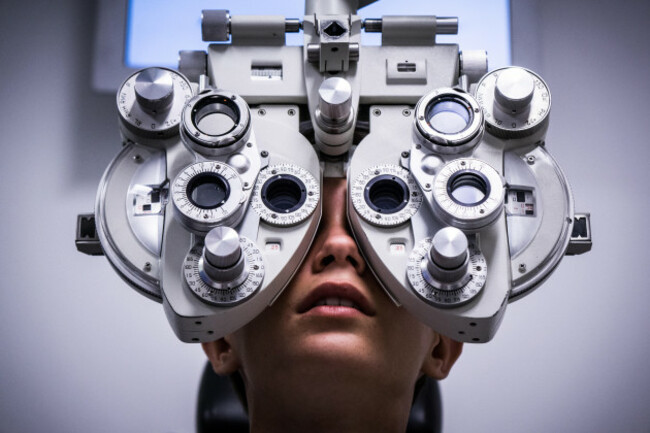
a-boy-having-an-eyetest-using-a-vision-test-machine A boy having an eye test using a vision test machine. Alamy Stock Photo Alamy Stock Photo

Across the world, a growing number of children are being diagnosed with myopia, otherwise known as near-sightedness. Why? The obvious answer is too much time spent looking at objects held close to the face, i.e. screens. But the hypothesis has been surprisingly difficulty to prove. Something about modern life is destroying our ability to see far away, but what is it?

(The Atlantic, approx 15 minutes reading time)

“In the U.S., 42 percent of 12-to-54-year-olds were nearsighted in the early 2000s—the last time a national survey of myopia was conducted—up from a quarter in the 1970s. Though more recent large-scale surveys are not available, when I asked eye doctors around the U.S. if they were seeing more nearsighted kids, the answers were: ‘Absolutely.’ ‘Yes.” “No question about it.’ In Europe as well, young adults are more likely to need glasses for distance vision than their parents or grandparents are now. Some of the lowest rates of myopia are in developing countries in Africa and South America. But where Asia was once seen as an outlier, it’s now considered a harbinger. If current trends continue, one study estimates, half of the world’s population will be myopic by 2050.”

3. What would Johnny Cash think of America?

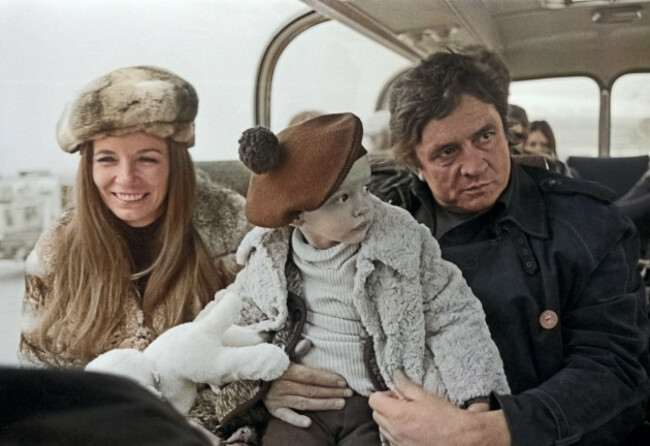
johnny-cash-amerikanischer-country-sanger-und-songschreiber-mit-ehefrau-june-carter-cash-und-sohn-john-carter-cash-in-hamburg-deutschland-um-1981-american-country-singer-and-song-writer-johnny-cas John Carter Cash with his parents Johnny and June in Hamburg, Germany 1981. Alamy Stock Photo Alamy Stock Photo

The Journal reporter Andrew Walsh sat down with Johnny Cash’s son, John Carter Cash, to see what the Man in Black would make of America today. He also opened up about his parents, their ties to Ireland, and the wisdom their songs continue to offer.

(The Journal, approx seven minutes reading time)

“The song Forty Shades of Green (yes, the Man in Black was the person to popularise this phrase) was penned as Cash looked down at the Irish landscape from the air, inspired by the country’s vivid patchwork of fields. The lyrics namecheck the River Shannon, Dingle and Tipperary, capturing a sense of wonder and nostalgia that felt worlds away from his black-clad image.”

4. The Nigerian couple fighting infanticide

In some isolated communities in central Nigeria, traditional beliefs that twins, triplets, children with disabilities or albinism are carriers of misfortune who should be killed may still persist, particularly when a mother dies in childbirth. One Nigerian couple who run a home for vulnerable children have confronted the practice of infanticide since 1996.

(The Guardian, approx 20 minutes reading time)

“Esther Stevens’ life nearly ended as soon as it began. She was born in 2007, in a village on the outskirts of Abuja, Nigeria’s capital city. Her mother died giving birth to her, and in the eyes of some villagers, that meant the baby was cursed. According to tradition, there was only one way to deal with such a child. The villagers tied the newborn to her mother’s lifeless body and prepared to bury them together.

When word reached a Nigerian missionary living in the community, she rushed to the burial site and pleaded for the baby’s life. After the villagers and relatives refused, she appealed to the traditional priest who had been called on to perform the rite. ‘Finally, the priest agreed and said, let them give her the evil child and see what the child will become,’ Esther said. ‘The child, that’s me.’”

5. The movie app changing cinephiles

ryazan-russia-june-16-2018-homepage-of-letterboxd-website-on-the-display-of-pc-url-letterboxd-com Alamy Stock Photo Alamy Stock Photo

Have you heard of Letterboxd? Apparently, the movie rating app is changing how the next generation of cinephiles engage with film. Rotten Tomatoes has become the go-to movie rating app used in Hollywood, but due to distaste over it potentially becoming a marketing tool, movie lovers are turning to Letterboxd. The app is now a buzzing hive mind where people share thoughts, take part in challenges and have discussions about their favourite movies.

(The New York Times Magazine, approx 12 minutes reading time)

“Letterboxd’s success rests on its simplicity. It feels like the internet of the late ’90s and early 2000s, with message boards and blogs, simple interfaces and banner ads, web-famous writers whose readership was built on the back of wit and regularity – people you might read daily and still never know what they look like.

“A user’s ‘Top 4 Films’ appears at the top of their profile pages, resembling the lo-fi personalization of MySpace. The website does not allow users to send direct messages to one another, and the interactivity is limited to following another user, liking their reviews and in some cases commenting on specific posts. There is no ‘dislike’ button. In this way, good vibes are allowed to proliferate, while bad ones mostly dissipate over time.”

6. The Washington Post’s demise

the-washington-post-building Alamy Stock Photo Alamy Stock Photo

The Washington Post, owned by billionaire Amazon founder Jeff Bezos, announced major job cuts this week, saying that “painful” restructuring was needed at the storied newspaper. Founded in 1877, the paper is an institution. What happened during Bezos’ ownership to cause this week’s mass layoffs?

(The New Yorker, approx 15 minutes reading time)

“The paper had some profitable years under Bezos, sparked by the 2016 election and the first Trump term. But it began losing enormous sums: seventy-seven million dollars in 2023, another hundred million in 2024. The owner who once offered runway was unwilling to tolerate losses of that magnitude. And so, after years of Bezos-fuelled growth, the Post endured two punishing rounds of voluntary buyouts, in 2023 and 2025, that reduced its newsroom from more than a thousand staffers to under eight hundred, and cost the Post some of its best writers and editors.

“Then, early Wednesday morning, newsroom employees received an e-mail announcing ‘some significant actions.’ They were instructed to stay home and attend a ‘Zoom webinar at 8:30 a.m.’ Everyone knew what was coming—mass layoffs.”

…AND A CLASSIC FROM THE ARCHIVES…

7. Taking down Jimmy Savile

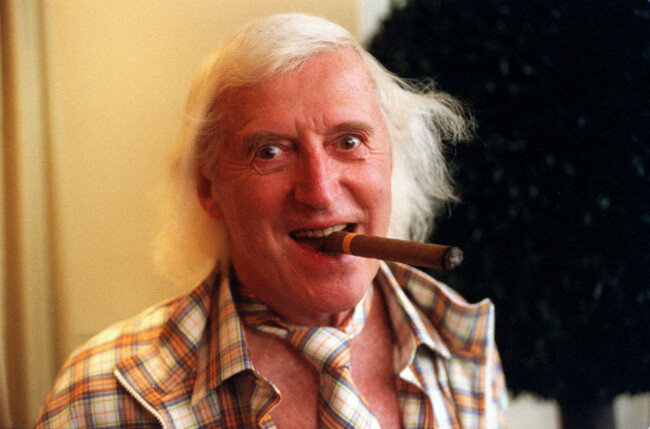
jimmy-saville-tv-presenter-june-98large-cigar Jimmy Savile. Alamy Stock Photo Alamy Stock Photo

Two journalists for the BBC, Liz MacKean and Meirion Jones, helped expose the horrific abuse TV presenter Jimmy Savile had subjected children to for decades. They gave a platform to many people who alleged abuse at the hands of the paedophile. When they began the work they didn’t know the extent they’d have to take on the BBC in order to make sure that the allegations were taken seriously, nor that they would risk their careers in doing so. Their efforts helped to change the treatment of survivors by the media and the justice system.

(The Guardian, approx 27 minutes reading time)

“Rumours about Savile being a sexual predator and a paedophile had persisted for decades. In his trademark brightly coloured shell suits, scant shorts and string vests, Savile had performed his perversions almost as much as he’d hidden them. His manner almost dared people to challenge him. Because of the UK’s punitive libel laws, no one ever had. On the Monday morning after Savile’s death, in the Newsnight office at BBC Television Centre, social affairs correspondent Liz MacKean and producer Meirion Jones began to investigate Savile’s history.”

Readers like you are keeping these stories free for everyone...
A mix of advertising and supporting contributions helps keep paywalls away from valuable information like this article. Over 5,000 readers like you have already stepped up and support us with a monthly payment or a once-off donation.

View 19 comments
Close
19 Comments
This is YOUR comments community. Stay civil, stay constructive, stay on topic. Please familiarise yourself with our comments policy here before taking part.
Leave a Comment
    Submit a report
    Please help us understand how this comment violates our community guidelines.
    Thank you for the feedback
    Your feedback has been sent to our team for review.

    Leave a commentcancel

     
    JournalTv
    News in 60 seconds