We need your help now

Support from readers like you keeps The Journal open.

You are visiting us because we have something you value. Independent, unbiased news that tells the truth. Advertising revenue goes some way to support our mission, but this year it has not been enough.

If you've seen value in our reporting, please contribute what you can, so we can continue to produce accurate and meaningful journalism. For everyone who needs it.

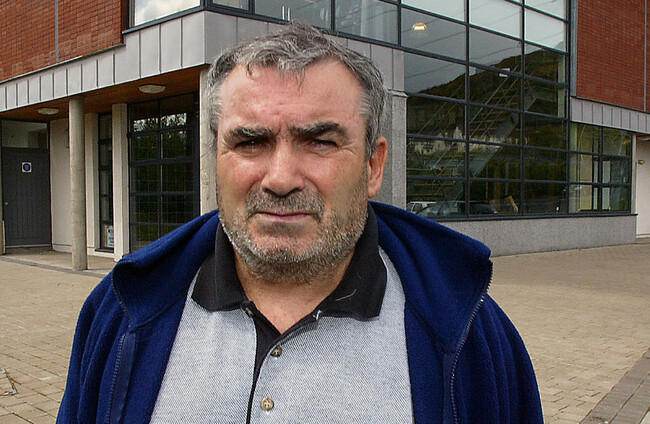
Freddie Scappaticci, who is widely believed to be the agent known as Stakeknife. Pacemaker Press

Taoiseach says 'everybody knows who the agent is' as UK urged to reveal identity of Stakeknife

‘I can cut to the chase now and formally announce Freddie Scappaticci was the agent Stakeknife,’ said a solicitor who represents the families of some victims.

LAST UPDATE | 9 Dec 2025

THE FINAL KENOVA report has urged the UK government to reveal the identity of Stakeknife, the British Army’s top spy in the IRA.

It also found there is no evidence of collusion between the British state and loyalist paramilitaries in the 1974 Dublin Monaghan bombings.

Operation Kenova found in its interim report that more lives were probably lost than saved through the operation of Stakeknife, an agent who “committed grotesque, serious crime” including torture and murder.

Following the final report, Kenova chief Iain Livingstone said there is a “compelling ethical case for the UK Government to derogate from the Neither Confirm Nor Deny (NCND) policy regarding the agent Stakeknife’s identity”.

He added: “It is in the public interest that Stakeknife is named.”

The agent Stakeknife was widely believed to be west Belfast man, Freddie Scappaticci, who was 77 when he died in 2023.

The report does not confirm the identity of Stakeknife, as the UK government will not allow it.

Taoiseach Micheál Martin remarked that Stakeknife was “responsible for the deaths of so many people” and supported calls for his identity to be revealed by the UK Government.

He told reporters that the report is “very clear about the unacceptable nature of state involvement and utilisation of this agent, which led to so many deaths”.

Martin added: “The agent should be named, everybody knows who the agent is.”

He also said he regretted that the full report of Operation Denton - the overarching review of the activities of the Glenanne Gang – had yet to be published.

However, he said there was a “seismic” finding in the summary report which said a network of loyalist paramilitaries, aided by members of the RUC and UDR, was responsible for murdering around 120 people.

“While this finding was expected, it is shocking and seismic none the less,” said Martin.

Elsewhere, Kevin Winters of KRW Law, who represents the families of some victims in relation to Operation Kenova, told a press conference this afternoon: “I can cut to the chase now and formally announce that Freddie Scappaticci was the agent Stakeknife.”

He added that the “dogs in the street know this”.

He also remarked that the Kenova team “fought hard to name Stakeknife in the face of the impenetrable State intelligence obstacle known as NCND”.

He called on the UK government to “drop its incessant use of NCND to block-tackle families getting this confirmation” and remarked that its use “prevents the truth about the role of State complicity in murder”.

PSNI Chief Constable Jon Boutcher also remarked that the refusal to name Scappaticci is “bordering on farce”.

Boutcher told a press conference today: “To directly quote a solicitor for the Kenova families, the dogs in the street know that Fred Scappaticci is the agent Stakeknife.”

Winters meanwhile added that Scappaticci “wasn’t the only Stakeknife in the drawer”.

He also remarked that the report revealed that an “MI5 operative broke into a locker belonging to two Kenova personnel”.

“What does that say about the integrity of the process?”

The report states that MI5 personnel “knew and had used the combination code for a secure safe used by Kenova liaison officers to store classified material”.

This only came to light when one member of MI5 staff said that they had retrieved a file from the safe.

“The combination had to be changed as a result, thereby eroding an element of trust that Kenova thought had been established,” said the Kenova report.

Winters also stated that a public inquiry is the “only option to take todays Kenova work product to the next stage, otherwise it will have been all in vain”.

Meanwhile, the Taoiseach described the report as a “catalogue of tragedy, failure and hurt that affected all communities”. 

He said it “sheds essential light” on the “systematic exercise of terror to communities at large by the Provisional IRA”.

Martin added that it also “shows the complicity of British state forces in allowing this to happen when it suited their ends”.

Martin stated that dealing with the legacy of the Troubles “remains essential work for both Governments” and welcomed the “commitment by the UK authorities to provide reciprocal cooperation to Ireland for investigations, inquiries and inquests carried out in this jurisdiction”.

Recommendations 

The report, published today, updates 10 recommendations made in the interim report last year, including a call for the UK government to acknowledge and apologise to bereaved families and surviving victims.

It also calls for a full apology from the Republican Movement for the Provisional IRA’s abduction, torture, and murder of those it suspected of being agents.

The final report includes a report of Operation Denton, which reviewed a series of attacks carried out by loyalists with involvement by some members of the security forces in the 1970s known as the Glenanne Gang.

It finds that an “easily defined Glenanne Gang did not exist”.

It contends the term “evolved” to become a “convenient shorthand construct to group together the horrific activities of a broader network of paramilitary groups, “primarily the wider UVF and Mid Ulster UVF acting with corrupt members of the security forces, including the RUC and UDR”.

It also finds that the UVF was responsible for the 1974 Dublin and Monaghan bombings, and there was no specific intelligence that could have prevented the attacks, which claimed 33 lives.

It remains the biggest loss of life on any single day of the Troubles.

Following the publication of the interim report last year, MI5 told Kenova it had found previously undisclosed material.

The report said this was a “significant failure on the part of MI5″.

Kenova’s 10 recommendations also include a call to designate the longest day, 21 June, as a day to remember all those lost, injured or harmed as a result of the Troubles.

The probe was initially set up to investigate the activities of Stakeknife within the PIRA’s internal security unit and commenced in 2016.

It examined 101 murders and abductions linked to the unit responsible for interrogating and torturing people suspected of passing information to the security forces during the conflict.

In total, it discovered 3,517 intelligence reports from Stakeknife, including 377 in an 18-month period.

However, the report found that “time and time again”, the reports were not acted on, apparently prioritising the protection of the agent over those who “could and should have been saved”.

Winters meanwhile remarked that this “industrial scale provision of information saved pitifully few lives”.

Last week, the Public Prosecution Service in Northern Ireland announced that no prosecutions would be pursued after consideration of the last batch of files from the investigation.

-With additional reporting from Diarmuid Pepper

Close
JournalTv
News in 60 seconds