Sign in. It’s quick, free and it’s up to you.
An account is an optional way to support the work we do. Find out more.
Sign in. It’s quick, free and it’s up to you.
An account is an optional way to support the work we do. Find out more.
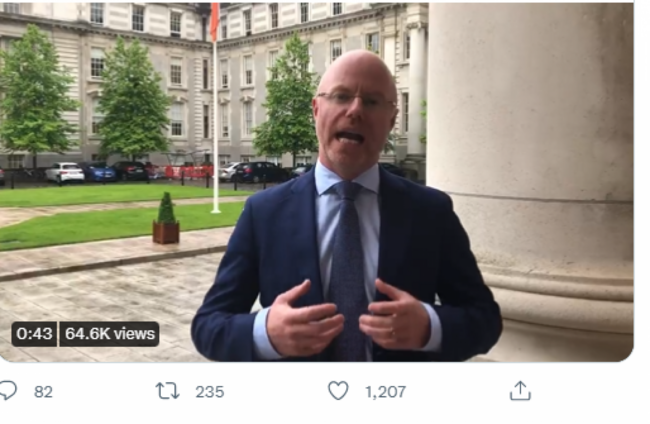
THE DEPARTMENT OF Health as well as representatives for the Minister for Health have both denied paying for promotional activity on the Minister’s Twitter account after hundreds of accounts retweeted a video Stephen Donnelly posted on the social media platform this afternoon.
A video of the minister was posted on his own account at 3.40pm. Within twenty minutes, the video, which had concerned an update on the controversial ownership of the National Maternity Hospital, had racked up over 200 retweets.
A search of who had retweeted the Minister showed hundreds of accounts which appeared to be mainly from Turkey.
The quick number of retweets sparked suggestions that some form of promotion or boosting of the Minister’s Twitter account had been paid for.
However, in a statement this evening, a spokesperson for the Minister for Health said: “Neither the Department nor the Minister have paid for any promotional activity in relation to his social media accounts.”
When viewing the video again at the time of writing (6.15pm), there were just 24 retweets.
There are now over 150 quote tweets – with the vast majority querying the sudden interest in the Irish Health Minister from Twitter accounts in Turkey.
Today is an important milestone in delivering a world-class new National Maternity Hospital for women and babies. Cabinet approval of the legal framework ensures all legally permissible services will be available. We'll work now to get this vital hospital built. pic.twitter.com/sTvT8qaYpt
— Stephen Donnelly (@DonnellyStephen) May 17, 2022
Fianna Fáil said it has reported the issue to Twitter.
Twitter has been attempting to cut down on the number of bots which are on the social media platform.
A piece published on Twitter’s Common Thread blog described how its “platform integrity team” are trying to remove malicious spreaders of either disinformation or engagement from fake accounts.
“The bots that the platform integrity team deals with are generally fake accounts deliberately created to distort information or manipulate people on Twitter. The first way the integrity team sniffs out bots is through machine learning.
“They train algorithms to recognize common patterns of malicious activity; these automatically challenge between 5 to 10 million accounts a week.”
With reporting by Rónán Duffy

To embed this post, copy the code below on your site














have your say