Sign in. It’s quick, free and it’s up to you.
An account is an optional way to support the work we do. Find out more.
Sign in. It’s quick, free and it’s up to you.
An account is an optional way to support the work we do. Find out more.
LAST UPDATE | 28 Mar 2025
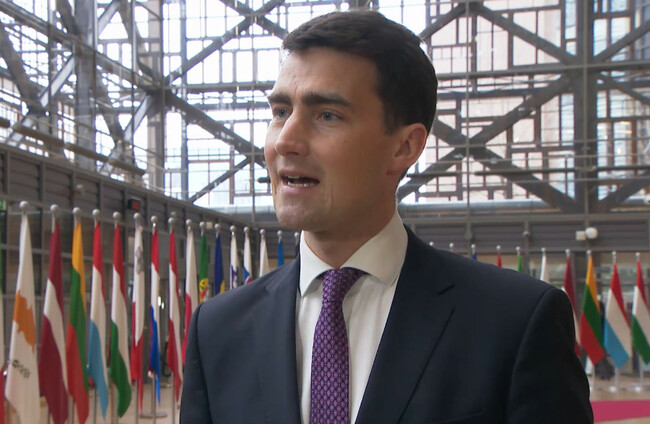
IRELAND IS THE “most exposed and most at-risk” country in the EU in the face of reportedly up to 20% tariffs from the Trump administration on exports coming from Europe, public expenditure minister Jack Chambers has said.
While it is a matter for the European Commission to prepare and decide on the overall EU response to potential tariffs from the US next week, the impact on Ireland will be much different when compared to other member states, he said.
Companies based in Ireland and the economy here could face the most-damaging of the downside risks associated with the import taxes, Chambers added, as 25% of Irish exports go to the US, compared the EU average of below 10%.
Since his return to the White House in January, US President Donald Trump has announced a barrage of tariffs on various goods that the US imports from other countries.
Officials in Europe are also preparing for a reported 20% blanket tariff on a wide range of goods coming from EU member states at the beginning of next week.
Asked if Ireland can sway the European Commission’s response to tariffs, Chambers said it will not be decided on a member-state-by-member-state basis.
He said: “I believe the Commission is assessing the overall EU position and are reflecting on different member states’ input in the context of retaliatory, or tit-for-tat, measures.
“We know the downside risks for trade in all countries, particularly in Ireland, which has 25% exports of good into the US, the average in the EU is 7%.
“So, Ireland is the most exposed and the most at-risk if this crystalises.”
Chambers, finance minister Paschal Donohoe, Tánaiste and trade minister Simon Harris and Taoiseach Micheál Martin are “wargaming” for all scenarios, the public expenditure minister said.
The Department of Public Expenditure is in the process of carrying out long-term planning, which will largely focus on using taxpayer money more efficiently and creating targeted supports, he said before meeting EU ministers to discuss European cohesion.
Chambers said he and his officials are looking at all of the risks, which are “all on the downside”. Ireland is not in a position to start slashing public spending, currently he said – adding that there is first a need for a long-term spending plan.
He ruled out once-off support measures in the next budget, with government opting instead for targeted aid.
Speaking today, Transport Minister Darragh O’Brien said he did not forsee a reduction in capital investment into the National Development Plan or infrastructure project, such as Metrolink North, as a result of any potential tariffs or economic shocks.
He said that a review of the National Development Plan, a scheme to modernise and future-proof Irish infrastructure and economic structures, will go ahead as planned in July.
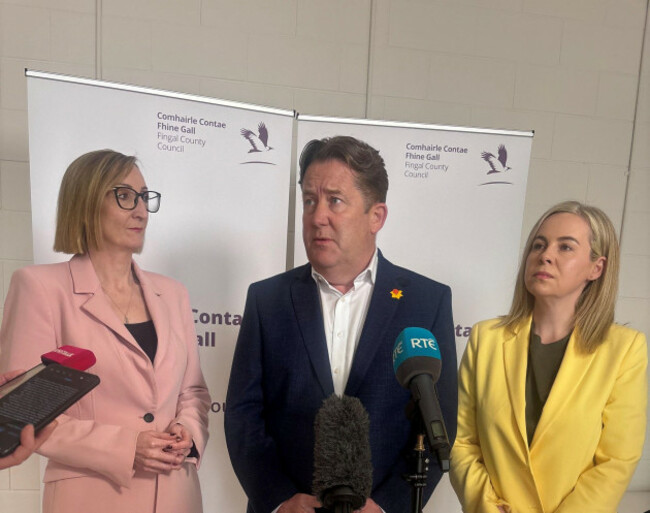
O’Brien said that having a growing economy with full employment places Ireland in a stronger position to be able to respond and deal with economic shocks. He said the government will continue to invest in the economy and infrastructure.
He added: “Our this government will do everything we can to protect our industries and our jobs.”
The most recent was the announcement this week of new tariffs on cars and car parts coming from outside the US – and Trump has signalled that pharma is next on his list, namechecking Ireland in an address earlier this week.
Finance minister Donohoe last night said he is “extremely concerned” about the impact the tariffs are likely to have on the pharma industry.
Donohoe said there will be “many ups and downs” as the EU responds to the threats, but cautioned that any response from the EU must create “incentives for negotiation” for the White House.
Donohoe, who is president of the ministers from the Eurozone, the Eurogroup, said “it’s an open question to say the least,” as to whether the US wants to be a partner with the EU.
“I’m extremely concerned…”
— RTÉ Prime Time (@RTE_PrimeTime) March 27, 2025
Minister for Finance @Paschald warns that US tariff threats pose “significant and real difficulties” for Ireland’s economy — but says, “collectively, we will be able to rise to the test ahead.”
WATCH:@rtenews | #rtept pic.twitter.com/B4zHgXU0if
The Fine Gael TD added that he believes Ireland will be able to meet the incoming threats because of the economy’s productivity and Ireland’s membership in the EU.
Asked if, like new Canadian prime minister Mark Carney, he believes the current US administration are no longer reliable trading partners, Donohoe warned the US are much less favourable to the EU in the Trump administration.
Carney said in an address last night that Canada’s “old relationship we had with the United States”, based on economic collaboration and military cooperation “is over” following Trump’s threats to impose tariffs and to make Canada a US state.
“I believe the American economy and I believe the employers that are located here in Ireland and in Europe are reliable partners,” Donohoe said. “I see that gain and again.”
But he added: “I think it’s a very open question to say the least does the United States want to be a partner with the European Union of these economic issues.”
To embed this post, copy the code below on your site















have your say