We need your help now

Support from readers like you keeps The Journal open.

You are visiting us because we have something you value. Independent, unbiased news that tells the truth. Advertising revenue goes some way to support our mission, but this year it has not been enough.

If you've seen value in our reporting, please contribute what you can, so we can continue to produce accurate and meaningful journalism. For everyone who needs it.

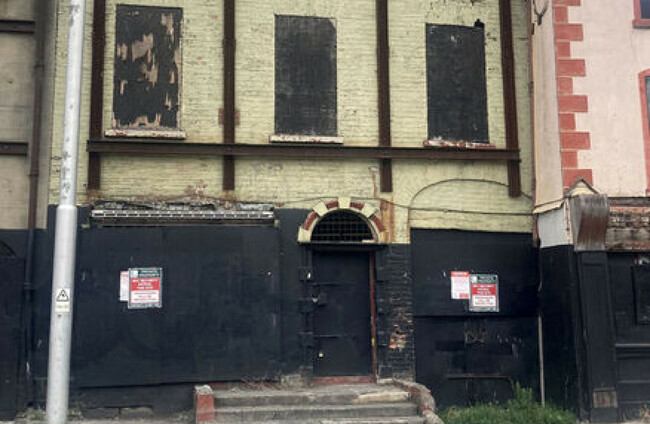
A derelict building on St James Street in Dublin.

A grassroots movement can help change housing policy - we should know

The founders of #DerelictIreland on the setbacks and victories of campaigning to bring empty homes back into use in Ireland.

The Housing Essay is a new weekly deep dive from a rotating variety of voices into issues impacting the property crisis in Ireland. Are there potential solutions that may be currently overlooked or traditionally ignored by policymakers? 

YESTERDAY MARKED THE 6th anniversary of us starting the national movement #DerelictIreland.

It coincides with an announcement last week that the government are finally putting teeth to the 36-year-old Derelict Sites Act, with a new Derelict Property Tax to be collected by Revenue, which we proposed to the Oireachtas Committees in 2021 and in 2025.

Have no doubt, this significant policy change is a result of the strong grassroots, self-organising, decentralised #DerelictIreland community and our relentless campaigning.

That’s according to the many politicians, civil servants and media professionals who have repeatedly thanked us for our work, while acknowledging the massive impact of the campaign.

Aside from this new tax, the crucial role that #DerelictIreland played in bringing in the 2022 Vacant Homes Tax (even if it was designed to fail) is also widely acknowledged, and the much sought-after vacancy and dereliction grants in 2022. As well as achieving a near doubling of enforcement of the Derelict Sites Act between 2020 and 2026.

‘I hear you’re a housing activist now’

But what’s it like to be a housing activist? What have we learned from starting a national movement that’s achieved substantial policy success?

The last six years as a housing activist have been a rollercoaster. Frustrating, uplifting, isolating, rewarding and humbling. Luckily, unlike many activists in Ireland, we are not fighting to have our basic needs met. Nor is anyone paying us to do what we do, as we haven’t fundraised and haven’t applied for grants or public tenders.

We could just walk away, and our lives would be much easier. Yet we stay. Why? We ask ourselves this a lot, and each time we always come back with another question, ‘if not us, then who?’.

We know we are privileged to have a roof over our heads. We know many would like to do more, but can’t. Too worn from caring for a loved one, too exhausted from work or too drained from fighting for access to essential public services.

We know we had an advantage too, since we have a good idea of how the system works, or in many cases doesn’t work. We had previous international success in creating sustainable changes in industry, policy and education. Given the dire situation so many were facing in Ireland, we felt a responsibility to use our professional skills and expertise to help ease the housing crisis. But it’s not been an easy journey.

Although some days are drudgery to keep going, others it feels like the wind is on our back, when we’ve made a breakthrough in changing culture, where there’s a new policy announcement, or we’ve reached a new audience. While on the worst days we can see our Sisyphus boulder rolling back down the hill as inertia and delays to change kicks in. Yet with empty homes everywhere and homeless numbers rising we know we need to keep going. We really feel we have no choice.

Housing activism

‘At least there’s two of us’ we often reflect. As a romantic couple, you can imagine living, working and campaigning together can get intense. But having someone else there who knows what you’re going through has been essential for our resilience. Someone who can help pick you up when you’re down. Because the reality is, housing activism can be a lonely job.

Conversely, being a housing activist can connect you to all kinds of wonderful people. We are privileged to have met so many inspirational lifelong activists working tirelessly for their communities.

From the outset, we knew we couldn’t get involved in everything. And we knew we needed to retain independence from political parties, institutes and industries to keep our focus. This was not the first time we’ve gone about changing national policies, previously advising Ministerial teams, with Frank named as having the biggest impact on Welsh resource policy in 2013. Yet this ‘official’ approach achieved very little real-world change, given it’s so frequently placated with vague promises of more action at some point in the future.

This independence comes at a price, though. It’s much easier for institutional actors to try to berate, dismiss and discredit your free work from their highly paid positions.

Luckily, we’re two middle-aged people who’ve experienced burnout and isolation before, so we knew putting ourselves out there with no clear alliances would create challenges.
Combined with our own idiosyncrasies, we knew we couldn’t keep everyone happy.

We are not superhumans. We cannot do everything we want, and certainly cannot do everything that’s needed. Too many times, our hearts have been broken because we couldn’t help those who needed it most. It’s important to remember that sometimes saying no can be the most powerful thing we can do.

But it’s important not to listen to other people telling you ‘no, you can’t do that’ or ‘that’s the way things are, just accept it’. Because when we started, it didn’t take long for others to pressure us to stop.

We were warned that Ireland only listens to the wealthy, hinting that we were too poor to create change in Ireland. We received a few kind warnings that we should stop, as we would never receive state funding if we continued with our daily dose of dereliction. We also received a lot of not-so-kind warnings. You only need to look at how whistleblowers are treated in Ireland to know that those trying to improve things are not always welcome.

Financial struggles

Maybe this is why we’ve been asked so many times about our income. You may be surprised to hear that we haven’t got billionaire donors supporting us. But luckily, we still have a few training and development clients that cover our bills, which we’ve significantly reduced with our sufficiency lifestyle.

But there’s no denying it, our finances have taken a hit these past six years, but then you don’t become an activist for the money.

Some have accused us of being activists for the attention. But who would really want the attention that being a housing activist brings you? We are frequently subject to abusive language online and have received disgusting physical threats to us and our property. In fact, we lost count of the times we’ve been threatened by trolls. Being thick-skinned was a skill we needed to quickly learn to keep going.

On the flip side, we’ve been overwhelmed by the support from those who actually want change. The gratitude you receive when strangers come up thanking you for your work can be overwhelming. As well as from those who take time out of their lives to stop and thank us for doing our activist street art, tours and installations, while so often sharing their personal stories. These people re-energise and inform us while helping to sustain our hope. We are truly grateful to each and every person who has supported us and the campaign.

We often bemoan the lack of sustained housing activism in Ireland, and although we know that it’s a hard road to travel, we need it now more than ever. And in a world that’s watching humanity die through genocide, ecocide and climate change, we need to fight back against apathy and cynicism and use our agency to ensure everyone has a home, a place to play and create.

We are grateful that #DerelictIreland gave us this sense of purpose, and are privileged that the community brought us hope and joy. And crucially, the results have demonstrated that people power works very well, even if there is still a long way to go.

And maybe, just maybe, if you’ve read this far, you too might consider becoming a housing activist. We live with Dóchas that you do.

Jude Sherry and Dr Frank O’Connor are founders of anois.org, ffud.art and #DerelictIreland. They are part of a series of writers, academics and economists penning a weekly essay delving into the housing crisis and potential solutions.

Close
15 Comments
This is YOUR comments community. Stay civil, stay constructive, stay on topic. Please familiarise yourself with our comments policy here before taking part.
Leave a Comment
    Submit a report
    Please help us understand how this comment violates our community guidelines.
    Thank you for the feedback
    Your feedback has been sent to our team for review.

    Leave a commentcancel