We need your help now

Support from readers like you keeps The Journal open.

You are visiting us because we have something you value. Independent, unbiased news that tells the truth. Advertising revenue goes some way to support our mission, but this year it has not been enough.

If you've seen value in our reporting, please contribute what you can, so we can continue to produce accurate and meaningful journalism. For everyone who needs it.

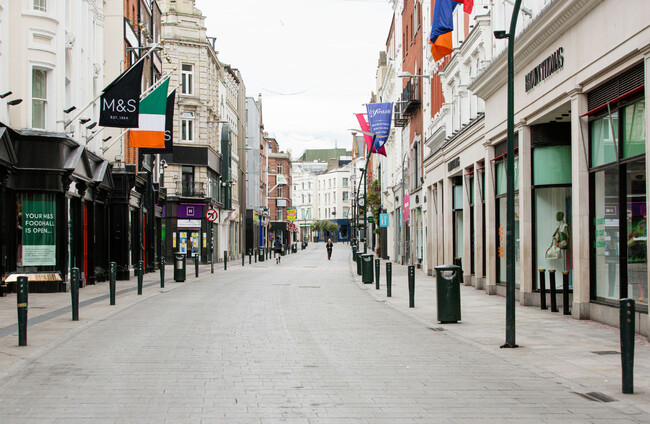
An empty Grafton Street at the height of the pandemic. Alamy Stock Photo

Ireland's Covid inquiry has been going on for over two months, here's what it's found out

The inquiry has received over 500 documents from the government around its response to the pandemic.

THE INDEPENDENT COVID-19 inquiry has been analysing Ireland’s response to the pandemic for over two months now.

Launching at the end of May, it announced that it was launching a public consultation inviting submissions on people’s experiences over the pandemic period.

It was also revealed that leading figures such as health ministers and chief medical officers, involved in managing the country’s response would not face public grilling.

Giving an update on its work so far, the inquiry or ‘evaluation’ as it has been dubbed, has found that the pandemic had significant negative impacts to the public, with those struggling financially hit the hardest.

The inquiry has also found the response to the pandemic in nursing homes was “particularly poor”.

These findings were shared as part of the first update from Ireland’s Covid-19 Evaluation, a non-state body set up to analyse pandemic responses across hospitals, the community and nursing homes, along with wider economic and societal impacts.

7,000 responses to public survey

A general public consultation survey, which received over 7,000 responses, found that high levels of negative impacts are emerging across several areas, including education and development, civil liberties, human rights and trust and mental health.

The survey found that those who reported difficulty in making ends meet reported “considerably wider” negative impacts.

Early findings from the survey, which are still being correlated by the group, also suggest mental health strains were most related to issues such as Covid-19 exposure and loneliness or isolation.

Parents and guardians were concerned about children’s education, particularly social development, while students said they  experienced challenges with connection and extracurricular activities.

In June, a meeting was held between the inquiry members and stakeholder organisations, based on the findings from the survey.

The meeting highlighted how the pandemic exposed “pre-existing inequalities”.

It found that people’s lives and futures were disrupted, with the level of impact depending on people’s individual circumstances.

It also highlighted the need for sustained investment, due to pre-existing gaps and overburdened systems.

The pandemic exposed the State’s reliance on the community and voluntary sector, the resilience of workers, and the value of the forgotten frontline who provide family care, the inquiry said in its update.

There was a particular focus on the need to have capacity, infrastructure, networks and datasets in place, which can be quickly scaled and leveraged in times of crisis.

Nursing homes

A workshop on the impact of the pandemic on nursing homes indicated that personal views by participants suggest the response in nursing homes was very poor, particularly in the early stages, with multiple problems highlighted.

Wider issues relating to a system of neglect were also highlighted by one participant, including the area being chronically under-researched, lacking a coherent national policy framework and underfunded, with significant investment required.

One of the participants also noted that nursing homes present complex issues around human rights, which are not simple to address.

Overall staffing was flagged as an issue, with terms and conditions a contributing factor.

It was suggested that waiting list for home care, and the fact that the proportion of people in nursing homes is returning to pre-Covid times, point to a lack of wider resources and care options.

It was also highlighted that nursing home ownership is moving towards private equity companies, with some expressing concern about the lack of data and how it impacts monitoring of the homes.

Government documents handed over to inquiry

In its latest update, it was confirmed that a total of 18 government departments and the HSE have handed over 500 documents to the inquiry, of which includes around 4,850 pages of “detailed content”. 

The inquiry said the submissions “paint a picture of a comprehensive, multifaceted response that necessitated the rapid introduction of legislative, regulatory, advisory, financial and operational measures to mitigate the impact of the pandemic on society and the economy”.

It said they show how the pandemic deeply impacted individuals, families, communities, businesses, services, and on wider society and the economy.

The submissions also reveal much about how the State responded to the pandemic: how issues were identified, how decisions were taken, and what factors informed and influenced those decisions.

They reveal the over-riding imperative of public health considerations, and the level of influence that NPHET advice had on government decisions and measures introduced.

They also show how the response evolved and changed over time, from the initial emergency response with short-term measures, through to the more medium and longer-term response as the pandemic progressed and the challenges evolved.

Readers like you are keeping these stories free for everyone...
A mix of advertising and supporting contributions helps keep paywalls away from valuable information like this article. Over 5,000 readers like you have already stepped up and support us with a monthly payment or a once-off donation.

View 31 comments
Close
31 Comments
    Submit a report
    Please help us understand how this comment violates our community guidelines.
    Thank you for the feedback
    Your feedback has been sent to our team for review.
    JournalTv
    News in 60 seconds