We need your help now

Support from readers like you keeps The Journal open.

You are visiting us because we have something you value. Independent, unbiased news that tells the truth. Advertising revenue goes some way to support our mission, but this year it has not been enough.

If you've seen value in our reporting, please contribute what you can, so we can continue to produce accurate and meaningful journalism. For everyone who needs it.

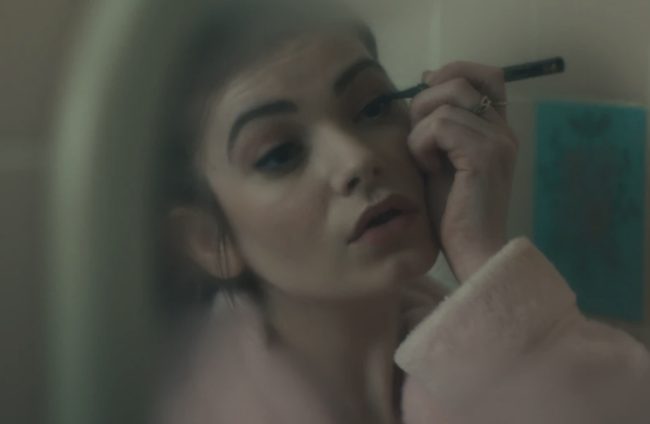
Effi o Blaenau, featuring Leisa Gwenllian in. the title role, has fuelled hope of a revival of Welsh language cinema. The film is due to be screened in Dublin's Lighthouse Cinema next week. S4C

An Cailín Ciúin and other films as Gaeilge inspired Welsh language cinema revival says S4C head

The chief executive of Welsh broadcaster S4C has said that his station needs to keep the focus on younger audiences to ensure the future of the Welsh language.

(Seo alt ónár bhfoireann Gaeltachta. Is féidir an bunleagan as Gaeilge a léamh anseo)

A WELSH-LANGUAGE FILM about a young woman living in a language heartland has been drawing audiences to cinemas across Wales since its launch at the end of last month.

‘Effi o Blaenau’ tells the story of Effi, a single young woman who is enjoying life until she meets a soldier in a nightclub and, as a result of that one relationship, finds herself pregnant.

The story in Effi o Blaenau is very different from that of An Cailín Ciúin, but Geraint Evans, Director General of S4C, the Welsh language channel, said that the film made under the TG4 and Screen Ireland scheme inspired the Welsh broadcaster to return to making films for cinema.

MetFilm Distribution / YouTube

“Alan Esslemont (former director general of TG4) always used to say that S4C had inspired him to push Irish-language films forward for cinemas so that an Irish-language film would receive an Oscar nomination – as happened with our own film Hedd Wynn in 1994,” said Evans, speaking in an interview with The Journal.

In the early 1990s, a handful of Welsh-language films made significant progress, among them Hedd Wynn – a film about a Welsh poet killed while fighting in the British Army in the First World War – and Branwen, a Welsh and Irish-language film set between Wales and Northern Ireland.

Hedd Wynn achieved a nomination in the same Oscar category in which An Cailín Ciúin received a nomination in 2023, and while neither of them won the prize, both succeeded in attracting considerable goodwill towards films in minority languages in Ireland and Britain.

Evans acknowledges, however, that the Welsh did not take those first further steps at the time.

“We are being encouraged now to reclaim cinema again, because it is another way of reaching our audience and of breathing new life into the Welsh-language film industry, given what we have seen with An Cailín Ciúin and Kneecap – An Scannán.

“Effi o Blaenau is in the cinemas now and it is doing wonderfully well, and a Welsh-language film will go into the cinemas every year as part of a new scheme called Cinema Cymraeg,” said Evans.

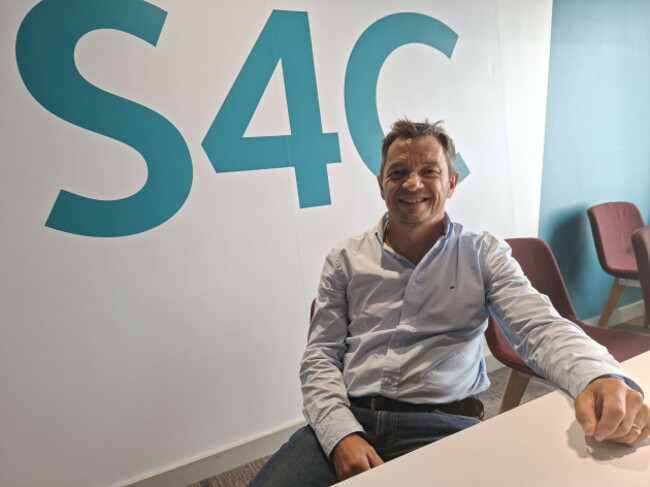
GeraintEvans Geraint Evans, ard stiurthóir S4C Concubhar Ó Liatháin Concubhar Ó Liatháin

Like any broadcaster or any media organisation, S4C’s business is to pursue an audience, but that landscape is changing, with more people – young people in particular – abandoning television entirely in favour of seeking their media content on smartphones and other screens.

The viewing figures bear that out. According to data from BARB (British Audience Research Bureau), there has been a fall of between 30,000 and 50,000 in the television audience among the Welsh-speaking community in Wales and people living outside Wales.

But that does not take into account the audience for streamed content being provided by S4C on various platforms such as TikTok and YouTube and through its own player, S4C Clic, and recently an agreement has been made with the BBC that will give greater prominence to content from the Welsh-language channel on the major British broadcaster’s iPlayer.

“The question is put to us – should we be spending our funding on films for the cinema and, as far as I am concerned, the cinema is just another screen for our content, just as the smartphone is another screen for our content, the same as television.

“A film for the cinema is just as valid as the short film we have just commissioned for TikTok.”

He said they have a specific platform, Hansh, aimed at people in the 18-25 age group, where the content is humorous and, sometimes, irreverent – content that is felt would appeal to that section of the audience, the section of the broader viewing public that has abandoned the television screen.

“The content on Hansh is bold and does things in Welsh that appeal to that age group.

“We must protect the future of the language by commissioning content that will appeal to young people and attract them.”

S4C was established at a time when Wales was under direct rule from Westminster and when Margaret Thatcher was prime minister. It is said that it was thought at the time that such a measure would satisfy the nationalists seeking independence.

At present a nationalist government – Plaid Cymru, the nationalist party in the majority – is in power in Cardiff, where a devolved government has been in place for almost 30 years. Nevertheless, S4C’s funding still comes from London through the television licence. The future of public service broadcasting in Britain is currently being assessed in a green paper.

It is the shift from linear television audiences to audiences watching in a non-linear way across all kinds of screens that lies behind this debate.

At present S4C receives approximately £100 million every year through the television licence fund – equivalent to €117 million and approaching twice the allocation TG4 receives from the Irish government.

“If we compare ourselves to TG4, they could certainly be a little envious of us but we should not be making that comparison, because the real comparison is with our competitors here – the likes of the BBC and ITV and, of course, Netflix.

“We need the funding so that the standard of our content is at a level that will attract people – young people in particular – to watch it, and if it is not of a high enough standard compared with what they are watching on the likes of Netflix, that is when they will choose not to watch it.

“They will not watch it out of a sense of duty, as people might have done years ago – you must be able to compete on the basis of the standard and quality of the content.”

While Plaid Cymru has stated in the party’s election manifesto that they want to move power over broadcasting from London to Cardiff, Evans is alert to the fact that this could also be risky.

“The question for me is whether the funding can be secure and sufficient rather than who provides the funding, because there would be danger in decentralising that power as well,” he said, noting the fierce competition from the education and health sectors for funding from the Welsh government at present.

When all is said and done, however, Evans is confident about the future – both the future of S4C and the future of Welsh.

“If we were only providing the linear television service, which the older generation is watching, and not catering for the needs of young people, we would have cause for concern not only for the future of S4C but for the future of Welsh as well.

“But if we continue to invest in new technology to produce content that attracts young people, if we are willing to be on platforms like YouTube, to be in cinemas with films like Effi o Blaenau, commissioning content for social media for young people, if we are the digital broadcaster first, then I believe we can influence the lives of young people in Wales and Welsh can be part of their lives as they seek out content – if we are able to offer jobs to young people so that they see they can earn a living through Welsh while speaking the language – and the more we do that, the brighter the future of Welsh will be.”

The Journal’s Gaeltacht initiative is supported by the Local Democracy Reporting Scheme.

This article was originally written in the reporter’s native Irish and has been translated to English here. AI was used as part of the translation process before final edits.

Readers like you are keeping these stories free for everyone...
A mix of advertising and supporting contributions helps keep paywalls away from valuable information like this article. Over 5,000 readers like you have already stepped up and support us with a monthly payment or a once-off donation.

Close
Comments
This is YOUR comments community. Stay civil, stay constructive, stay on topic. Please familiarise yourself with our comments policy here before taking part.
Leave a Comment
    Submit a report
    Please help us understand how this comment violates our community guidelines.
    Thank you for the feedback
    Your feedback has been sent to our team for review.

    Leave a commentcancel

     
    JournalTv
    News in 60 seconds