Share your views on our Irish-language content

We need your help now

Support from readers like you keeps The Journal open.

You are visiting us because we have something you value. Independent, unbiased news that tells the truth. Advertising revenue goes some way to support our mission, but this year it has not been enough.

If you've seen value in our reporting, please contribute what you can, so we can continue to produce accurate and meaningful journalism. For everyone who needs it.

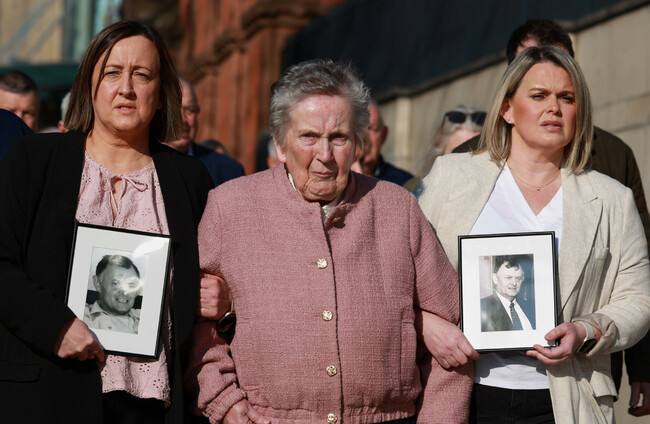
Bridie Brown, the widow of Sean Brown, with their daughters Claire Loughran (right) and Siobhan Brown (left) outside the Royal Courts of Justice in Belfast in April. Alamy Stock Photo

UK government seeks Supreme Court appeal over ruling on public inquiry in Sean Brown case

The Court of Appeal in Belfast ruled in April that the ongoing failure to hold a public inquiry in the Brown case was unlawful and “cannot stand”.

THE BRITISH GOVERNMENT has sought permission from the UK Supreme Court to appeal a court ruling that ordered it to hold a public inquiry into the killing of GAA official Sean Brown.

The Court of Appeal in Belfast ruled in April that the ongoing failure to hold a public inquiry in the Brown case was unlawful and “cannot stand”.

The court affirmed an earlier High Court ruling compelling the British government to hold a public inquiry.

The Appeal Court judges said their final order compelling Northern Ireland Secretary Hilary Benn to establish an inquiry would come into effect on 2 June.

Earlier this month, it was confirmed that Benn would seek leave to take the case to the Supreme Court following the Court of Appeal decision.

According to the court’s website, the permission to appeal from the government has now been lodged. 

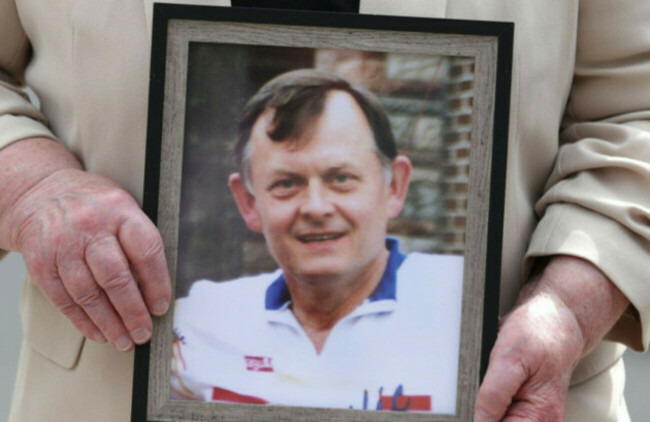
Brown, 61, the chairman of Bellaghy Wolfe Tones GAA Club in Co Derry, was ambushed, kidnapped and murdered by loyalist paramilitaries as he locked the gates of the club in May 1997.

download (41) No one has ever been convicted of Sean Brown's murder. Alamy Stock Photo Alamy Stock Photo

No-one has ever been convicted of his killing.

Last year, a coroner halted an inquest into the Brown killing, expressing concern that his ability to examine the case had been “compromised” by the extent of confidential state material being excluded from the proceedings on national security grounds.

Preliminary inquest proceedings had already heard that in excess of 25 people had been linked by intelligence to the murder, including several state agents.

It had also been alleged in court that surveillance of a suspect in the murder was temporarily stopped on the evening of the killing, only to resume again the following morning.

Coroner Mr Justice Patrick Kinney called on the British government to establish a public inquiry into the loyalist murder.

Benn decided against holding an inquiry, arguing that the case could instead be dealt with by a new Troubles investigatory body, the Independent Commission for Reconciliation and Information Recovery (ICRIR).

Sean Brown’s widow Bridie challenged Benn’s decision not to order a public inquiry and High Court judge Mr Justice Humphreys found in her favour in December and ordered the UK government to establish one. They then appealed against that decision.

The Northern Ireland Secretary contends the case involves a key constitutional principle of who should order public inquiries, the Government or the judiciary.

With reporting from Press Association

Readers like you are keeping these stories free for everyone...
A mix of advertising and supporting contributions helps keep paywalls away from valuable information like this article. Over 5,000 readers like you have already stepped up and support us with a monthly payment or a once-off donation.

Close
JournalTv
News in 60 seconds