We need your help now

Support from readers like you keeps The Journal open.

You are visiting us because we have something you value. Independent, unbiased news that tells the truth. Advertising revenue goes some way to support our mission, but this year it has not been enough.

If you've seen value in our reporting, please contribute what you can, so we can continue to produce accurate and meaningful journalism. For everyone who needs it.

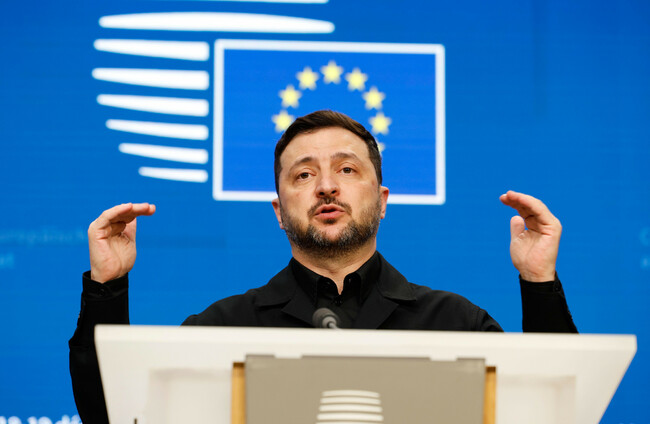
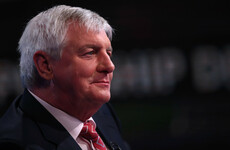
Ukrainian President Volodymyr Zelenskyy Alamy Stock Photo

Leaders gather for high-stakes summit on frozen Russian assets - and it could be a long one

The Belgians fear that the country may be held liable in the future for the use of the seized assets.

LAST UPDATE | 3 hrs ago

A CRUNCH EUROPEAN Council Summit today seeks to reach a resolution around plans to use frozen Russian state assets to support Ukraine.

The European Commission has proposed a financial package worth up to €210 billion for Ukraine, partly by using the cash value of frozen Russian state assets.

Those Russian assets that the EU proposes to use – worth €165 billion – are currently held in Belgium.

However, the Belgians fear that the country may be held liable in the future for the use of the seized assets and its government has opposed the EU’s plan.

Arriving at the summit in Brussels, Taoiseach Micheál Martin said the focus will be the “future financing” of Ukraine and upholidng rules that deter states from needlessly invading others.

He is in favour of the use of immobilised assets to finance Ukraine for the next two years.

This, he says, is justified by Russia’s violation of the UN Charter by undermining the sovereignty of another nation and attacking it.

Martin said he “can’t predict with certainty” whether a deal on the immobilised assets will be struck before the end of the summit, but there is “strong momentum” behind it.

Separately, Ireland is to take over the European presidency for six months from next June.

The Taoiseach said today that by the end of the tenure, he wants to see more states join the bloc, particularly Montenegro.

He also wants to see increased funding from the EU, particularly when it comes to CAP (Common Agricultural Policy) payments.

‘Sense of security’

Ukrainian President Volodymyr Zelenskyy will also be in attendance at the summit today. 

Chairman of EU summits, Antonio Costa indicated that meeting could go on all night, stating earlier in the week if it’s necessary, “we will continue on the 19th or the 20th of December – until we reach a positive conclusion”.

Speaking on radio yesterday, the Taoiseach said there’s limits to what Europe can do to financially support Ukraine, and particularly the reconstruction of Ukraine.

“Geopolitically, it makes sense, and it gives some sense of security, you know, to Ukraine in the aftermath of a peace settlement,” he told Newstalk’s Pat Kenny.

He said settling disputes of this kind is not simple.

“The idea that Russia would have certain control over areas of territories of Ukraine is something that’s very, very difficult for anybody to accept, particularly areas that Russia have not conquered,” he added.

Italian Prime Minister Giorgia Meloni said yesterday that an EU plan for financing Ukraine using frozen Russian assets “cannot be forced”.

“Italy obviously considers the principle that Russia should be the first to pay for the reconstruction of the nation it has attacked to be sacrosanct, but this result must be achieved on a solid legal basis,” she said.

Meanwhile, German Chancellor Friedrich Merz said it was essential to finalise an EU plan to use frozen Russian assets to fund Ukraine’s defence and send a “clear signal” to Moscow.

“It is clear that the pressure on Putin must be increased even further in order to persuade him to engage in serious negotiations,” Merz said in a speech to parliament ahead of an EU summit today.

EU chief Ursula von der Leyen is pushing a plan to use the frozen Russian assets to provide €90 billion loan to Ukraine over the next two years.

Belgium fears reprisal

However, Belgium still fears the scheme could open it up to Russian reprisals and is insisting on rock-solid guarantees from other EU countries that they will share any legal and financial liabilities.

Attempts to reassure the Belgian government have so far failed to break the deadlock, setting up a potentially marathon round of wrangling at the summit.

In theory other EU leaders could override Belgium and ram the initiative through with a weighted majority — but that would be a nuclear option that few see as likely for now.

Russia’s Central Bank announced last week it was suing the Belgium-based Euroclear financial group which holds frozen assets.

Aside from discussing how to finance Ukraine, Martin said he will also be arguing strongly in favour of accelerating Ukraine’s EU application.

“Membership of the EU for Ukraine is also important for its future security. Our meeting is an opportunity to send a clear message that EU enlargement will happen, and that the reform efforts by countries aspiring to join our Union will be matched by our ambition to advance their path towards EU membership.

“There are malign actors, including Russia, who are seeking to destabilise the EU and our neighbours, attacking our shared values and posing a real threat to our security. As recent events have shown, Ireland is not immune to these threats and we must continue to work with our EU partners to combat them,” he said.

Apart from Ukraine, European leaders will also take stock of the situation in the Middle East, with the Taoiseach stating he will use the opportunity to highlight the critical humanitarian situation in Gaza.

“Two months into the ceasefire, aid has still not reached the levels required and as agreed in the peace plan. I will be stressing the need for the EU to do all it can to get this much-needed assistance to the people of Gaza, especially as winter closes in, and to contribute to the next phase of the peace plan, which supports a two-state solution.”

Today’s European Council meeting will also commit to intensify efforts to rid societies of antisemitism, something Martin says he welcomes.

“We were all deeply shocked and appalled by the terrorist attack on the Jewish community in Sydney. There can be no place for antisemitism and hatred in our societies,” he said.


With reporting by - © AFP 2025 

Readers like you are keeping these stories free for everyone...
A mix of advertising and supporting contributions helps keep paywalls away from valuable information like this article. Over 5,000 readers like you have already stepped up and support us with a monthly payment or a once-off donation.

Close
JournalTv
News in 60 seconds