We need your help now

Support from readers like you keeps The Journal open.

You are visiting us because we have something you value. Independent, unbiased news that tells the truth. Advertising revenue goes some way to support our mission, but this year it has not been enough.

If you've seen value in our reporting, please contribute what you can, so we can continue to produce accurate and meaningful journalism. For everyone who needs it.

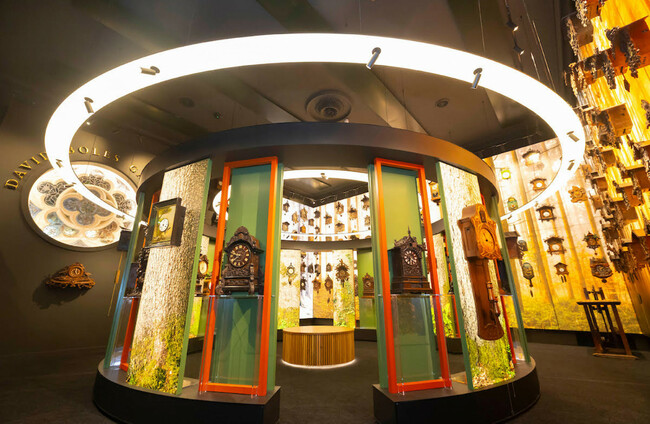
The new wing at the Irish Museum of Time in Waterford. Patrick Browne

World’s largest exhibition of cuckoo clocks opens (now someone needs to put them all forward)

The exhibition comes right in time for the clocks going forward this weekend.

THE WORLD’S LARGEST exhibition of cuckoo clocks is set to open today at Waterford’s Irish Museum of Time.

The Exhibition – which includes over 400 timepieces – celebrates the craftsmanship of Germany’s Black Forest, where the cuckoo clock was originally created in the 18th century.

The trend for the novelty clocks took off as a hobby for farming families in the region, who passed the time during the long, cold winters constructing the clocks and incorporating intricate carvings along with the familiar sound of the cuckoo bird.

The exhibits were purchased from a private cuckoo clock museum near Manchester, which is closing down after fifty years. 

David Boles, the collector who founded the Waterford attraction, snapped up the clocks and funded the restoration of the new wing at the museum that now houses them.

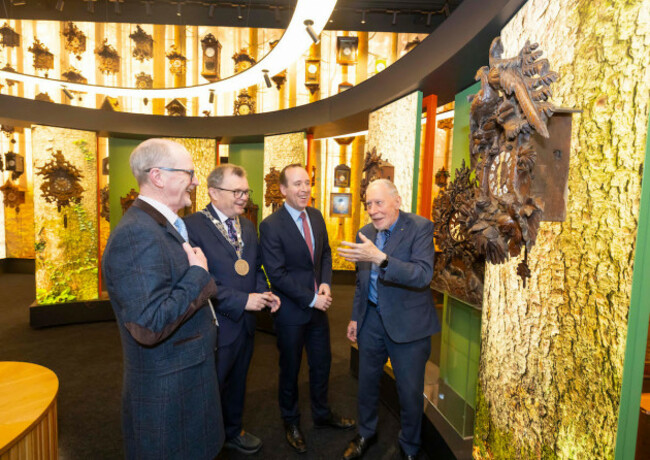
Boles said the design is “mysterious, green, dark, and unusual”, mimicking the German forests of the cuckoo clock’s origins.

unnamed (2) Boles and co-founder Colman Curran meet Minister John Cummins and Waterford Mayor, Councillor Séamus Ryan Patrick Browne Patrick Browne

Boles, who has been collecting clocks for over 60 years, worked on the project alongside fellow museum co-founder Colman Curran and project manager Eamonn McEneaney over the past two and half years. 

He said the Black Forest-themed exhibition “offers a rare opportunity to explore how this enchanting region gave rise to timepieces that are both mechanical marvels and timeless works of art”.

Highlights of the exhibit include eight-day clocks, which need to be wound every seven days, wall and table clocks, miniatures and oversized showpieces.

The Journal / YouTube

Boles reckons cuckoo birds have the “perfect bird sound for a clock”, and joked that people wouldn’t appreciate the passing of time being marked by seagulls. 

But does a niche topic offer much general appeal? Boles thinks so.

“I often ask people what they thought when they were leaving, and they say they only came in for five minutes, but they’ll be back for an hour tomorrow.”

Of course, the opening comes just in time for the annual spring time change this weekend. 

Staff at the museum will be busy setting their clocks forward by an hour as summer time officially begins. 

Readers like you are keeping these stories free for everyone...
A mix of advertising and supporting contributions helps keep paywalls away from valuable information like this article. Over 5,000 readers like you have already stepped up and support us with a monthly payment or a once-off donation.

View 3 comments
Close
3 Comments
This is YOUR comments community. Stay civil, stay constructive, stay on topic. Please familiarise yourself with our comments policy here before taking part.
Leave a Comment
    Submit a report
    Please help us understand how this comment violates our community guidelines.
    Thank you for the feedback
    Your feedback has been sent to our team for review.

    Leave a commentcancel

     
    JournalTv
    News in 60 seconds