Sign in. It’s quick, free and it’s up to you.
An account is an optional way to support the work we do. Find out more.
Sign in. It’s quick, free and it’s up to you.
An account is an optional way to support the work we do. Find out more.
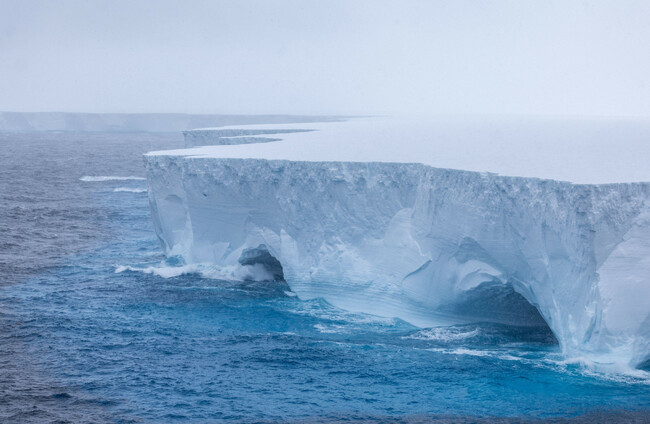
THE WORLD’S LARGEST iceberg appears to have run aground roughly 70 kilometres from a remote Antarctic island, potentially sparing the crucial wildlife haven from being hit, a research organisation said today.
The colossal iceberg A23a – which is more than twice the size of Greater London and weighs nearly one trillion tonnes – has been drifting north from Antarctica towards South Georgia island since 2020.
This had raised fears it could collide with the island or run aground in shallower water near it, potentially disrupting the ability of adult penguins and seals to feed their young.
“Potentially, it could interrupt the pathway to feeding sites and force the adults to expend more energy to travel around it,” the British Antarctic Survey (BAS) said.
“This could reduce the amount of food coming back to pups and chicks on the island, and so increase mortality.”
However, the iceberg has been stuck 73 kilometres from the island since 1 March, according to the BAS.
“If the iceberg stays grounded, we don’t expect it to significantly affect the local wildlife,” BAS oceanographer Andrew Meijers said.
“In the last few decades, the many icebergs that end up taking this route through the Southern Ocean soon break up, disperse and melt,” added Meijers, who encountered A23a in late 2023 and has tracked its fate via satellite ever since.
“Commercial fisheries have been disrupted in the past however, and as the berg breaks into smaller pieces, this might make fishing operations in the area both more difficult and potentially hazardous.”
Researchers are keen to study how the iceberg could affect the local ecosystem.
In its current location, there could even be an upside to its presence.
“Nutrients stirred up by the grounding and from its melt may boost food availability for the whole regional ecosystem, including for charismatic penguins and seals, Meijers said.
The world’s biggest and oldest iceberg calved from the Antarctic shelf in 1986.
It remained stuck for over 30 years before finally breaking free in 2020, its lumbering journey north sometimes delayed by ocean forces that kept it spinning in place.
A 19-kilometre chunk of the iceberg broke off in January.
Unsure of what exactly is happening with the earth’s climate? Check out our FactCheck Knowledge Bank for essential reads and guides to finding good information online.

To embed this post, copy the code below on your site














have your say