TheJournal.ie uses cookies. By continuing to browse this site you are agreeing to our use of cookies. Click here to find out more »
Dublin: 9 °C Sunday 19 May, 2013

Céard? 17 words from modern Ireland, in Irish

Have you ever sent a ‘tvuít’ about the ‘tarrtháil’?

THE LATEST EDITION of the official English-Irish dictionary was formally launched this week – and was marked by the relaunch of focloir.ie, its official website run by Foras na Gaeilge.

The modern dictionary – the first update since 1959 – includes a series of new words, like a formal Irish translation for ‘tweet’ among others.

With the new dictionary in mind, we thought we’d offer you the Irish translations for some of the words and terms you might use pretty regularly in modern Ireland.

Ar aghaidh libh…
Céard? 17 words from modern Ireland, in Irish
1 / 17
  • Tarrtháil (bailout)

    ...this. (AP Photo/Peter Morrison)
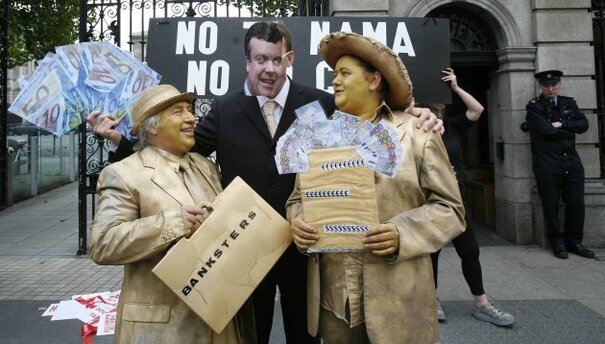
  • Baincéirí (bankers)

    The people partially responsible for the existence of... (Niall Carson/PA Wire)
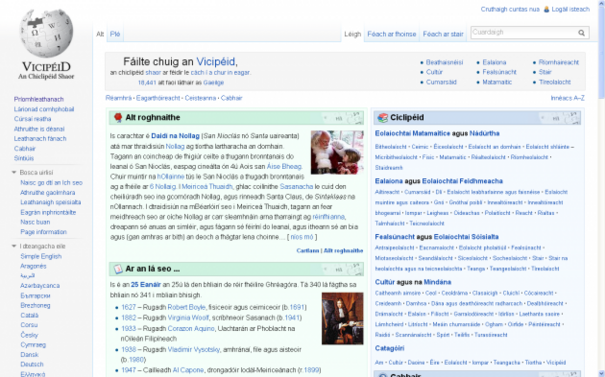
  • Vicipéid (Wikipedia)

    There's no generic translation, because Wikipedia (like 'iPod' or 'Coca-Cola') is a name in itself. However, Wikipedia itself offers the translation 'Vicipéid', so that'll do for us.
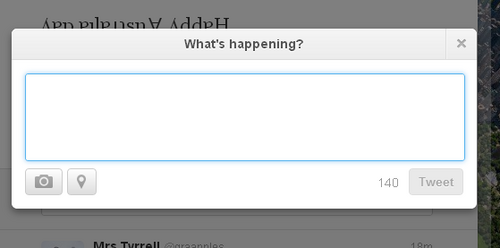
  • Tvuít (tweet)

    One of the new additions to the Irish lexicon in the new Foclóir.
  • Triúracht (Troika)

    The combined ECB, European Commission and the IMF. (Niall Carson/PA Archive)
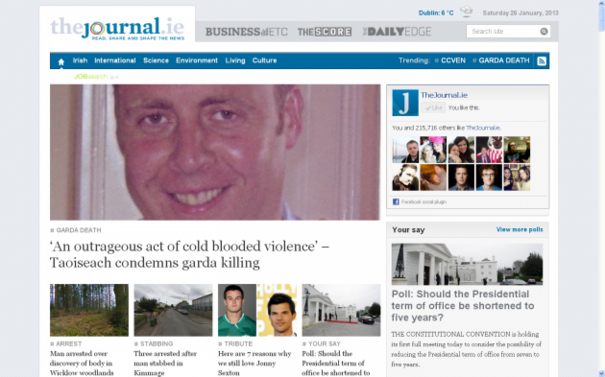
  • An Iris Reatha (The Journal)

    'Iris' means a publication of some sort (though usually printed), while 'reatha' means 'current' (as in 'cúrsaí reatha' for 'current affairs'). 'Iris reatha' usually means a journal in an academic context, but that seems like a better fit than the version 'dialann' (which better describes a diary).
  • Teilifís réaltachta (reality TV)

    The X Factor's Rylan can rest easy knowing he's the new 'rí' of 'teilifís réaltachta', having won Celebrity Big Brother 2013. (Eamonn and James Clarke)
  • Podchraoladh (podcast)

    This is a pretty easy one. 'Craol' is already the verb meaning to 'broadcast', so just stick a 'pod' in front of it (which is a term already borrowed from the name 'iPod' to begin with).
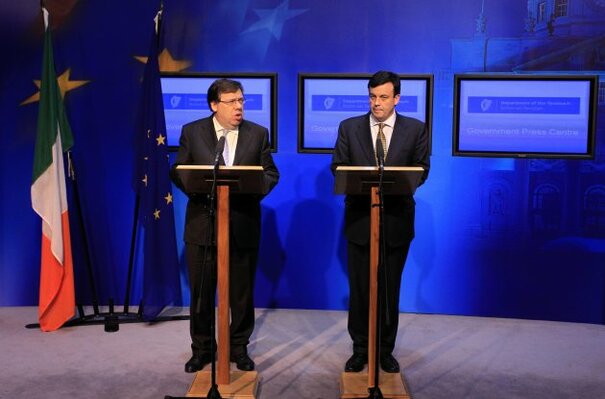
  • Pobalbhreith (opinion poll)

    The bane of every politician's life. (Eamonn Farrell/Photocall Ireland.)
  • Cothromas diúltach (negative equity)

    A phrase that only a handful of us had ever heard of five years ago, but which most people would now love to see the back of. (Eamonn Farrell/Photocall Ireland)
  • Bhlagáil (blogging)

    The act of keeping an online diary.
  • Micreabhlagáil (microblogging)

    ...meaning you only need sick 'micrea' in the front to turn it into 'microblogging'. (See also 'micreapeileadóir', a phrase aptly used to describe microblogging micro-footballer Michael Owen.)
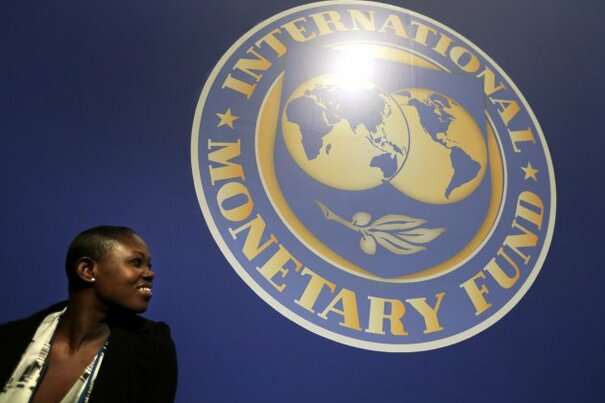
  • Ciste Airgeadaíochta Idirnáisiúnta (IMF)

    This is a simple enough one, though the terminology is difficult. 'Ciste' means fund, 'airgeadaíochta' means monetary (derived from 'airgead', simply meaning money, or literally 'silver') and 'idirnáisiúnta' means international. (AP Photo/Itsuo Inouye)
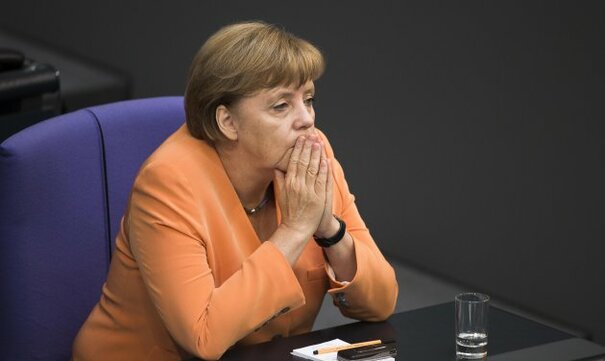
  • Sásra Cobhsaíochta Eorpach (European Stability Mechanism)

    Angela Merkel will hope that the Eurozone's bailout fund will help end the continent's debt crisis. (AP Photo/Markus Schreiber)
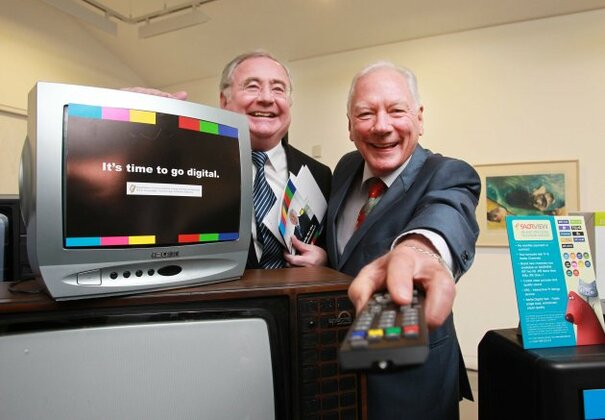
  • An trasdul digiteach (the digital switchover)

    There isn't really an Irish for 'switchover', so we've instead gone with 'transition', which comes out as 'trasdul'. (Leon Farrell/Photocall Ireland)
  • Cibearspás (cyberspace)

    Note that the letter C in this case is a hard C, so it's pronounced 'Kibber-spawss'.
  • Cibearbhulaíocht (cyberbullying)

    Similarly enough, a term that we hope won't need to be used very often. (Photo: Shutterstock)

Read next:

Comments (49 Comments)

  • js1711 26/01/13 #

    With ref to the gaeilge for tweet, I didn’t think there was a ‘v’ in the Irish alphabet.

    Reply
    • It was brought it to deal with foreign words: veidhlín, vóta etc. The sound occurs in Irish and is represented by a ‘bh’….so technically it isn’t part of the traditional alphabet but in practice it exists.

      Reply
    • You’re right, there shouldn’t be. Dunno where the guys behind the new focloir.ie got “tvuít” from – I’ve NEVER seen that on Twitter or anywhere else. Tuít, maybe, but I’d prefer to keep it as tweet (e.g. I sent a tweet = Sheol mé tweet).

      Still, nice little piece. Shows that the language is well able to keep up with the times, despite what some think about it. (But I’d never call theJournal.ie “An Iris Reatha”! lol!)

      Reply
    • Vicipéid? Whose idea was that? Surely it should be Bhicipéid?

      Reply
    • To be fair, I have no idea why they went with a V for that either – I know it can exist in borrowed words (as Neil Patrick pointed out) but there doesn’t seem to be any sound etymological reason, that I can see, for making a V sound in that word in the first place. As Scott suggested, a U would seem more logical (‘tuaít’) but I’m happy to defer to the Foclóir based on the work that went into it.

      As for Vicipéid… Who knows. Again, there seems to be a desire to stick in a few Germanic-style V sounds where none would be needed. ‘Uicipéid’ would seem more true to form but the spelling with the V is the one Wikipedia adopted itself, so who am I to judge!

      Reply
    • Not saying I like it just it does actually exist. But tvuít really looks ugly.

      Reply
    • Children in school now learn to put their éadai in the vardrús, instead of the cófra.

      Reply
    • Nobody uses tvuít on twitter. I’ve seen tuít, but never tvuít. There are some members within the Irish language community that use ‘v’ quite a lot. Eamon Ó Cuív’s surname is originally Ó Caoimh, but was changed by his grandfather to conform to his own system – An Leitriú Shimplí.

      Reply
    • there isn’t….. it makes me want to bhomit !

      Reply
    • the sound ‘v’ exists in Irish as ‘bh’, as Scott says above — however, bh can’t be used at the start of a word (it would be delenited and turn into a B). Hence the reason that most of the Vs occur at the start of the words. i.e. vóta (not bóta)

      Reply
    • — tuít would be my preference for tweet, however.

      Reply
    • When the alphabet was reviewed ‘v’ was added but ‘w’ wasn’t. ‘V’ is supposed to cover both the ‘w’ and the ‘v’ sound so a word like ‘vardús’ is supposed to be pronounced ‘war-doos’. There is no way to tell when one should be used above the other though so in ‘Transalváin’ (Transalbháin) it’s sounded ‘tran-sall-wawn’.
      It’s a silly and unnecessary move, the ‘b’ served the purpose fine and is the one heard in native speakers’ speech the most. Listen to RnaG at an election time and there is talk of ‘bótaí’ instead of ‘vótaí’.

      With regard to ‘tvuít’, it’s supposed to be pronounced like the English. ‘Giolc’ and ‘tuít’ are far more common on twitter though. I’ve never seen ‘tvuít’.

      Reply
    • What about Eamon O’Cuiv so?

      Reply
    • Alan – as Seán pointed out above, Ó Cuív’s grandfather formulated his own method for spelling Irish words (‘an leitriú shimplí’, literally meaning ‘the simple spelling’) and this is where the spelling of Cuív (as opposed to ‘Caoimh’) originates from.

      This caused some confusion for reporters and editors when Éamon’s mother, Emer I Chuiv, died last year. Usually a woman whose married name is Caoimh would be Uí Chaoimh, but under the simpler alternative model it simply because ‘Í Chúiv’ – which led to a lot of confusion because ‘Í’ would otherwise never appear in a surname.

      Reply
  • Bouile 26/01/13 #

    cad é an focal le haghaidh ‘Jaegerbombs’?

    Reply
  • Fág amach é !!

    Reply
  • Méh….

    Reply
  • I think Tvuít looks horrible. Since when in Irish has the letter v denoted a w sound? Which when in Irish has a v been used in such an order? Vótáil, Vicipéid etc yeah ok I get it but Tvuít? I don’t understand!

    Reply
  • I love Irish, But this is what I hate about the “experts” who add new words to the language. I mean Vicipéid for Wikipedia, or Tvuít for tweet. Come on guys thats so stupid. Tír gan teanga tír gan ainm.

    Reply
    • 1) It’s “Tír gan teanga, tír gan anam” as in soul, not name. 2) Vicipéid was not coined by experts but from a community of speakers. That same community uses tweet left in its English format or tuít, but not tvuít.

      Reply
  • If it cannot be spelled out with the letters in the Irish alphabet, then pick another word or print it in English or Chinese or whatever language it comes from.

    It’s bad enough having the ‘h’ foisted onto the language in place of the seimiu – whoever thought of that one should be flayed alive and then dipped in vinegar.

    Reply
    • The h, believe it or not, precedes the ponc. Initially it was placed in the same place as in modern Irish before being relegated to a superscript position above the lenited consonant. Over time the superscript was reduced to a dot, or ponc. The h was reintroduced as the availability of typing devices with the ability to print the superscript ponc was sparse.

      Reply
  • What about some Irish words used in English – maybe they should be made more English. Tories (from toraíocht) should be called pursuers, slum (from ‘is lom’) it’s barren (i think slut has a similar etymology, lot =violation) .. right, nuf e dat, back to the telly!

    Reply
  • Mack 26/01/13 #

    Tweet and Wikipedia should stay the same if your going to convert to Irish, do it right v is only to be used if there is no irish version. Replacing one unused letter with another unsed letter doesn’t make it any less wrong, if they are going to the trouble of including words could they refrain from including “loan” words.

    Reply
    • Why refrain from using loan words? You hardly think whiskey, vodka, kayak, moccasin, ship, boat, street, etc are English? All those words are loan words. If it’s good enough for every other language on the planet to have loan words then it’s good enough for Irish.

      Reply
    • Indeed if you took the loan words out of English you wouldn’t actually have an awful lot left. Borrowing lexical items from other languages has been standard practice for years. And when they are borrowed they are changed to suit the orthography of the new language. Languages with many more speakers than Irish do it…

      Reply
    • patrick 26/01/13 #

      Keep loan words as loan words in their original language. Much like German does for words like internet, email and wikipedia. Wikipedia comes from Hawaiian and the irish rewriting mucks it up completely, losing and somehow disrespecting the etymology.

      Same for tweets, which come from a brand name, twitter, which has global meaning.

      I hated this when at school in the 80s/90s with words like fotocoipeadoireacht or something, where the prefix photo- elsewhere was griain-. No consistency then, and it’s just become worse.

      Reply
    • And would you suggest loanwords taken from non-Latin based alphabets also remain in their respective format? Perhaps we could, rather than use the word “carbhat” (tie), instead talk about “fear agus é ag caitheamh хорват”? There is a reason loan words are modified in different languages. It’s down to grammar. If you expect Irish to adopt loanwords unadulterated then you are placing an onus on speakers of the language to change the language’s entire grammatical structure. E.g., using vicipéid allows the speaker to create a definite genitive in “na vicipéide”, an indefinite genitive in “vicipéide” as well as forming plurals “vicipéidí”. Using wikipedia unaltered means you can’t create any genitive or plural form. It also means the word suddenly no longer fits into the masculine-feminine categorisation that exists in Irish. This is the same with other words such as those you mentioned.

      Reply
  • These words are not traditional Irish words. They should be scrapped. We need to preserve our culture not make a laughing stock of the Irish language by making up all these silly words. Leave the language alone please.

    Reply
    • So you want the language to go into stasis? That’s impractical. What do we then do about new words – what is your solution to the whole thrust of this article?

      Reply
    • Rather than worry about a few foreign words here and there (and again Irish is far from unique in this. Kompentz und Know-how says the Deutsche Bank advertisement) or frett over the intrusion of the killer “v” the only real way to preserve the langauge is by actually making even a tiny effort to learn/use it. Leaving the language alone is not an option.

      Reply
    • Just use the English words.

      Reply
    • But the English words contain letters that don’t exist in the Irish alphabet. And what if the words are not from English? What if they’re from Russian, or Greek, or Japanese or any language that doesn’t use the Latin alphabet? If you propose to use the English translations of those words then you’re polluting the Irish language further and thereby negating your own argument.

      Reply
  • I wish they would stop wasting money on Irish. It’s a total waste of time and money which would be better spent on more Police or special needs assistants in schools.

    Reply
    • Here we go…..

      the typical anti-Irish non-argument poorly disguised as an economic or social justice argument

      there’s enough money for carers, police and the Irish language once we stop paying German, French and British bondholders

      convenient people like you never mention that

      Reply
    • They are called Garda not Police. :)

      Reply
    • Kerron ná tabhairt aire don trolláil. Which is also another piece of god awful bearlish! Surely there is a brilliant old irish word for (or equivalent of) troll?! Why can’t we use that?! Why are we subbing in phonetically “irishised” words instead of trawling around trying to come up with something decent based on words and language we already have! Have you ever heard worse garbage that tvúit or vickipéid?

      Reply
    • Barra 26/01/13 #

      For “troll” I think “gabhal” might do the job. At least here in Luimneach.

      Reply
  • The reason all those houses are for sale is because their walls are at a 45 degree angle.

    Reply

Add New Comment