Sign in. It’s quick, free and it’s up to you.
An account is an optional way to support the work we do. Find out more.
Sign in. It’s quick, free and it’s up to you.
An account is an optional way to support the work we do. Find out more.
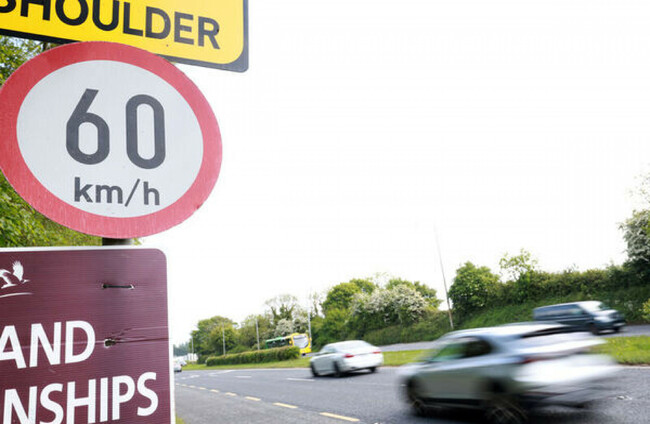
THIS WEEK, WE heard from our readers on topics ranging from speed bumps to Knickerbocker Glories. Have something to say? See our letter guidelines here.
Editor,
Since May, I’ve been detected twice for speeding and thus paid €160 and received three penalty points for each offence. Serves me right, say most people!
Part of me agrees, especially because I don’t intentionally exceed speed limits, when these are visible. I note that road signage for speed is not as evident as it used to be, thus my letter.
Detection rates must be very high, because I’ve attracted two tickets in the space of 3 months, having attracted none in the previous 50 years of ticket-free driving!
So I’m wondering if there’s scope to examine the universal implementation of speed legislation, when speed signage appears deficient. Surely a graduated approach makes sense.
Thoughts?
Joe Harrison,
Spanish Point,
Co Clare
No doubt the people who call for speed bumps on our roads and entrances to car parks have the best of intentions. But they would soon realise how hazardous they are if they took the trouble to negotiate these obstacles on a motorbike or motorised wheelchair.
Even a straight stretch of road in dry conditions becomes dangerous when these artificial slip-hazards are added. On windy roads, near river banks, in rainy, misty, icy or snowy conditions, they pose an unacceptable risk to drivers of all vehicles.
There are safer ways to slow down traffic, such as rumble strips.
Geraldine Comiskey,
Shankill,
Co Dublin
[How do you know if you're talking to an AI chatbot or a human? Companies must now tell you]
Dear Editor,
Ireland’s new AI office arrives at the right moment. From 2 August, Irish authorities gained additional powers under the EU AI Act, while businesses face new transparency and high-risk-system obligations.
The office should judge success through real workplace evidence, not the number of guidance documents, training completions or AI accounts created.
Every public body and supported business should begin with one recurring task, such as answering a routine query, checking an application or preparing a first draft. It should define what data may enter the tool, who reviews the result and when a person must intervene. Then it should compare the AI-supported process with the old one on time, quality, errors and user experience.
This approach would complement Ireland’s existing effort to help businesses adopt AI gradually and responsibly. It would also reveal where generic training falls short. Employees often understand a tool in a classroom yet remain uncertain about confidential information, accountability and how to report a failure.
The AI Office can make Ireland a leader by publishing simple, anonymised lessons from these workflow tests. Irish employers would learn which uses produce genuine gains, which need stronger guardrails and which should stop.
Good regulation should protect people while helping useful innovation spread. Evidence from real work can do both.
Dr Gleb Tsipursky,
Ohio,
United States
Dear Editor,
I was out for a meal at the weekend and saw a childhood favourite dessert of mine on the menu that I should have ignored but couldn’t: the infamous Knickerbocker Glory.
Now where in God’s name did that name come from with its sexist connotation? Apparently it was named after a hotel in New York, the Knickerbocker Hotel in Manhattan. During the early 1900s, the hotel was pink-and-cream-colored, and well-known to the denizens of New York. After it closed in 1920, a tall pink-and-cream coloured dish was created in its honour and soon afterwards became very popular in Ireland and the UK.
Aidan Hampson,
Artane,
Dublin
Would you like to have a letter published? See guidelines for submission here.

To embed this post, copy the code below on your site












have your say